
A Little Girl Invited a Lonely Millionaire Home for Christmas—But What She Said at Dinner Made Him Question Everything He Had Built
“Mom, he said he doesn’t have anybody.”
The little girl’s words stopped Jennifer cold.
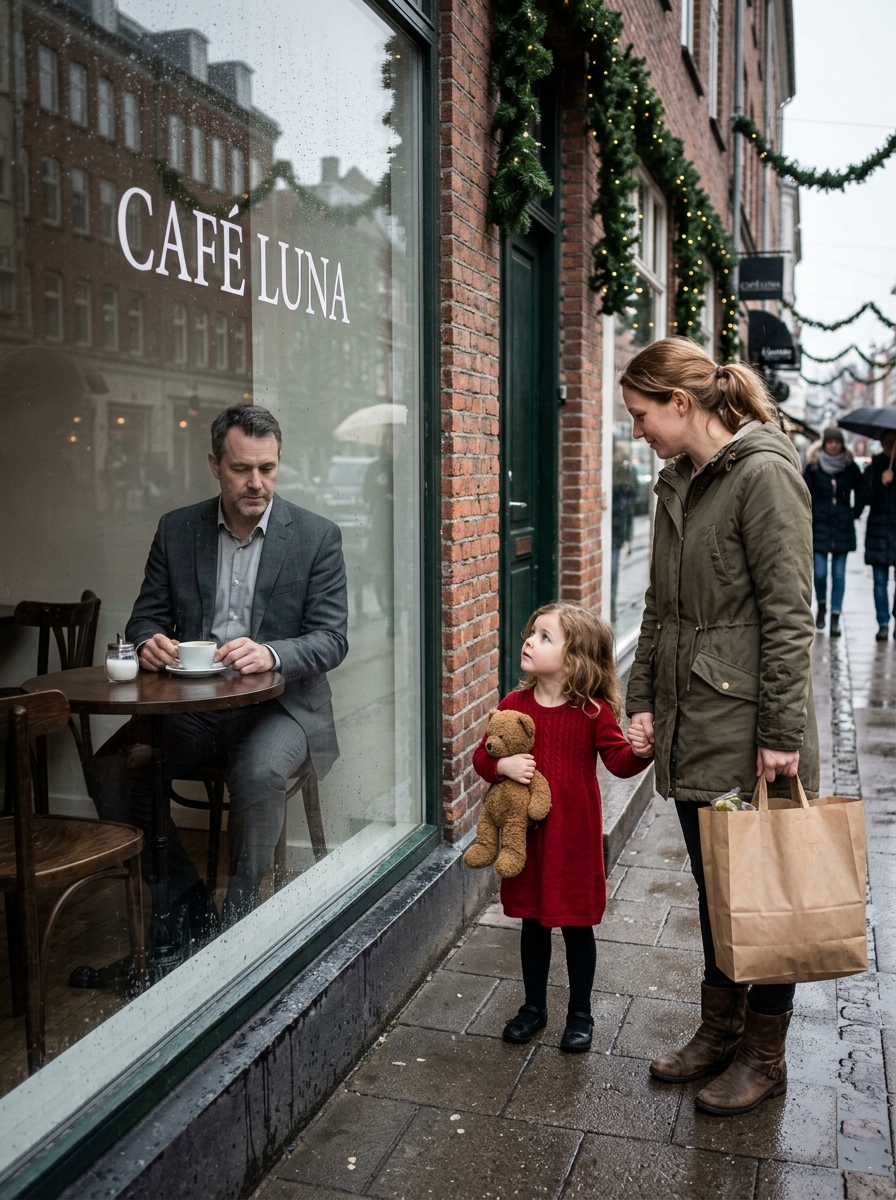
She stood a few feet from an outdoor café table, one hand wrapped around two grocery bags, the other reaching for her four-year-old daughter.
“Emma,” she said carefully, “come back over here.”
But Emma didn’t move.
She stood beside the stranger in the charcoal suit, clutching an old brown teddy bear under one arm.
“He’s gonna be alone tonight,” she said.
Jennifer looked at the man.
Then at her daughter.
Then back at the man.
The stranger slowly stood.
“I’m sorry,” he said. “She was just being kind. I didn’t mean to make you uncomfortable.”
Jennifer’s eyes narrowed a little.
“You told my daughter you have nowhere to go on Christmas Eve?”
The man looked embarrassed.
“I didn’t exactly volunteer it.”
Emma lifted her chin.
“I asked him.”
Of course she had.
Jennifer closed her eyes for half a second.
Her daughter had never met a question she didn’t think deserved an answer.
“She asked why I was sitting alone,” the stranger explained. “I told her I was having coffee.”
“And then I asked who he was waiting for,” Emma said.
Jennifer gave her daughter a look.
Emma kept going.
“And he said nobody.”
The man rubbed one hand against the back of his neck.
“Pretty much.”
Emma looked at her mother like the rest should have been obvious.
“So I invited him.”
Jennifer nearly dropped a grocery bag.
“You did what?”
“To dinner.”
“Emma.”
“We have enough turkey.”
“That is not the point.”
“And Grandma made pie.”
“Still not the point.”
Emma’s little face fell.
“But you said nobody should be alone on Christmas.”
Jennifer opened her mouth.
Nothing came out.
The stranger looked away.
For one second, Jennifer saw something change in his face.
It wasn’t embarrassment anymore.
It was hurt.
Quiet hurt.
The kind adults get good at hiding.
And that was how Harrison Cole, forty-one years old, wealthy beyond anything Jennifer could imagine, ended up being invited to Christmas dinner by a preschooler who thought loneliness was an emergency.
Harrison had spent most of his adult life learning how to make people believe he needed nothing.
He had become very good at it.
His company developed business software used by firms across the country.
He had started it in a rented room with two folding tables, a secondhand computer, and more confidence than common sense.
Fifteen years later, he occupied the top floor of a downtown office building.
His name appeared in business magazines.
People asked him to speak at conferences.
Young executives repeated things he said in meetings as if they were rules for living.
Harrison found that almost funny now.
Because when it came to actually living, he had made a mess of it.
He owned a penthouse with windows that stretched almost from floor to ceiling.
He owned a sleek black car that he rarely drove because a driver usually took him where he needed to go.
His kitchen had appliances he didn’t know how to use.
His dining table seated ten.
He had never had ten people sitting around it.
Not once.
Five Christmases earlier, his wife had left him.
There hadn’t been shouting.
That almost made it worse.
She had sat across from him at their dining table while his phone kept buzzing beside his plate.
“Harrison,” she had said, “I don’t think you even notice when I’m here anymore.”
He had told her that wasn’t true.
Then his phone buzzed again.
And he looked at it.
He still remembered the expression on her face.
Not anger.
Not surprise.
Just exhaustion.
A few months later, the marriage was over.
She eventually remarried.
Harrison saw the announcement online.
The man standing beside her was a high school teacher with a crooked smile.
For a few minutes, Harrison studied the photo.
Then he shut his laptop and went back to work.
That was what he did with every feeling he didn’t know how to handle.
He worked over it.
Under it.
Around it.
Until he couldn’t hear it anymore.
His parents had died years earlier, within the same difficult year.
He had no brothers.
No sisters.
Most of his old friends had stopped calling after too many unanswered messages, canceled dinners, and birthday gatherings Harrison promised to attend but somehow always missed.
He told himself they had grown apart.
The truth was less comfortable.
He had trained people not to expect him.
Eventually, they listened.
And on Christmas Eve, while families rushed home carrying grocery bags and wrapped packages, Harrison had walked out of his office because the building had become too quiet.
His employees had gone home hours earlier.
He had encouraged them to leave.
“Family first,” he’d told them.
The phrase had sounded polished and responsible coming out of his mouth.
Then he had stood alone in the conference room and realized he had no family waiting for him.
So he wandered downtown.
He bought coffee.
He sat at an outdoor table beside a small café.
And he watched people belong to one another.
That was what bothered him most.
Not the decorations.
Not the music coming softly through the café speakers.
Not the children carrying paper bags or couples walking shoulder to shoulder.
It was the way people expected to see each other again.
“See you at Mom’s.”
“Meet you at the house.”
“Dad’s already cooking.”
“Grandpa keeps asking where you are.”
Everywhere Harrison looked, somebody had a destination that included another person.
He had an apartment.
He had an office.
He had reservations available at any restaurant he wanted.
He had no place where somebody would look at the clock and say, “Where is Harrison?”
He had been sitting there almost forty minutes when Emma appeared.
She looked at him without fear or ceremony.
“Mister?”
He looked down.
“Yes?”
“Why are you sitting by yourself?”
Harrison almost laughed.
Children asked questions adults worked hard to avoid.
“I’m drinking coffee.”
She studied the cup.
“You’re not drinking it.”
He looked at the untouched coffee.
“That’s fair.”
“Are you waiting for somebody?”
“No.”
“Is your family coming?”
He hesitated.
“No.”
Emma’s eyebrows pulled together.
“Where are they?”
“Emma!”
Jennifer’s voice carried from beside an old compact sedan parked nearby.
She was putting grocery bags into the trunk.
Emma glanced toward her mother.
Then turned right back to Harrison.
“My mommy’s there.”
“I see that.”
“What’s your name?”
“Harrison.”
“That sounds fancy.”
He smiled despite himself.
“What’s yours?”
“Emma.”
“That sounds pretty fancy too.”
“No, it doesn’t.”
Apparently the matter was settled.
She hugged her teddy bear tighter.
“Do you have kids?”
“No.”
“A wife?”
“No.”
“A dog?”
“No.”
“Cat?”
“No.”
Emma looked increasingly concerned.
“Who lives with you?”
“Nobody.”
She stared at him.
“Why?”
That one landed harder.
Harrison swallowed.
“I guess I got busy.”
“With what?”
“Work.”
“You work all the time?”
“Pretty close.”
Emma frowned.
“That sounds boring.”
He actually laughed.
Maybe the first real laugh he’d had in days.
Then she asked the question Jennifer had walked over in time to hear.
“Who are you having Christmas with?”
Harrison could have lied.
He had spent years giving people polished answers.
He could have said colleagues.
Friends.
A dinner later.
A party.
Instead, he looked into the serious blue eyes of a four-year-old stranger and told the truth.
“Nobody.”
Emma reacted as if he had said he planned to eat dinner without a chair.
Something obviously wrong.
Something that required immediate correction.
“Come to our house.”
“What?”
“We’re having turkey.”
“I don’t think—”
“And mashed potatoes.”
Harrison smiled.
“That sounds nice, but—”
“My grandma makes pie. Mommy makes green beans, but I don’t really like those.”
“Emma!”
And now Jennifer was standing there.
Which brought Harrison back to the uncomfortable present.
Jennifer shifted the grocery bags in her hands.
She was probably thirty-three or thirty-four.
Her brown hair had been pulled into a loose ponytail that looked like it had been done early that morning and forgotten about.
Her coat was clean but worn around the cuffs.
Her boots had seen better days.
There were tired shadows beneath her eyes.
But she stood straight.
Alert.
Protective.
Harrison recognized that kind of posture.
It belonged to people accustomed to carrying more than they admitted.
“I apologize,” he said again. “I should have redirected the conversation.”
Jennifer looked at him for another second.
“Emma talks to everybody.”
“I gathered that.”
“She invited a grocery clerk to her birthday party last month.”
“Did he come?”
“No.”
“That seems like his loss.”
Jennifer almost smiled.
Almost.
Emma tugged on her sleeve.
“Mommy.”
“No.”
“I didn’t ask yet.”
“I know what you’re going to ask.”
“But he’s alone.”
Jennifer sighed.
“Sweetheart, we can’t invite every stranger we meet into our apartment.”
“Why?”
“Because that’s not how things work.”
Emma looked genuinely puzzled.
“But why?”
Jennifer glanced at Harrison.
He lifted both hands.
“I’m staying out of this.”
That finally got a small laugh from her.
Then Harrison reached into his pocket and pulled out a business card.
“I’m Harrison Cole. I run a software company downtown. You certainly don’t have to invite me anywhere. In fact, you probably shouldn’t.”
Jennifer took the card.
She read it.
Looked at him again.
Then at the expensive suit.
Suddenly, the pieces fit.
“You’re that Harrison Cole?”
He wished immediately that she hadn’t recognized the name.
“I suppose.”
“I read an article about your company a few months ago.”
“Hopefully a flattering one.”
“It said you worked sixteen-hour days.”
“That part was unfortunately accurate.”
Emma tugged Jennifer’s sleeve again.
“So he really does work all the time.”
“Yes, apparently.”
“See?”
“See what?”
“That’s why he needs Christmas.”
Harrison looked down.
Jennifer stopped smiling.
For a moment, the three of them stood there.
Then she exhaled slowly.
“Our apartment is small.”
Harrison looked up.
“The furniture is old. My mother lives with us. Dinner is simple. And if you’re expecting some picture-perfect Christmas, you are going to be disappointed.”
“I’m not expecting anything.”
Jennifer studied his face.
“If you really have nowhere to go…”
Emma gasped.
Jennifer held up one finger.
“…you can come for dinner.”
Emma bounced in place.
“Yes!”
“Dinner,” Jennifer repeated. “That’s all I’m promising.”
Harrison felt something tight in his chest loosen.
“I’d be grateful.”
Emma shoved her teddy bear at him.
“Hold Mr. Buttons.”
Harrison blinked.
“What?”
“I have to help Mommy.”
Before he could object, the bear was in his hands.
Jennifer stared at him standing there in an expensive suit holding a battered teddy bear with one ear slightly flatter than the other.
This time, she really smiled.
“Welcome to the family, Mr. Cole.”
It was supposed to be a joke.
Neither of them knew how strange those words would sound one year later.
Jennifer lived across town in an older apartment building with narrow hallways and chipped paint around the stairwell.
The elevator hadn’t been working properly that week, so they climbed three floors.
Emma talked the entire way.
She explained that her grandmother was named Rose.
Rose made the best apple pie in America.
This had not been independently verified.
Emma also explained that she was allowed to open one present before bed, but only one, and Grandma Rose always tried to guess which present she would choose even though she was usually wrong.
“Last year I picked the big one,” Emma said.
“What was it?” Harrison asked.
“Socks.”
He stopped on the stairs.
“The big present was socks?”
“Yes.”
“That’s a tough Christmas.”
Jennifer laughed behind him.
“They had cartoon penguins on them.”
“Oh. Well, that changes everything.”
Emma nodded solemnly.
“I still wear them.”
By the time they reached the apartment, Harrison knew more about Emma’s preschool class than he knew about several vice presidents at his own company.
Jennifer unlocked the door.
Harrison stepped inside.
And stopped.
The place was maybe one quarter the size of his penthouse.
Possibly smaller.
The living room opened directly into a tiny dining area.
A narrow kitchen sat beyond that.
The couch had a faded blanket over one arm.
The recliner near the window had been repaired with careful stitching along one side.
A small Christmas tree stood in the corner.
Nothing matched.
And yet everything somehow belonged.
Paper ornaments hung from the tree.
A handprint painted green had been turned into something that was probably supposed to be a Christmas tree.
A crooked paper star sat near the top.
Family photographs covered one shelf.
Emma as a baby.
Emma wearing a giant sun hat.
Jennifer in nursing scrubs holding Emma on her hip.
Rose with flour on her cheek.
A refrigerator was covered in drawings, magnets, reminders, and one piece of paper with a purple handprint and the words MOMMY + ME.
Harrison stared at it.
His own refrigerator held bottled water, sparkling water, and food somebody else stocked for him.
That was it.
A gray-haired woman appeared from the kitchen holding a dish towel.
She saw Harrison.
Stopped.
Looked at Jennifer.
Looked at Harrison again.
“Jennifer?”
“Mom, don’t panic.”
“That’s always comforting.”
“This is Harrison.”
Rose’s eyes moved over his suit.
“I can see that he’s Harrison. I’m asking why Harrison is in our living room.”
Emma ran past him.
“I found him.”
Rose looked at the child.
“Where?”
“At the café.”
“Why were you finding men at cafés?”
Jennifer pressed two fingers against her forehead.
“Mom.”
“I’m just trying to catch up.”
“He was sitting alone,” Emma explained.
“So I invited him for turkey.”
Rose looked at Harrison.
“You accepted a dinner invitation from a four-year-old?”
“When you put it like that, I admit it sounds questionable.”
Rose stared at him for two seconds.
Then laughed.
“All right. At least he knows.”
Jennifer relaxed.
A little.
Rose offered her hand.
“Rose Banks.”
“Harrison Cole.”
“I hope you eat leftovers.”
“I do now.”
“Good answer.”
Dinner was almost ready.
Harrison offered to help.
Jennifer handed him a stack of plates.
He stood there holding them.
She waited.
“What?”
“Where do these go?”
“The table.”
“Right.”
She looked at him.
“When was the last time you set a table?”
Harrison considered lying.
“Maybe college.”
“Oh, this should be interesting.”
It was.
He put the forks on the wrong side.
Emma corrected him.
He forgot napkins.
Rose corrected him.
He nearly carried an empty serving bowl to the table because he didn’t realize Jennifer planned to put food in it.
Jennifer stopped him.
By the time everything was ready, all three women were laughing.
Harrison was too.
Nobody at his executive dinners laughed when someone used the wrong fork.
They noticed.
They just pretended not to.
Here, there was no pretending.
Rose carved the turkey.
Jennifer brought mashed potatoes.
Emma had been assigned the important job of placing dinner rolls in a basket.
She arranged them with enormous concentration.
Finally, they sat.
Harrison waited.
Rose noticed.
“Something wrong?”
“No.”
“You look nervous.”
“I’m not nervous.”
Jennifer raised one eyebrow.
“You look nervous.”
“I haven’t had Christmas dinner with a family in a long time.”
That quieted the table.
Emma reached across and touched one finger to his hand.
“You’re doing good.”
Harrison’s throat tightened.
“Thank you.”
Rose smiled.
Then she lifted her glass.
“Well, since Emma apparently runs the guest list now, here’s to unexpected company.”
Jennifer raised hers.
“To unexpected company.”
Emma raised her milk.
“To Mr. Harrison not being lonely.”
Harrison looked down at his plate for a second before lifting his glass.
“To Emma.”
The meal was imperfect.
The turkey was slightly dry.
The potatoes had too much butter according to Jennifer and exactly enough according to Rose.
Emma moved green beans around her plate like someone solving a complicated puzzle.
The rolls were store-bought.
Jennifer apologized for that.
Harrison didn’t understand why.
“This is the best dinner I’ve had all year.”
Rose pointed a fork at him.
“Now I know you’re trying to flatter us.”
“I’m not.”
“What do rich people eat on Christmas?”
“Apparently room service.”
Jennifer’s face changed.
“You were going to order room service tonight?”
“Probably.”
“Alone?”
“Yes.”
Emma looked horrified.
“On Christmas?”
“Yes.”
“With no pie?”
“I assume they would have pie.”
“Not Grandma pie.”
“Clearly not.”
Emma shook her head.
“That is so sad.”
“Emma,” Jennifer warned.
“It’s okay,” Harrison said.
“She’s right.”
Rose studied him.
“You really don’t have anybody?”
Harrison put his fork down.
It would have been easy to turn the conversation.
Ask about Jennifer’s nursing work.
Compliment the apartment.
Make a joke.
That was what he normally did when discussions got personal.
But something about the small room made dishonesty feel ridiculous.
“My parents are gone,” he said. “I’m an only child. I was married. That ended five years ago.”
Rose nodded slowly.
“Friends?”
“I used to have some.”
“You used to?”
“Mom,” Jennifer said.
“No, it’s okay.”
Harrison looked at Rose.
“I got busy. They stopped calling.”
“They stopped calling, or you stopped answering?”
The question hit exactly where it was supposed to.
Jennifer gave her mother a look.
Rose shrugged.
“He came for honesty. We’re giving him honesty.”
“I don’t remember asking for that package.”
“It comes free with dinner.”
Harrison smiled faintly.
Then he answered.
“I stopped answering.”
Rose nodded.
“There it is.”
Jennifer shook her head.
“Can you please not interrogate our guest?”
“I’m not interrogating him.”
“You asked him why he has no friends.”
“I asked a logical follow-up question.”
Harrison laughed.
“No, she’s right.”
Rose leaned back.
“I usually am.”
Jennifer muttered something about confidence being a family problem.
Emma giggled without understanding.
Harrison picked up his fork again.
“I started the company at twenty-six,” he said.
“In the beginning, if I didn’t work, nothing happened. If I didn’t answer a customer, there was nobody else to answer. If I didn’t solve the problem, the problem stayed.”
Jennifer nodded.
“That makes sense.”
“The trouble is, the company grew.”
“And you never stopped acting like it was just you,” she said.
Harrison looked at her.
“Exactly.”
He had never explained it that way before.
Or maybe nobody had ever understood it so quickly.
“I became useful to hundreds of people,” he continued. “Employees. Customers. Investors. Everybody needed something.”
Emma raised her hand.
Harrison smiled.
“Yes?”
“I need ketchup.”
Jennifer sighed.
“The ketchup is two feet from you.”
“I can’t reach.”
Harrison handed it to her.
Emma grinned.
“Thank you.”
He looked back at Jennifer.
“Apparently I’m still useful.”
Jennifer smiled.
“But that’s different.”
It was.
And Harrison knew it.
He had built his entire identity around being needed for answers.
Decisions.
Strategy.
Money.
Approval.
Emma needed him to pass the ketchup.
No performance required.
For some reason, that felt better.
After dinner, Rose brought out the pie.
Emma had not exaggerated.
It was excellent.
Harrison ate two slices.
Then they moved into the living room.
Emma selected her favorite Christmas movie.
Harrison had never seen it.
This offended her deeply.
“How have you never seen it?”
“I work a lot.”
“That’s your answer for everything.”
Jennifer laughed into her mug.
Harrison pointed at Emma.
“She’s tough.”
“She gets that from my mother.”
Rose looked proud.
They drank hot chocolate.
Jennifer brought out cookies from the kitchen.
“They’re from the grocery store,” she said.
“Stop apologizing for food you didn’t personally create,” Harrison told her.
She looked at him.
“Occupational hazard.”
“As a nurse?”
“As a mother.”
He understood that answer even less.
But he remembered it.
Halfway through the movie, Emma moved from the floor to the couch.
Then from the couch to the arm of Harrison’s chair.
Then somehow, without asking permission, she climbed onto his lap.
She kept Mr. Buttons tucked under her chin.
Within twenty minutes, she was asleep.
Harrison froze.
Jennifer noticed.
“You can breathe.”
“I am breathing.”
“Barely.”
“I don’t have much experience with this.”
“She’s just sleeping.”
“I’m aware.”
“You look like someone handed you a priceless antique.”
Harrison looked down at the child.
“That’s sort of what it feels like.”
Jennifer’s smile softened.
She came over.
“I can take her.”
Harrison hesitated.
“It’s okay.”
“You sure?”
He nodded.
“She’s fine.”
Jennifer returned to the couch.
Harrison stayed still.
Emma’s head rested against his chest.
Her little hand had curled around the front of his shirt.
It was such a small thing.
Yet it unsettled him more than any business crisis he had faced in years.
Because she trusted him.
For no reason.
She didn’t know what he had built.
She didn’t know how much he earned.
She didn’t know his name carried weight in certain rooms.
She knew only that he had been alone.
So she invited him home.
That was enough.
Harrison stared at the Christmas tree.
A paper ornament turned slightly from the heat vent.
Across the room, Jennifer watched him.
“You okay?”
He nodded.
Then shook his head.
“I don’t know.”
She waited.
Harrison spoke quietly.
“When was the last time somebody wanted me somewhere just because I was there?”
Jennifer’s expression changed.
“You mean not for work?”
“Not for work.”
He tried to remember.
He couldn’t.
“That’s a hard thing to realize at forty-one.”
Rose, sitting in the recliner, looked over.
“Better at forty-one than eighty-one.”
Harrison smiled.
“You really never miss a chance, do you?”
“Nope.”
Rose stood and stretched.
“Now I’m going to bed before I accidentally fix the rest of your life.”
“You’ve done enough damage for one evening.”
“Good.”
She kissed Jennifer’s forehead.
Then Emma’s.
Then surprised Harrison by squeezing his shoulder.
“Merry Christmas.”
“Merry Christmas, Rose.”
After Rose went to her room, the apartment became quiet.
The movie ended.
Emma kept sleeping.
Jennifer lowered the volume on the television and poured coffee into two mismatched mugs.
“I’m sorry,” she said.
“For what?”
“All of this.”
Harrison looked around.
“What part?”
“My daughter questioning your entire life. My mother joining in. Dinner turning into group therapy.”
He smiled.
“I needed it.”
Jennifer sat on the opposite end of the couch.
“You probably think we’re strange.”
“I think you’re the first people in years who didn’t care what I do for a living until after I sat down.”
“That isn’t true.”
“No?”
“I cared once I realized you were wearing a suit that probably costs more than my monthly rent.”
Harrison laughed.
“At least you’re honest.”
“I told you. It runs in the family.”
They sat quietly.
Then Jennifer looked at Emma.
Her face softened immediately.
“She’s the reason I still believe most people are decent.”
Harrison followed her gaze.
“What happened with her father?”
Jennifer didn’t answer at first.
Harrison regretted asking.
“You don’t have to tell me.”
“No. It’s okay.”
She folded her hands around her mug.
“He decided he wasn’t ready for the life we had.”
Harrison stayed quiet.
“He left when Emma was two,” Jennifer continued. “There wasn’t some giant dramatic scene. He just kept becoming less present.”
She swallowed.
“First he missed dinner. Then weekends. Then appointments. Eventually, he moved out.”
Harrison understood that pattern too well.
A person didn’t always vanish in one moment.
Sometimes they disappeared one canceled plan at a time.
“We lost the house a while later,” Jennifer said. “Not because of anything dramatic. I simply couldn’t keep up with it alone.”
“So you came here.”
“My mom moved in with us. I picked up extra shifts. We adjusted.”
“You make that sound easy.”
“It wasn’t.”
She smiled faintly.
“But Emma never got the memo that life was supposed to feel tragic.”
Harrison looked down at the sleeping child.
“She just kept going?”
“She kept finding things to love.”
Jennifer’s eyes shone.
“A cardboard box became a castle. The apartment stairs became a mountain. We’d have pancakes for dinner because I was too tired to cook anything complicated, and she’d call it backwards day.”
Harrison smiled.
“She made ordinary things feel like enough.”
Jennifer nodded.
“She taught me that enough can actually be a beautiful word.”
That stayed with him.
Enough.
Harrison had spent his life treating enough like failure.
Enough revenue?
Grow more.
Enough clients?
Add more.
Enough money?
Invest more.
Enough office space?
Expand.
Enough influence?
Build more.
He had never asked when more became meaningless.
Jennifer looked at him.
“What about you?”
“What about me?”
“You said your marriage ended because of work.”
“That’s the short version.”
“What’s the long version?”
Harrison stared into his coffee.
“The long version is that my wife asked me to come home for years.”
Jennifer didn’t interrupt.
“I always had a reason.”
A meeting.
A deadline.
A crisis.
A customer.
A flight.
A conference call.
“One night she made dinner for our anniversary,” he continued. “I was almost three hours late.”
Jennifer winced.
“I walked in talking on the phone.”
“Oh.”
“Exactly.”
“What did she say?”
“Nothing at first.”
That was the part he remembered.
Silence.
Two cold plates.
Candles burned almost to the bottom.
“She finally said, ‘I don’t know why I keep setting a place for you.’”
Jennifer looked down.
Harrison continued.
“I told her she knew how demanding the company was.”
He gave a humorless smile.
“As if the company had married me first.”
“Did you try to change?”
“I promised to.”
“That isn’t what I asked.”
Harrison looked at her.
“No.”
The answer hurt.
“No, I didn’t.”
Jennifer nodded.
Not accusing.
Just hearing him.
“She eventually stopped asking.”
“That’s usually when it’s already over.”
He knew she was right.
“I thought success would make everything else easier.”
“Did it?”
“No.”
That answer came quickly.
They talked for almost another hour.
About work.
Parenthood.
Fear.
Regret.
Jennifer admitted she worried constantly about whether Emma felt the absence of a father.
Harrison admitted he sometimes stayed late at work simply because going home reminded him how empty his personal life had become.
At one point Jennifer said, “You know you can change, right?”
Harrison looked at her.
“You make it sound simple.”
“I didn’t say simple.”
She leaned back.
“I said possible.”
Those were different things.
Harrison had forgotten that.
Eventually, he had to leave.
Jennifer carried Emma to bed.
When she returned, Harrison stood near the door holding his coat.
For the first time all evening, the expensive suit seemed almost ridiculous.
Like a costume from another life.
“Thank you,” he said.
Jennifer shook her head.
“For dry turkey and personal questions?”
“For making room.”
Her expression softened.
“You’re welcome.”
He paused.
“I meant what I said. This was the best Christmas Eve I’ve had in years.”
“I’m glad.”
“Do you think Emma will remember inviting a stranger home?”
Jennifer smiled.
“She’ll probably tell her entire preschool class.”
“That’s comforting.”
“She also might tell them you can’t set a table.”
“Please stop her.”
“No promises.”
Harrison started toward the hallway.
Jennifer called after him.
“Harrison?”
He turned.
“You don’t have to disappear after tonight.”
He stood very still.
She pulled out her phone.
“Emma is going to ask about you tomorrow. I’d rather have an answer.”
Harrison gave her his number.
She sent him a quick message so he would have hers.
Then he walked down three flights of stairs.
For the first time in years, somebody expected to see him again.
Back at his penthouse, Harrison stood in the middle of his living room.
Everything looked different.
Nothing had changed.
The furniture was still expensive.
The art was still carefully chosen.
The kitchen counters were spotless.
City lights filled the windows.
But after Jennifer’s apartment, the space felt less like luxury and more like a beautifully decorated waiting room.
There were no drawings on the refrigerator.
No worn teddy bear on the floor.
No half-finished craft project on the coffee table.
No one asleep down the hall.
Harrison walked to his dining room.
Ten chairs.
Ten perfect place settings stored in cabinets.
No memories.
He sat down.
Then his phone buzzed.
His first instinct was work.
It usually was.
But the message was from Jennifer.
A photograph.
Emma was asleep in bed, hugging Mr. Buttons.
Underneath, Jennifer had written:
She asked if Mr. Harrison got home okay.
Harrison stared at the message.
Then typed:
Tell her Mr. Harrison got home.
He paused.
Then added:
And tell her thank you for inviting me.
Jennifer replied a minute later.
She said, “Obviously.”
Harrison laughed alone in his giant apartment.
But for once, being alone didn’t feel permanent.
The next morning, he did something he hadn’t done in years.
He went shopping himself.
Not through an assistant.
Not through an online order handled by somebody else.
He walked through a neighborhood grocery store pushing a cart.
He bought a ham.
Potatoes.
Dinner rolls.
Fruit.
Desserts.
Far too much food.
Then he went to a small gift shop.
He bought Rose a warm shawl.
For Jennifer, he bought a sturdy insulated lunch tote after remembering her mentioning long shifts.
For Emma, he stood in the children’s section for almost twenty minutes.
He nearly bought an enormous stuffed bear.
Then he imagined Mr. Buttons being replaced.
That felt wrong.
So he bought a small stuffed bear instead.
“A friend,” he told the cashier.
The cashier looked at him.
“For who?”
“The other bear.”
The cashier nodded like this made perfect sense.
When Jennifer opened the apartment door that afternoon, her mouth dropped open.
Harrison stood there with bags hanging from both hands.
“No.”
“Merry Christmas.”
“Harrison.”
“I brought food.”
“I see that.”
“And a few gifts.”
“A few?”
Emma appeared behind her.
“Mr. Harrison!”
She ran forward.
Harrison barely managed to put the bags down before she wrapped both arms around his legs.
“I told Mommy you’d come back.”
“You did?”
“Yes.”
“How were you so sure?”
Emma looked up.
“Because you were happy when you left.”
Harrison couldn’t answer that.
Jennifer could.
She covered her mouth and looked away.
The Christmas Day meal was larger.
Louder.
Easier.
Harrison no longer needed instructions to find the plates.
He still put one fork on the wrong side.
Emma corrected him.
Again.
Then came the gifts.
Rose loved the shawl.
Jennifer thanked Harrison for the lunch tote but looked uncomfortable.
Emma introduced the new bear to Mr. Buttons.
“This is your brother,” she announced.
Harrison sat on the couch.
Jennifer sat beside him.
“You really didn’t need to do all this.”
“I wanted to.”
“I know.”
She hesitated.
“But I need to say something.”
Harrison heard the shift in her tone.
“Okay.”
“You can come here.”
He waited.
“You can eat with us. Watch movies. Let Emma talk your ear off.”
“Sounds dangerous.”
She didn’t smile.
“But please don’t turn us into a project.”
Harrison’s stomach dropped.
“I wasn’t—”
“I know you mean well.”
Jennifer kept her voice low so Emma wouldn’t hear.
“But I’ve spent a long time building a life where my daughter knows we’re okay.”
Harrison looked at the bags.
The gifts.
The expensive desserts.
He understood.
“You think I’m trying to rescue you.”
“I think you’re used to solving problems.”
“That’s fair.”
“We aren’t a problem.”
The words were gentle.
They still landed hard.
Harrison nodded.
“You’re right.”
Jennifer looked surprised.
“You don’t have to agree that fast.”
“I do.”
He leaned back.
“I got excited. I wanted to say thank you, and money is the tool I reach for most easily.”
Her face softened.
“I’m not angry.”
“You should still say it.”
“I just did.”
Harrison nodded.
“Then I’ll listen.”
That conversation changed something.
If Jennifer had said nothing, Harrison might have ruined the entire relationship by trying to improve things nobody had asked him to improve.
Instead, he learned the lesson he had missed in his marriage.
Showing up was not the same as taking over.
Helping was not the same as controlling.
Giving was not always about money.
Sometimes giving meant sitting on a tiny living room floor while a four-year-old explained why purple was better than blue.
So that was what he started doing.
He came back the next weekend.
No gifts.
No catered dinner.
Just Harrison.
Emma opened the door.
“Where’s the bags?”
“I didn’t bring any.”
“Good.”
He blinked.
“Good?”
“Mommy said you don’t have to bring stuff.”
Harrison looked at Jennifer.
She shrugged.
“Children hear everything.”
Emma grabbed his hand.
“Come color.”
So he colored.
His snowman was terrible.
Emma told him so.
The next weekend, Jennifer was working a late shift, and Rose asked if Harrison wanted to stay for dinner.
He did.
The weekend after that, he helped Emma build a cardboard house.
The roof collapsed twice.
Harrison approached the problem like an engineer.
Emma ignored all his suggestions and used tape.
Her method worked better.
A month passed.
Then two.
Harrison kept coming back.
Sometimes Jennifer cooked.
Sometimes Rose did.
Sometimes Harrison brought takeout from a neighborhood diner, but only after asking first.
He learned that Emma hated peas.
Rose loved game shows.
Jennifer drank coffee with too much cream when she was tired.
Emma had a specific bedtime routine involving two stories, one glass of water, three stuffed animals, and a final inspection of the closet because she believed lost socks lived there.
Harrison began arranging his schedule around those routines.
At first, it happened accidentally.
A meeting ran toward six o’clock.
Harrison looked at the time.
“I need to go.”
One of his executives stared.
“We still have three items left.”
“Then they’ll be here tomorrow.”
People exchanged glances.
Harrison saw them.
He ignored them.
Another evening, a client called during dinner at Jennifer’s apartment.
Harrison looked at the screen.
Then turned the phone face down.
Jennifer noticed.
“You can answer it.”
“No.”
“Are you sure?”
“Yes.”
Emma shoved a crayon drawing toward him.
“I made you.”
It showed four stick figures.
One small.
Two women.
One very tall man.
Harrison stared at it.
“Who’s that?”
“You.”
His stick figure was holding hands with Emma.
Something moved in Harrison’s throat.
“Do I really look that weird?”
“Yes.”
Jennifer laughed so hard she nearly spilled her drink.
By March, Harrison and Jennifer had become friends.
Real friends.
Not polite acquaintances held together by Emma’s enthusiasm.
They talked after Emma went to bed.
They talked in the kitchen while Rose watched television.
They talked during walks around the neighborhood.
Harrison told Jennifer when work frustrated him.
Jennifer told Harrison when she was exhausted.
Neither tried to fix everything.
That part mattered.
One evening, Jennifer came home after a long shift and found Harrison sitting at the tiny kitchen table helping Emma glue cotton balls onto construction paper.
The project looked disastrous.
Rose was stirring soup.
Emma had glue on one sleeve.
Harrison had somehow gotten glitter on his forehead.
Jennifer stopped inside the doorway.
Nobody noticed her for several seconds.
She watched.
Harrison listened patiently while Emma explained her artwork.
No phone.
No laptop.
No distracted glances.
Just him.
Present.
Jennifer’s eyes filled.
Rose noticed.
She walked over.
“You okay?”
Jennifer nodded.
“Yeah.”
Rose followed her gaze.
Then whispered, “He’s different.”
Jennifer wiped beneath one eye.
“I know.”
Harrison looked up.
“Hey.”
Jennifer smiled.
“Hey.”
“Your daughter has destroyed my professional reputation.”
Emma gasped.
“I made a cloud!”
“Out of half a bag of cotton balls.”
“It’s a big cloud.”
Jennifer walked over and kissed Emma’s head.
Then she looked at Harrison.
“You have glitter on your face.”
“I’m aware.”
“No, you’re not.”
He reached for the wrong side.
Jennifer laughed.
“Other side.”
That night, after dinner, Harrison asked Jennifer if she wanted to go out with him sometime.
She stared.
“Out where?”
“Dinner.”
“We eat dinner together all the time.”
“Different dinner.”
She understood.
“Oh.”
Harrison suddenly felt more nervous than he had before presentations involving millions of dollars.
“If you don’t want to—”
“I do.”
He stopped.
“You do?”
“Yes.”
“Okay.”
Jennifer smiled.
“You’re very smooth.”
“I’ve been out of practice.”
Their first real date was at a quiet neighborhood restaurant.
Nothing fancy.
Jennifer chose it.
Harrison agreed immediately.
He left his phone in his coat pocket.
Halfway through dinner, it buzzed.
He didn’t reach for it.
Jennifer noticed.
“You didn’t even look.”
“I know.”
“Are you feeling okay?”
“Extremely uncomfortable.”
She laughed.
“But I’m learning.”
Their relationship grew slowly.
That mattered to both of them.
Jennifer didn’t want Emma attaching herself to someone who might disappear.
Harrison understood.
Maybe better than anyone.
So he never made promises casually.
If he said he would be at Emma’s preschool performance at six, he arrived at five forty-five.
If he said he would call Jennifer after work, he called.
If something truly unavoidable came up, he told them early.
He stopped treating personal commitments like appointments that could be moved whenever business demanded it.
At work, people noticed.
Not because Harrison became less effective.
The opposite happened.
He finally began trusting the people he had hired.
He promoted a longtime executive to oversee daily operations.
He delegated decisions.
He stopped reading every email.
He stopped joining meetings where his presence added nothing.
For years, Harrison had told himself the company needed him involved in everything.
The truth was more uncomfortable.
He needed to feel involved in everything.
Control had made him feel important.
Letting go made room for something else.
A life.
Six months after Christmas, Harrison left the office at five twenty on a Wednesday.
His assistant looked up in surprise.
“Everything okay?”
“Perfect.”
“Do you have a meeting?”
“Yes.”
“With who?”
Harrison held up a paper bag.
“My most demanding client.”
Inside were hamburger buns.
Emma had decided the four of them were having backyard-style burgers on Jennifer’s tiny balcony.
The balcony barely fit two chairs.
They ate inside.
Emma still called it the balcony party.
That summer, Harrison made another decision.
He put his penthouse on the market.
Jennifer almost choked on her coffee when he told her.
“You love that apartment.”
“No, I don’t.”
“You paid a fortune for it.”
“That doesn’t mean I love it.”
“Why sell?”
Harrison thought about the answer.
“Because I finally understand the difference between impressive and comfortable.”
A few weeks later, he bought a house.
Not enormous.
Not behind gates.
Not designed to impress magazine photographers.
It sat in the same general neighborhood as Jennifer’s apartment.
Four bedrooms.
A kitchen with a wide table area.
A modest backyard.
A front porch.
An old tree near the driveway.
When he showed it to Jennifer, she walked through each room slowly.
Emma ran ahead.
“This one is mine!”
Jennifer froze.
“Emma.”
The child appeared in the doorway of a bright bedroom.
“What?”
“This is Harrison’s house.”
“I know.”
“You don’t get to claim rooms in other people’s houses.”
Emma looked at Harrison.
“Can I?”
He smiled.
Jennifer pointed at him.
“Careful.”
Harrison crouched beside Emma.
“If your mom says it’s okay, you can choose a room to use when you visit.”
Emma looked triumphant.
“This one.”
“Apparently that was fast.”
Jennifer walked into the room.
There was nothing inside.
No expensive children’s furniture.
No giant pile of toys.
Harrison had learned.
He hadn’t designed a life for them.
He had only made space.
That meant more.
On the back porch, Jennifer asked quietly, “Why here?”
Harrison looked around the yard.
“Because Emma can stay near her friends.”
Jennifer’s eyes widened.
“And because your mother likes her neighborhood.”
He paused.
“And because if we keep doing this… if we keep becoming what I think we’re becoming… I don’t want you to have to leave your whole life to fit into mine.”
Jennifer stared at him.
Harrison kept going.
“I did that once.”
“What?”
“I assumed my life was the important one. My schedule. My work. My needs.”
He shook his head.
“I’m not doing that again.”
Jennifer’s eyes filled.
“You really have changed.”
“Emma says I still set the table wrong.”
“You do.”
“Then apparently there’s more work ahead.”
Jennifer laughed through her tears.
A few months later, Rose moved into the house.
Not because Harrison announced it.
Not because he arranged it.
Because Rose looked at the downstairs bedroom and said, “If you two keep pretending this isn’t becoming a family, I’m going to lose patience.”
Jennifer nearly dropped a dish.
Harrison smiled.
Rose moved in three weeks later.
By the time Christmas approached again, the house no longer looked new.
That pleased Harrison more than he expected.
Emma’s drawings covered the refrigerator.
One couch cushion had a juice stain.
Rose kept magazines stacked beside her chair.
Jennifer’s shoes appeared near the front door.
A half-finished puzzle occupied one end of the dining table.
Harrison had once paid professionals to make his penthouse look untouched.
Now he loved evidence that people had been living in his house.
On December 24, exactly one year after Emma found him alone outside the café, Harrison took Jennifer back to the same street.
Emma stayed home with Rose.
Jennifer recognized the place immediately.
“You planned this.”
“I did.”
“That’s suspicious.”
“Come on.”
The café had rearranged its outdoor tables, but Harrison found a spot close to where he had been sitting.
They ordered coffee.
This time, Harrison actually drank his.
Jennifer looked at him across the table.
“You were sitting right about there.”
“I know.”
“You looked miserable.”
“I was miserable.”
“You also looked intimidating.”
“I was drinking cold coffee.”
“In an expensive suit.”
“Apparently the suit was the problem.”
Jennifer smiled.
Then Harrison reached into his coat pocket.
Her smile vanished.
“Harrison.”
He set a small box on the table.
Jennifer stared at it.
Then at him.
“You didn’t.”
“I haven’t done anything yet.”
“You absolutely have.”
Harrison took a breath.
He had negotiated contracts worth more money than he could comfortably say out loud.
Nothing had made his hands shake like this.
He opened the box.
Inside was a simple ring.
Elegant.
Not enormous.
Not chosen to display wealth.
Chosen because it looked like Jennifer.
“Harrison…”
“One year ago, I sat here thinking I had built everything I was supposed to build.”
His voice tightened.
“I had money. A company. A home people admired.”
Jennifer’s eyes filled.
“And then Emma asked me who I was waiting for.”
He looked at her.
“I didn’t have an answer.”
Jennifer covered her mouth.
“You invited me into your life when you had no reason to trust me.”
“Emma invited you.”
“That’s true.”
Jennifer laughed through tears.
“I’ll revise that.”
Harrison smiled.
“Emma invited me. You let me stay.”
His voice grew softer.
“You taught me that being loved and being useful are not the same thing.”
Jennifer wiped her cheek.
“You taught me that showing up matters more than making promises.”
He swallowed.
“You gave me somewhere I wanted to go home to.”
Then Harrison asked her to marry him.
Jennifer looked at him for a long moment.
Long enough that Harrison stopped breathing.
Finally, she said, “There’s one condition.”
His heart stumbled.
“Anything.”
“No giant wedding.”
He laughed.
“Done.”
“No ice sculpture.”
“I wasn’t planning one.”
“You’re rich. I don’t know what rich people do.”
“Apparently we eat room service on Christmas.”
She laughed harder.
Then she leaned across the table.
“Yes.”
Harrison stared at her.
“Yes?”
“Yes.”
He had imagined this moment a hundred times.
He had not imagined Jennifer laughing while crying.
He had not imagined himself laughing too.
He had not imagined the café worker clapping from inside after apparently watching the entire thing through the window.
It was perfect.
They married in the backyard the following spring.
The ceremony was small.
Rose stood beside Jennifer.
Emma wore a pale dress and carried flowers in one hand.
Mr. Buttons rode under her other arm.
Jennifer tried to convince her to leave the bear inside.
Emma refused.
Harrison supported Emma’s position.
“You stay out of this,” Jennifer told him.
“I’m practicing family democracy.”
“You’re practicing getting overruled.”
Emma carried Mr. Buttons down the aisle.
Nobody complained.
Harrison’s vows were simple.
That surprised several people from work.
They expected the man known for speeches and presentations to say something elaborate.
He didn’t.
He looked at Jennifer.
Then at Emma.
Then at Rose.
“I spent years thinking success meant being the person everyone needed.”
His voice shook.
“I was wrong.”
Nobody moved.
“Success is having people you need too.”
Jennifer’s eyes filled.
“People who know you when you aren’t performing. People who don’t care what your title is. People who tell you when you’re wrong.”
Rose whispered loudly, “You’re welcome.”
Everyone laughed.
Harrison did too.
Then he continued.
“A year and a half ago, I had a beautiful apartment and nowhere to go.”
He looked at Emma.
“One little girl saw me sitting alone and decided that was unacceptable.”
Emma smiled proudly.
“She gave me a seat at her family’s table.”
Harrison turned back to Jennifer.
“And you gave me the chance to earn that seat again and again.”
Jennifer wiped her eyes.
“I promise I will never stop showing up.”
That was the vow that mattered most.
Not perfection.
Not wealth.
Not grand promises about a flawless future.
Showing up.
Years passed.
Harrison remained involved with his company.
He didn’t abandon the work he loved.
He simply stopped asking work to be his entire identity.
He ate dinner at home more nights than not.
He missed some.
Real life was still real.
But when he missed one, he noticed.
He apologized.
He returned.
Jennifer eventually reduced the number of extra shifts she worked, but she kept nursing because the job mattered to her.
Harrison never asked her to quit.
He had learned that love didn’t mean absorbing someone else’s life.
It meant standing beside it.
Rose remained exactly as honest as she had been the first night.
Maybe more.
Whenever Harrison became too impressed with himself, she reminded him that Emma had once needed to teach him where forks went.
Emma grew.
Mr. Buttons lost more fur.
One of his eyes eventually had to be restitched.
He survived.
When Emma was eight, she asked Harrison to tell her the story of how they met.
“You already know it,” he said.
“I want to hear your version.”
“My version?”
“Yes.”
“What’s different about my version?”
“You make me sound smart.”
“You were smart.”
“I was four.”
“You were smarter than me.”
She considered this.
“Okay. Tell it.”
So Harrison told her.
He told her about the café.
The cold coffee.
Her red dress.
Her old teddy bear.
He told her how she asked why he was alone.
How she invited him home before learning almost anything about him.
Emma frowned.
“Mom says we’re not supposed to invite strangers home.”
“That rule was created partly because of you.”
“Oh.”
Harrison smiled.
“You were kind.”
“I just thought you looked sad.”
“That was enough.”
Emma thought for a moment.
“Were you really that lonely?”
Harrison looked toward the kitchen.
Jennifer was helping Rose with dinner.
Their voices carried through the house.
A pot lid clattered.
Rose complained that Jennifer had moved something from its proper drawer.
Jennifer insisted there was no proper drawer.
Emma sat beside him on the couch.
Family photographs covered the wall.
More photographs than Harrison knew what to do with.
“Yes,” he said.
“I really was.”
Emma leaned against him.
“But you had a lot of money.”
“Yes.”
“And a big apartment.”
“Yes.”
“And a company.”
“Yes.”
She looked confused.
“Then why were you lonely?”
Harrison smiled sadly.
“Because none of those things can notice when you’re missing.”
Emma went quiet.
That became the lesson Harrison carried with him.
For years, he had confused being important with being loved.
Important people received calls.
Emails.
Invitations.
Requests.
Loved people were missed.
There was a difference.
A huge one.
Every Christmas Eve, Harrison, Jennifer, Emma, and Rose returned to the café.
At first, it was simply tradition.
They ordered coffee.
Hot chocolate for Emma.
Pie if the café had any left.
They sat together and remembered.
Then one year, when Emma was nine, she looked through the window and noticed an older man sitting at a table by himself.
She watched him for a moment.
Harrison saw the look on her face.
“No,” Jennifer said immediately.
“I didn’t say anything.”
“You’re thinking loudly.”
Emma looked at Harrison.
He tried not to smile.
Jennifer pointed at him.
“Do not encourage her.”
“I am doing nothing.”
Emma looked back at the man.
“He looks lonely.”
Jennifer sighed.
The man wasn’t distressed.
He was simply sitting alone with a cup of coffee and a paperback book.
Emma walked over with Jennifer beside her.
Harrison stayed back.
He watched his daughter speak.
The man looked surprised.
Then smiled.
A few minutes later, Jennifer and Emma returned.
“What happened?” Harrison asked.
“He’s waiting for his sister,” Emma said.
Harrison laughed.
“So he doesn’t need rescuing?”
“No.”
Emma climbed into her chair.
“But I asked.”
That became their tradition.
Not inviting strangers home.
Jennifer made that rule very clear.
They simply noticed people.
Sometimes they bought coffee for someone sitting alone.
Sometimes Emma offered a friendly Merry Christmas.
Sometimes Harrison started conversations.
Sometimes they did nothing because the person clearly wanted privacy.
The point was never to assume.
The point was to notice.
Harrison had spent too much of his life surrounded by people while seeing almost nobody.
Emma changed that.
She taught him to look.
Years later, when she was old enough to understand the whole story, Emma once said, “You know, I didn’t save you.”
They were sitting on the front porch.
Harrison had gray at his temples now.
Jennifer was inside.
Rose, older and slower, was complaining from the living room that nobody had made enough coffee.
Harrison smiled.
“I know.”
“I just invited you to dinner.”
“I know.”
“You did the hard part.”
“What hard part?”
“Changing.”
Harrison thought about that.
Emma was right.
Kindness had opened the door.
But Harrison still had to walk through it.
He had to learn to put the phone down.
He had to learn to listen when Jennifer set boundaries.
He had to stop trying to solve people with money.
He had to trust coworkers.
He had to leave meetings unfinished.
He had to apologize.
He had to show up again after the magic of Christmas wore off.
That was the part people usually left out of stories.
One beautiful night could wake you up.
But a life changed through ordinary days.
Tuesday dinners.
Preschool plays.
Missed calls that stayed unanswered until bedtime stories were finished.
Grocery lists.
Burned hamburgers.
Arguments about laundry.
Apologies.
Coffee on the porch.
Being there.
Again.
And again.
And again.
Harrison looked at Emma.
“You gave me the first push.”
She smiled.
“I was bossy.”
“You were extremely bossy.”
“Still am.”
“Yes.”
She leaned her head against his shoulder, just as she had when she was little.
Harrison looked through the front window.
Jennifer walked past carrying two mugs.
Rose called something from the other room.
The refrigerator was covered in family pictures, school announcements, and drawings from years ago that nobody had the heart to remove.
His company had continued to grow.
His financial life was still secure.
His name still appeared in business articles now and then.
But those things no longer felt like the headline of his life.
They were details.
The headline was inside the house.
Jennifer.
Emma.
Rose.
The battered teddy bear still sitting on a shelf in Emma’s old bedroom.
A dining table that actually had scratches on it.
A kitchen that was used.
A front door people walked through without needing an appointment.
People who noticed when Harrison was late.
People who knew when he was quiet.
People who expected him at dinner.
People who missed him when he wasn’t there.
That was wealth.
Not being admired.
Being known.
Not having somewhere impressive to live.
Having somewhere you were expected to return.
And every Christmas Eve, when Harrison passed the café where a four-year-old girl had once looked at a lonely stranger and asked the simplest question in the world, he remembered the answer that had changed everything.
“Who are you waiting for?”
Back then, the answer had been nobody.
Now Harrison couldn’t imagine saying that word again.
Because somewhere along the way, the man who had once built a life where nobody waited for him had finally learned the one thing no business book had ever taught him.
The richest life wasn’t the one where you could afford anything.
It was the one where somebody looked toward the door and smiled because you had finally come home.