
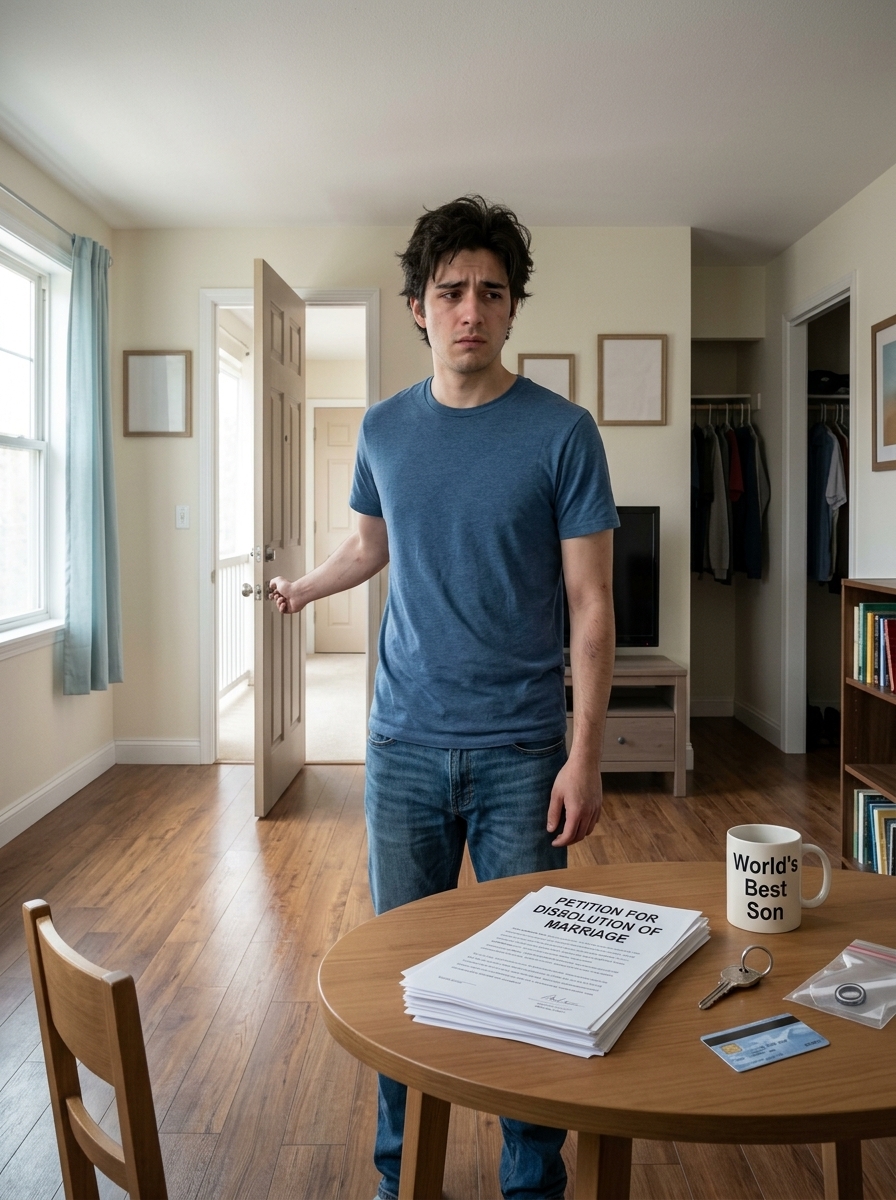
The first thing Derek Hale heard was his mother shouting. The second thing he heard was a cashier asking her to step aside. He stood in the rear bay of the Phoenix auto shop with a wrench still in one hand, sweat cooling beneath the collar of his work shirt, trying to understand why Marjorie sounded personally betrayed by a bank card declining at a grocery store.
“Derek, you need to come down here,” she snapped. “This card won’t work, and they’re treating me like I’ve done something wrong.”
An impact gun rattled from the next bay. Derek pressed a finger into his free ear. “What card?”
“Olivia’s.”
His hand stopped moving.
For several seconds, the noise of the shop seemed to pull away from him. He pictured his wife’s brown leather purse, the one Olivia usually kept zipped and tucked beside the kitchen counter when she came home. “Why do you have Olivia’s bank card?”
Marjorie answered as though he had asked why she was wearing shoes. “I needed groceries.”
“That isn’t what I asked.”
“She’s your wife. I’m your mother. We’re family, Derek. Must everything become a courtroom with that woman?”
That woman. His wife of three years. Derek closed his eyes. He should have heard the problem immediately. Instead, an older instinct rose first—the instinct to calm Marjorie before she made a scene, then deal with Olivia afterward.
“Did Olivia give you the card?”
A pause followed.
It was brief, but different from Marjorie’s usual pauses. There was calculation in it.
“She leaves her purse sitting around.”
Derek lowered the wrench onto the steel workbench.
Across the bay, Carlos, the shop manager, glanced over. Derek turned away. “Mom. Did she give you permission?”
“I don’t have time for this interrogation. There are people waiting behind me.”
“Then put the groceries back.”
“What?”
“You heard me.”
The silence on the line sharpened.
Marjorie’s voice dropped. “You’re choosing her side before you even know what happened.”
Derek almost laughed from sheer disbelief. Yet even then, some part of him wondered whether Olivia had deliberately blocked the card after realizing Marjorie had taken it. That thought came so naturally that he hated himself later for not noticing what it revealed.
“I’m going home,” he said. “Give the card back.”
“You need to come pay for these groceries.”
“No.”
He ended the call before she could answer.
For the next twelve minutes, Derek drove through Phoenix traffic rehearsing an argument with Olivia. He knew exactly what he would say. Why hadn’t she called him? Why had she let things get this far? Why couldn’t she and Marjorie settle one disagreement without putting him between them?
At a red light, he caught his reflection in the rearview mirror and saw the irritation on his own face.
Olivia had warned him about his mother for months.
Marjorie entered their apartment without knocking. She reorganized cupboards. She borrowed things and returned them days later—or not at all. Once, Olivia had found her in their bedroom opening a dresser drawer. Marjorie claimed she was looking for batteries.
Olivia had asked Derek to take back the spare key.
He had refused.
“She’s my mother,” he had said.
“And this is our home,” Olivia had answered.
That argument had ended like most of them: Derek promising to “talk to Mom,” Marjorie laughing when he tried, and Olivia becoming a little quieter afterward.
Lately, Olivia had stopped arguing altogether.
Derek had mistaken that for improvement.
He reached their apartment complex, parked badly, and took the stairs two at a time. His irritation had returned by the time he reached the landing. He unlocked the door and pushed inside already speaking.
“Olivia, what exactly were you trying to—”
He stopped.
The living room echoed.
For one confused second, Derek thought he had entered the wrong apartment.
The sofa was gone.
So was the coffee table, the floor lamp Olivia had bought during their first year of marriage, the framed photographs from the wall, and the cream-colored rug beneath the window.
Boxes stood in neat rows.
Two movers carried another carton through the open doorway.
Olivia stood at the kitchen island wearing dark trousers and a charcoal coat despite the afternoon heat. Her hair was pulled back. Her keys rested beside one hand.
She looked tired.
Not furious.
Not frightened.
Finished.
Derek’s anger collapsed so quickly it left him dizzy.
“What is this?”
Olivia studied him for a moment. “What did your mother tell you?”
“She said your card was declined.”
“And?”
“She said she was buying groceries.”
Olivia’s expression barely changed. “Did she tell you how she got my card?”
Derek opened his mouth.
Nothing came out.
Olivia nodded once, as though his silence confirmed something she had already expected.
“She took it from my purse this morning.”
“I told her to give it back.”
“How generous.”
“Olivia.”
“No.” Her voice remained quiet. “Don’t come in here and make today about the first decent sentence you finally managed to say to your mother.”
Derek looked at the boxes. Several bore Olivia’s handwriting: BOOKS. OFFICE. CLOTHES. KITCHEN.
His stomach tightened.
“Are you leaving?”
“I’ve left.”
The distinction landed harder than he expected.
“Where?”
“That isn’t something I’m giving you today.”
“Liv, come on.”
One of the movers appeared from the hallway carrying a sealed box. Olivia pointed toward the door. “That goes with the others.”
Derek waited until the man had passed. “Can we please talk without strangers walking through our apartment?”
Olivia looked around the nearly empty room.
“Our apartment?”
He flinched.
She reached beneath a folder on the island and slid a cashier’s check toward him.
Derek looked at the amount.
“What is this?”
“Your half of what was left in the joint savings.”
“What do you mean, what was left?”
“The joint account is closed.”
His eyes rose.
“The checking account too?”
“Yes.”
“That’s why the card declined?”
“The card declined because it was canceled.”
Derek stared at her.
Olivia continued before he could speak. “I opened an account in my name. Your money is yours. Mine is mine. Shared bills through the end of this month are covered. I made copies of everything.”
“This is insane.”
“No, Derek. What was insane was living with someone who thought his mother having unrestricted access to my home was normal.”
“She stole your card. I understand that now.”
Olivia gave him a long look.
“You understand one thing that happened today.”
“What else am I supposed to understand?”
Her eyes shifted toward a thick folder at the far end of the island.
Derek followed her gaze.
“What’s that?”
“Something I hoped I would never have to leave you.”
He reached toward it.
Olivia put her palm over the cover.
“Not yet.”
“Why?”
“Because I need you to answer one question first.”
Derek waited.
“When your mother called and told you my card had been declined, who were you angry with?”
He looked away.
Olivia’s voice softened, which somehow made answering harder.
“Derek.”
“You.”
She nodded.
“I was angry at you,” he admitted.
“Before asking why she had my card.”
“Yes.”
“Before asking whether I gave it to her.”
“Yes.”
“Before asking whether she stole it.”
He swallowed. “Yes.”
Olivia removed her hand from the folder.
“That is why I’m leaving.”
Derek stared at the folder but didn’t touch it.
“No. That can’t be the whole reason.”
“It isn’t.”
“Then tell me the rest.”
“I have. For months.”
He stepped closer. “Tell me again.”
Something finally broke through Olivia’s composure. Not anger. Pain.
“I shouldn’t have to keep finding new words for the same boundary because you dislike the ones I used before.”
Derek lowered his voice. “I can change the locks.”
“I asked you to do that in January.”
“I’ll do it today.”
“I asked you to take away her key after she entered our bedroom.”
“I know.”
“I asked you to stop giving her information about our finances.”
“She’s my mother. I didn’t think—”
“That sentence,” Olivia said. “That is our marriage.”
He went still.
She looked toward the movers.
“I asked you to believe me when I told you things were disappearing.”
“I thought you meant little things.”
“My mail, Derek.”
His forehead creased.
“My bank statements. Copies of tax documents. A folder from our filing cabinet.”
“You never told me about a folder.”
“I told you someone had been going through the cabinet.”
“You said things looked moved.”
“And you told me I was paranoid.”
The memory came back with uncomfortable clarity.
He had been watching television. Olivia had stood near the bedroom door holding a file. She had asked whether he had rearranged their financial records.
He had barely looked away from the screen.
“You said Mom probably needed something,” Olivia reminded him.
Derek felt heat rise along his neck.
“What was missing?”
“I don’t know yet.”
“Yet?”
Olivia glanced again at the folder.
Derek reached for it.
This time she let him.
Inside lay a set of divorce papers.
He stared at the first page.
The words seemed absurdly formal compared with the woman standing three feet away.
Petition.
Marriage.
Dissolution.
Property.
He looked up. “You filed?”
“I had them prepared.”
“That isn’t what I asked.”
“No. I haven’t filed them yet.”
Hope rushed into him so quickly he nearly mistook it for relief.
“Then don’t.”
Olivia’s face closed again.
“That wasn’t an invitation to persuade me.”
“What is it?”
“One final chance for the truth to matter more to you than protecting your mother.”
Derek looked down at the papers.
“What truth?”
Olivia reached into her coat pocket and placed a brass key beside the divorce documents.
He recognized it immediately.
His old apartment key.
The spare he had lost in January.
He picked it up.
“Where did you get this?”
“Your mother dropped it here this morning.”
Derek’s skin prickled.
“That doesn’t make sense.”
“It makes perfect sense.”
“I lost this months ago.”
“No. You thought you lost it.”
He remembered Marjorie visiting the afternoon the key disappeared. He remembered asking whether she had seen it.
She had teased him for always losing things.
Olivia had been standing in the kitchen.
Quiet.
Watching.
Derek looked at his wife. “You knew?”
“I suspected.”
“For how long?”
“Long enough to stop trusting guesses.”
“What does that mean?”
“It means I started documenting.”
A mover called from the hallway that the bedroom was clear.
Olivia answered, then picked up her handbag.
Derek moved instinctively between her and the door.
“Please don’t leave yet.”
“Move.”
“I just need ten minutes.”
“You had months.”
“Olivia—”
“Move, Derek.”
He stepped aside.
She passed him, then stopped at the doorway.
“Don’t call me tonight.”
He turned. “Why?”
“Because you’re going to want me to explain everything.”
“Yes.”
“And I’m done doing that.”
She looked toward the folder.
“The explanations are there.”
Derek glanced down.
Under the divorce papers were photographs he had not noticed before.
The first showed their kitchen.
The timestamp was January 8.
Marjorie stood beside Olivia’s purse.
Derek slowly lifted the photograph.
Another lay beneath it.
His mother was opening the purse.
The next showed her hand inside it.
Another showed her at the bedroom dresser.
Another showed her opening the filing cabinet.
Derek’s breathing changed.
“How did you get these?”
Olivia remained by the door.
“I installed a camera.”
“When?”
“After you told me nobody was coming into the apartment.”
He looked through more photographs.
Different dates.
Different clothes.
Same woman.
His mother.
Inside their home.
Again and again.
“How many times?”
Olivia’s eyes rested on him.
“Twelve that I documented.”
The number seemed impossible.
“Why didn’t you show me?”
“I tried showing you the first unauthorized charge.”
Derek remembered.
A restaurant receipt.
Marjorie had said she had accidentally used Olivia’s card.
He had laughed.
Olivia had not.
The memory now felt poisonous.
Derek looked toward the door.
“Where are you going?”
“Somewhere she doesn’t have a key.”
The movers descended the stairs.
Olivia followed them.
Derek stood in the doorway holding a photograph of his mother with her hand inside his wife’s purse.
He wanted to chase Olivia.
He wanted to call Marjorie.
He wanted the afternoon to reverse itself by thirty minutes, six months, perhaps three years.
Instead he looked down at the remaining photographs.
Twelve entries.
Twelve dates.
And beneath the last photograph was a handwritten note from Olivia.
There was only one instruction.
Start with January 8.
Derek closed the apartment door.
For the first time in his life, he locked his mother outside.
PART 2 – Twelve Secret Visits Forced Derek to Reconsider Every Warning He Had Dismissed About His Mother and His Marriage
Derek sat alone at the kitchen island while the apartment settled around him with unfamiliar sounds. Without the furniture, every passing car seemed louder. The refrigerator motor hummed against bare walls. Somewhere upstairs, a child ran across a floor. He had lived here for four years and had never realized how thin the building sounded when Olivia’s life was removed from it.
His phone vibrated.
MOM.
He turned it facedown.
The first photograph remained in front of him.
January 8.
Marjorie stood in the kitchen wearing the red cardigan Derek had bought her for Christmas. Olivia’s purse sat open on the counter. Marjorie’s hand was inside it.
The next photograph was timestamped twelve minutes later. Marjorie was entering the bedroom.
Then the dresser.
Then the filing cabinet.
Derek spread the pictures across the island.
January 21.
February 3.
February 11.
February 19.
March 2.
March 14.
More dates followed.
He counted twelve visits.
He had known about perhaps three.
His phone vibrated again.
Then again.
Derek finally answered.
“What did you do?”
Marjorie did not hesitate. “Excuse me?”
“You heard me.”
“I have been standing outside that grocery store for half an hour because your wife embarrassed me, and that is how you answer your mother?”
“Did you enter my apartment when nobody was home?”
Silence.
Derek stared at the January photograph.
“Mom?”
“I have a key.”
“Where did you get it?”
“You gave me one.”
“No, I didn’t.”
“Years ago.”
“That lock was replaced.”
Another pause.
Derek picked up the brass key Olivia had left.
“My spare disappeared in January.”
Marjorie’s tone sharpened. “Are you accusing me of something?”
“I’m asking where you got the key.”
“I’m your mother.”
“That isn’t an answer.”
“Since when do I need permission to enter my son’s home?”
Derek shut his eyes.
He had heard versions of that sentence his entire life. His bedroom had never really been private when he was young. His phone had been inspected. His mail had been opened. Marjorie called it concern.
He had carried her definition of family into his marriage and expected Olivia to live inside it.
“Did you take Olivia’s bank card?”
“I borrowed it.”
“Did she say you could?”
“Derek, stop using that tone with me.”
“Did she?”
Marjorie exhaled loudly. “She’s your wife.”
“That doesn’t make her purse yours.”
“I needed a few things.”
“You took her card without permission.”
“I intended to return it.”
“That’s stealing.”
“How dare you.”
His mother’s voice cracked across the line with such practiced outrage that six months earlier Derek would have apologized automatically.
He did not.
“How many times have you used it?”
“I don’t know.”
“How many?”
“Maybe once or twice.”
Derek looked at the bank statements beneath Olivia’s note.
Several transactions had been highlighted.
He read the dates.
“January eighth?”
Silence.
“January twenty-first?”
Marjorie said nothing.
“February third?”
“Where are you getting these dates?”
Derek’s pulse quickened.
“Why does that matter?”
“Because Olivia has been filling your head with nonsense.”
“No. Answer me.”
“You know what she’s always wanted.”
“What?”
“To turn you against me.”
Derek rubbed his forehead.
For years, that accusation had ended discussions. Any boundary became rejection. Any disagreement became betrayal. Any request for privacy became Olivia’s campaign against his family.
Today it sounded different.
Smaller.
Desperate.
“Did you go through our financial files?”
Marjorie stopped talking.
Derek’s hand tightened around the phone.
“Mom?”
“I have no idea what she told you.”
“I didn’t ask what she told me.”
“She lies.”
“Did you open my filing cabinet?”
“Why would I?”
“There are photographs.”
The silence that followed was longer.
Derek heard traffic on Marjorie’s end of the call.
Then her voice changed.
“What photographs?”
He looked at the image of her standing beside the cabinet.
“That’s what you’re worried about?”
“I’m not worried.”
“You sound worried.”
“You’re letting that woman manipulate you.”
“That woman is my wife.”
“She’s leaving you!”
The words struck exactly where Marjorie intended.
Derek looked at the divorce papers.
“Yes.”
“And you’re still defending her?”
Something inside him shifted.
“She left because I defended you.”
Marjorie scoffed. “She left because she’s selfish.”
Derek looked at the empty space where their wedding photograph had hung.
“No.”
“Derek—”
“No. You don’t get to tell me why she left.”
His mother went quiet.
Derek’s voice lowered.
“How long have you had my key?”
“I don’t remember.”
“Try.”
“Months, maybe.”
“Did you take it?”
“I found it.”
“Where?”
No answer.
“Mom.”
“You’re upset. We’ll talk when you calm down.”
She ended the call.
Derek remained seated with the phone against his ear until the dead line registered.
Then he put it down.
He opened Olivia’s first folder.
Inside were printed account statements. The unauthorized charges were not enormous. That almost made them worse.
Forty-seven dollars.
Eighty-two.
A little over a hundred.
Fifty-three.
Two hundred.
Groceries. Pharmacy purchases. Restaurant meals. Online orders.
Amounts small enough to dismiss individually.
Together they formed a pattern.
Derek remembered Marjorie arriving with shopping bags and saying she had picked up a few things. He remembered complimenting her for managing money despite constantly complaining that she was broke.
He had never asked how she paid.
The next page was a copy of an email Olivia had sent to herself after the January 8 transaction. She had documented the amount, location and time, then recorded Marjorie’s explanation that she had accidentally taken the wrong card.
Derek remembered the conversation.
Olivia had asked him whether he believed the explanation.
He had said yes.
“Mom gets confused sometimes.”
Olivia had stared at him.
“She took a card out of my purse, Derek.”
“She probably thought it was hers.”
“They don’t look alike.”
“Do we really need a fight over fifty bucks?”
Derek closed his eyes.
He had said that.
He could hear himself saying it.
The next documents recorded more transactions.
Then came printed messages between Olivia and Marjorie.
Olivia had asked directly for the card back.
Marjorie had refused until she finished using it.
Derek read that exchange twice.
There was no misunderstanding.
No confusion.
No accidental card swap.
His mother had known exactly what she was doing.
A photograph showed Olivia’s purse open on the counter.
Another showed Marjorie holding the card.
A note beside the picture said Olivia had realized at that point the purchases were not the real problem.
Derek frowned.
“What does that mean?”
He turned the page.
His own credit report stared back at him.
At first, nothing seemed remarkable.
Then he noticed the inquiries.
A personal loan.
A retail credit application.
A collection account he did not recognize.
Derek straightened.
He read the page again.
The collection balance was not enormous, but it was his name attached to it.
He had never opened the account.
He checked the next report.
Olivia’s.
Clean.
Then came an application from a financial institution.
The applicant was Marjorie Hale.
Derek scanned the information.
Her address.
Her date of birth.
Then his information appeared.
Employment.
Income.
Home address.
Marital status.
Olivia’s income.
Derek’s mouth went dry.
“How did you get this?”
He turned another page.
A photocopied signature appeared near the bottom.
His signature.
Except it was not.
Someone had reproduced the shape well enough to fool a stranger, but Derek knew the way his own hand moved. The D was too narrow. The final stroke rose instead of falling.
He whispered into the empty apartment, “I didn’t sign this.”
He grabbed his phone and called Olivia.
Voicemail.
He called again.
Nothing.
Then he remembered her instruction.
Do not call until he had finished.
Derek set the phone down.
The next folder was yellow.
One word had been written across the tab.
ESCALATION.
Inside was an incident number from the Phoenix police.
March 17.
No charges.
No arrest.
Just documentation.
The next sheet contained information about protective orders.
Then correspondence from an attorney.
Derek read the name.
Rebecca Collins.
It stirred a memory.
A woman had visited the auto shop months earlier asking for him. Marjorie happened to be there that afternoon.
Before Derek could speak to the woman, his mother had intercepted him.
“She’s trouble,” Marjorie had said.
Derek had been busy.
He let the woman leave.
He now stared at Rebecca’s name on the legal letter.
His phone buzzed again.
This time the caller was Carlos.
“Boss?”
“What happened?”
“Your wife called the front desk.”
Derek stood.
“When?”
“Maybe twenty minutes ago.”
“What did she want?”
“She asked whether you were there.”
“What did you tell her?”
“That you left.”
Carlos hesitated.
“There’s something else.”
Derek gripped the island.
“What?”
“Someone got into your office.”
His heartbeat stumbled.
“What do you mean?”
“Back door was open. Your office door too.”
“Was anything taken?”
“Not that I can tell.”
“Call the police.”
“Already did.”
Derek looked down at the papers spread across the counter.
“Carlos, don’t touch anything.”
“I won’t.”
“Keep everyone out.”
He ended the call.
For several seconds he did not move.
Then he noticed an envelope partly hidden beneath the yellow folder.
His name was written across it in Olivia’s handwriting.
He opened it.
The note inside was brief.
If the evidence leads you somewhere unexpected, do not confront your mother alone.
Derek read the sentence again.
Not if you believe me.
Not when you understand.
When the evidence leads somewhere unexpected.
As if Olivia already knew where it would lead.
He turned the note over.
There was another sentence.
Rebecca knows what happened before we got married.
Derek stared at the name.
His phone rang.
Unknown number.
He answered immediately.
“Derek Hale?”
A woman’s voice.
“Yes.”
“My name is Rebecca Collins.”
His gaze dropped to Olivia’s note.
“Where is my wife?”
“She’s safe.”
“Let me speak to her.”
“I can’t do that.”
“Then tell me what is happening.”
Rebecca was silent for a moment.
“Have you read the January documents?”
“Yes.”
“The credit report?”
“Yes.”
“The application with your signature?”
Derek’s stomach tightened.
“How do you know what’s in this apartment?”
“Olivia showed me copies.”
“Did my mother forge my name?”
“I think you should finish looking at the evidence before we discuss conclusions.”
“I’m finished being managed by people who know more about my life than I do.”
Rebecca’s voice stayed level.
“Then start asking why your wife had to investigate your life without your help.”
The words stung.
Derek paced toward the empty living room.
“My office was just broken into.”
Rebecca went silent.
“Did you hear me?”
“Yes.”
“Do you know anything about that?”
“No. Call the police.”
“They’re already coming.”
“Good.”
“Rebecca.”
“Yes?”
“What did Olivia find?”
Another pause.
“When you understand the answer, the stolen card will seem like the least important thing your mother did.”
Derek stopped pacing.
“What does that mean?”
“It means your mother wasn’t taking money because she needed groceries.”
“What was she doing?”
“Testing access.”
Derek’s fingers went cold.
“Access to what?”
“Your household. Your documents. Your accounts. Your signature.”
He looked toward the photographs.
“What does she want?”
“I’m not discussing the rest over the phone.”
“Then meet me.”
“Not yet.”
“Why?”
“Because Olivia asked me not to.”
Derek nearly shouted.
“Olivia is leaving me!”
“Yes.”
Rebecca’s calm answer silenced him.
“And despite that,” she continued, “she is still trying to protect you.”
The call ended.
Derek stared at the phone.
He had spent months believing Olivia wanted to separate him from his mother.
Now Olivia had separated herself from Derek—and apparently left behind evidence designed to protect him anyway.
He returned to the kitchen.
Beneath the yellow folder lay one final item.
A small memory card taped to a sheet of paper.
Olivia had written a date beside it.
March 15.
Derek knew the date.
It was the day after the most recent photographed theft.
Underneath, Olivia had added five words.
Watch what happens after she leaves.
Derek looked toward the smoke detector in the hallway.
For the first time, he realized it was not the same model as the others.
He pulled over a chair.
Climbed onto it.
Twisted the detector loose.
A second memory card dropped into his palm.
Derek climbed down slowly.
His mother had not merely been entering their apartment.
Olivia had been waiting for her to do it.
And whatever Olivia had recorded was important enough that she had hidden a backup where Marjorie would never think to look.
PART 3 – The Hidden Camera Showed Derek That the Stolen Card Was Only the Doorway Into a Much Larger Betrayal
Derek found an old laptop in the bedroom closet, one of the few things Olivia had left behind. He carried it to the kitchen, inserted the memory card, and waited while a directory filled the screen.
Dozens of video files appeared.
Every filename was a date.
January 8 came first.
He clicked it.
The camera angle looked down the hallway toward the kitchen. Marjorie entered using a key. She did not knock. She did not call Derek or Olivia.
She closed the door carefully behind her and stood still.
Listening.
Derek leaned closer.
His mother walked directly to Olivia’s purse.
There was no wandering around, no moment of confusion.
She opened it.
Removed the bank card.
Slipped it into her pocket.
Then she walked into the bedroom.
Derek watched her open the filing cabinet.
She removed a folder containing his tax documents, placed several pages on the dresser and photographed them with her phone.
She returned everything exactly where she had found it.
Then she left.
Derek replayed the sequence.
The efficiency bothered him almost as much as the theft.
This was practiced behavior.
He opened February 3.
Same pattern.
February 19.
Again.
March 2.
Again.
Each visit involved money, documents or both.
Then he reached March 14.
Marjorie entered and removed Olivia’s card.
Before leaving, however, she stopped.
Her face turned toward the camera.
Derek froze.
She looked directly into the lens.
And smiled.
He replayed the moment.
The smile remained unmistakable.
She knew.
His mother knew Olivia had installed a camera.
Marjorie walked toward the door, then turned and said something.
Derek raised the volume.
The recording was faint but understandable.
She warned Olivia that provoking her would have consequences.
Derek’s hands rested motionless on the keyboard.
This was no longer a dispute about boundaries.
Marjorie had known she was being documented and continued anyway.
He opened the next file.
March 15.
His mother entered with a man Derek had never seen.
The stranger wore a pale shirt and carried a slim briefcase.
They sat at Derek’s dining table.
Marjorie removed a folder.
The man examined copies of Derek’s tax records, employment information and bank statements.
Then Olivia’s records appeared.
Derek felt a chill despite the warm apartment.
The man pointed toward one page.
Marjorie leaned forward.
The microphone caught only fragments until she spoke more loudly.
Once Derek signed, she said, everything would come back to her.
The man asked about Olivia.
Marjorie dismissed the concern.
Derek paused the recording.
“Come back to you?”
He stared at his mother’s frozen face.
What belonged to her?
He owned no property with Marjorie.
His father’s house had been sold years earlier.
At least, that was what he had been told.
Derek opened March 16.
Same man.
This time they were arguing.
The stranger said Derek had not signed anything.
Marjorie insisted he would.
Why?
Because he was her son.
The certainty in her voice disturbed Derek more than shouting would have.
His mother had built her plan around his obedience.
And until today, she had been right.
The stranger mentioned Olivia discovering something.
Marjorie said she would not.
The video ended.
Derek stared at his reflection in the black screen.
Then he noticed one final file.
WATCH LAST.
He opened it.
Olivia appeared at the dining table.
Her face looked exhausted.
She stared into the camera as though speaking to a future version of Derek she was not certain would ever exist.
She explained that the stolen card had never been the central problem. Marjorie had been trying for months to persuade Derek to refinance property connected to the family.
Derek remembered those conversations.
Marjorie had complained about debts.
She said refinancing would give everyone breathing room.
Derek had nearly agreed.
Olivia had objected.
He had called her selfish.
The memory made him grip the edge of the table.
Olivia continued.
The refinancing was not intended merely to pay Marjorie’s debts.
It was intended to cover liabilities she had already created using Derek’s identity.
Derek stopped the video.
He sat completely still.
Then played it again.
Olivia had discovered suspicious activity in February.
Copies of Derek’s identification and tax information had been used.
Applications had appeared under his name.
His signature had been imitated.
When Olivia questioned Marjorie, Marjorie denied everything.
When Olivia tried telling Derek, he defended his mother.
Olivia’s recorded voice trembled only once.
She said she eventually understood that proving Marjorie wrong was not enough. She would also have to prove the truth to Derek.
So she began documenting.
Derek covered his mouth.
Olivia had not been secretly preparing to attack his mother.
She had been secretly preparing for the day her husband might finally listen.
His phone rang.
Marjorie.
He answered.
“Where are you?”
“At home.”
“You need to come get me.”
“No.”
“Derek.”
“Who is the man?”
Silence.
“The man you brought into my apartment.”
Marjorie’s breathing changed.
“What are you talking about?”
“March fifteenth.”
Nothing.
“You sat at my dining table with him.”
“You’re confused.”
“I watched the video.”
A small sound came through the phone.
Not surprise.
Fear.
Derek felt his own fear deepen.
“Who is he?”
“Someone helping me with paperwork.”
“What paperwork?”
“My finances.”
“He had my tax records.”
“You gave me those.”
“No.”
“You’ve given me documents for years.”
“Not permission to use them.”
Marjorie’s tone hardened.
“You need to stop listening to Olivia.”
Derek looked at the laptop.
“She was right.”
“No, she wasn’t.”
“She was right about the card.”
“That was nothing.”
“Right about the key.”
“Derek—”
“Right about you entering our apartment.”
“You’re my son.”
“Right about the documents.”
Marjorie said nothing.
Derek lowered his voice.
“What did you do in my name?”
“I did nothing that harmed you.”
“That isn’t what I asked.”
“I was trying to protect this family.”
“From what?”
A long silence.
Then Marjorie said, “From losing what your father built.”
Derek stood.
“What does Dad have to do with this?”
Marjorie immediately backtracked.
“Nothing.”
“You just mentioned him.”
“I meant the family generally.”
“No. You said what Dad built.”
“Derek, you’re upset.”
“What did he build?”
“Stop.”
“What are you trying to get back?”
Marjorie’s voice changed.
For the first time that day, she sounded frightened.
“Do not go through old family records.”
Derek’s heart hammered.
“Why?”
“Because you don’t understand what you’re looking at.”
“Then explain it.”
“I said stop.”
She ended the call.
Derek remained standing.
His father, Thomas Hale, had died eight years earlier.
Heart attack.
Sudden.
Marjorie rarely discussed it.
Derek had accepted that silence as grief.
Now he wondered whether silence had served another purpose.
His phone rang again.
Rebecca.
He answered.
“I watched the videos.”
“Then you understand why Olivia left.”
“I understand why she stopped trusting me.”
“That’s a beginning.”
“Who was the man with my mother?”
“We’re still identifying exactly what role he played.”
“Olivia knows?”
“She knows enough.”
“Where is she?”
“Safe.”
Derek clenched his jaw. “Stop saying that.”
Rebecca waited.
He exhaled.
“Sorry.”
“You should be apologizing to someone else.”
“I know.”
He looked toward the laptop.
“My mother mentioned my father.”
Rebecca went quiet.
“Rebecca?”
“What exactly did she say?”
“That she was protecting what he built.”
Another silence.
“Do not confront Marjorie tonight.”
“Why does everyone keep telling me that?”
“Because your wife has been preparing to leave for weeks, and it wasn’t only because she wanted a divorce.”
Derek’s chest tightened.
“Was Olivia threatened?”
“I’m not discussing that over the phone.”
“Was she?”
“Yes.”
The answer stripped away whatever anger remained.
“By my mother?”
“Olivia believes so.”
“Believes?”
“We document facts, Derek. We don’t turn suspicion into fact because it feels obvious.”
He thought of Olivia.
That sounded exactly like something she would insist upon.
Rebecca continued.
“Go to your truck.”
“What?”
“Your truck.”
“Why?”
“Olivia left something there.”
Derek hurried downstairs.
The evening heat hit him as he crossed the parking lot.
His truck was locked.
Nothing looked disturbed.
Then he saw an envelope on the passenger seat.
He unlocked the door.
His name was written on the front.
Inside was a photograph.
Olivia stood outside a motel beside Rebecca.
On the back was a note explaining that this was where Olivia had learned the truth about Marjorie.
Derek studied Rebecca’s face.
Then recognition came.
“You came to my shop.”
Rebecca was still on the phone.
“Yes.”
“Six months ago.”
“Yes.”
“My mother told me you were trouble.”
“I know.”
“What were you trying to tell me?”
“That someone had used your information in a financial matter connected to your mother.”
Derek sat behind the steering wheel.
“And I ignored you.”
“You never spoke to me.”
“Because she told me not to.”
“I know.”
His shame felt almost physical.
Rebecca continued. “Go back upstairs.”
“There’s more?”
“One document Olivia didn’t leave on the table.”
“What document?”
“You’ll recognize it.”
The call ended.
Derek returned to the apartment.
He searched drawers, cabinets and the bedroom.
Nothing.
Then he remembered January 8.
The filing cabinet.
He opened the bottom drawer and removed the remaining folders.
Behind them was an envelope taped against the metal back panel.
Inside lay a property record.
Derek read the address.
His father’s old house.
The house Marjorie had told him was sold after Thomas died.
The record showed something different.
Ownership had transferred through a trust.
Derek’s name appeared.
So did Marjorie’s.
He read further.
A recent loan application had been submitted against the property.
His signature appeared at the bottom.
Forged.
Derek’s phone buzzed.
A text from Olivia.
Do not take that document to your mother.
He typed immediately.
How did you know I found it?
The reply came after several seconds.
Because that is the document she has been trying to make disappear.
Derek stared at the screen.
Another message arrived.
And because it proves your father left you something your mother never told you existed.
PART 4 – A Break-In at Derek’s Auto Shop Revealed Forged Loans, Surveillance, and a Connection to His Father’s Unsettling Past
Derek was still reading the property record when Carlos called again.
“The police are here.”
“I’m coming.”
“You might want to hurry.”
“Why?”
Carlos lowered his voice. “Whoever entered your office left something on your desk.”
Derek looked at the forged signature on the property document.
“What?”
“A folder.”
He drove to the auto shop through late-afternoon traffic without remembering a single intersection. The facts in his mind refused to arrange themselves into anything sensible.
His mother had stolen Olivia’s bank card.
She had repeatedly entered their apartment.
She had copied financial documents.
Someone had used Derek’s identity.
A loan had been attempted against property he did not know he owned.
And now his workplace had been entered.
Two police cruisers sat outside when he arrived.
Carlos waited near the entrance.
“You okay?” he asked.
“No.”
Carlos nodded. “Fair answer.”
“Did anybody touch the office?”
“No.”
“Security footage?”
“We have it.”
“Did you see who went in?”
“A man.”
Derek stopped.
“What did he look like?”
“Hat. Mask. Dark clothes.”
“Which entrance?”
“Back.”
“Did he search anywhere else?”
Carlos shook his head. “That’s the strange part. He went straight to your office.”
Derek’s stomach tightened.
A uniformed officer met them inside and asked several questions before allowing Derek near the room.
The office looked normal.
Computer untouched.
Tools untouched.
Cabinets closed.
Nothing obviously stolen.
A black folder sat precisely in the center of his desk.
DEREK HALE was printed across the front.
The officer photographed it before opening it.
Inside were copies of Derek’s driver’s license, Social Security information, tax returns, employment records and bank details.
His signature appeared repeatedly.
Then came documents Derek had never seen.
Loan applications.
Credit forms.
A refinancing request.
The officer handed Derek gloves.
Derek picked up the first application.
Everything about him was correct.
Employer.
Income.
Address.
The signature was wrong.
“I never signed this.”
The officer looked at him. “Do you know who submitted it?”
Derek scanned the page.
An intermediary company appeared near the bottom.
He did not recognize the name.
The next application used the same company.
And the next.
“Someone has been using my identity.”
“That’s something we’ll need to investigate.”
“My mother had copies of these records.”
The officer’s expression sharpened. “How do you know?”
Derek told him about the apartment footage.
The stolen card.
The hidden documents.
The officer listened without interrupting.
“Your wife documented this?”
“Yes.”
“Where is she?”
“I don’t know.”
“Can you contact her?”
“Her phone goes to voicemail.”
“Do you believe she may be in danger?”
Derek thought about Rebecca’s warning.
He thought about Olivia leaving quietly instead of announcing where she was going.
“Yes.”
The officer’s posture changed.
“Why?”
Before Derek could answer, the front door opened.
Rebecca Collins entered.
Derek recognized her immediately.
She approached the officers first, showed identification and explained that she represented Olivia.
“You know where she is?” Derek asked.
“Yes.”
“Tell me.”
“No.”
“Rebecca.”
“She’s safe.”
Derek gave a short, humorless laugh. “That word is becoming meaningless.”
Rebecca looked at him carefully.
“Would you have believed her yesterday?”
He said nothing.
“Last week?”
His eyes dropped.
“Last month?”
“No.”
Rebecca nodded. “Then you understand why she isn’t ready to give you access to her.”
Derek looked toward the black folder.
“She knew this would happen?”
“She knew something was escalating.”
“Why didn’t she tell me?”
“She did.”
“No. She told me my mother was taking things.”
“She told you Marjorie had access to financial information.”
Derek remained silent.
“She showed you suspicious charges.”
He remembered.
“She asked you to change passwords.”
He remembered that too.
“And you told her she was imagining a conspiracy.”
Derek closed his eyes.
“I was wrong.”
“Yes.”
There was no cruelty in Rebecca’s answer.
That made it worse.
She stepped toward the folder.
“There’s something else.”
She turned several pages.
Photographs appeared.
Derek frowned.
The first showed him leaving the auto shop.
Another showed him entering a restaurant.
Another showed his truck outside the apartment.
Another showed him at a grocery store.
“Who took these?”
“We don’t know yet.”
He flipped faster.
There were dozens.
Someone had been following him.
One photograph showed Derek crossing a parking lot while a man stood far behind him.
Derek leaned closer.
The man looked familiar.
Then he realized why.
“That’s him.”
Rebecca nodded.
“The man from the apartment video.”
“Yes.”
“But I’ve never met him.”
“We know.”
“Then why was he following me?”
“That’s what Olivia was trying to determine.”
Derek stared at the photograph.
“How long?”
“At least two months.”
The next image showed Olivia outside a bank arguing with Marjorie.
Derek recognized the date.
He had been at work.
That evening Marjorie had told him Olivia had humiliated her in public.
Derek had come home angry.
He had demanded that Olivia apologize.
Now he looked at the photograph and wondered what the argument had actually been about.
Rebecca produced a bank document.
“Your mother attempted to access an account associated with the property your father left.”
Derek looked at her sharply.
“You know about the house?”
“Olivia found the trust.”
“My mother told me the house was sold.”
“It wasn’t.”
“Why is my name on it?”
“Because your father placed an interest in trust for you.”
Derek felt the floor shift beneath him.
“Why didn’t I know?”
“That is one of the questions Olivia has been investigating.”
The officer beside them took notes.
Rebecca continued.
“Marjorie appears to have been trying to borrow against that property.”
“With my forged signature.”
“Yes.”
“Why?”
“We don’t know the full reason.”
Derek looked at the documents.
“What else?”
Rebecca hesitated.
Then she removed another form.
Life Insurance Beneficiary Change Request.
Derek read it.
His face went cold.
“What is this?”
“Someone attempted to change the beneficiary of your work policy.”
“To whom?”
He looked down.
Marjorie Hale.
His mother.
For several seconds nobody spoke.
Derek remembered bringing the insurance paperwork home.
He had left it on the dining table while Marjorie was visiting.
He had gone to shower.
When he returned, the papers had been neatly stacked.
He had thought nothing of it.
“She knew about the policy.”
Rebecca nodded.
“Because I left the papers in front of her.”
“Yes.”
Derek sat down.
He rubbed both hands over his face.
He had not forged anything.
He had not stolen Olivia’s card.
He had not submitted false applications.
But he had repeatedly given Marjorie access and repeatedly dismissed Olivia when she warned him.
He had opened every door his mother needed.
Rebecca closed the folder.
“Olivia wants to meet you tomorrow.”
Derek looked up immediately.
“Where?”
“I’ll send the location in the morning.”
“Why not now?”
“She wants you alone.”
“I’ll come alone.”
“And she doesn’t want you bringing any of these documents.”
“Fine.”
Rebecca turned away.
“Does she still love me?”
She stopped.
Derek regretted the question the moment it left his mouth.
Rebecca looked back.
“That isn’t the useful question.”
“What is?”
“Whether you can become someone she has a reason to trust.”
Then she left.
Derek remained in his office while officers continued examining the folder.
Carlos stood nearby without speaking.
Eventually Derek looked at the small model car on his shelf.
Olivia had given it to him when he became part-owner of the shop.
He remembered her laughing as she placed it on the desk, telling him every mechanic deserved one vehicle that never needed repairing.
His phone buzzed.
Olivia.
His heart jumped.
The message contained one sentence.
Tomorrow I’ll tell you what your mother did the night your father died.
Derek read it twice.
Thomas Hale had died eight years earlier.
Heart attack.
That was the story.
He typed.
What does Dad have to do with any of this?
No response.
Then another message arrived.
Ask her why the place where he died changed every time she told the story.
Derek stared at the words.
Memories surfaced reluctantly.
Marjorie saying Thomas had collapsed in the kitchen.
Another time, the garage.
Years later, during a conversation with relatives, she had said he became ill while driving.
Derek had noticed the inconsistencies without ever gathering them together.
His father was dead.
He had believed details no longer mattered.
Now they mattered.
He stood and reached for his jacket.
Carlos stepped in front of him.
“Where are you going?”
“To my mother’s.”
“Is that smart?”
“I need answers.”
“Your wife spent months collecting evidence instead of confronting her.”
Derek stopped.
Carlos rarely interfered in his personal life.
That made the warning harder to dismiss.
Before Derek could decide, his phone rang.
Unknown number.
He answered.
“Mr. Hale?”
A man.
“Yes.”
“You don’t know me.”
Derek looked toward the black folder.
“Then why are you calling?”
“Because you need to stop asking questions.”
His pulse quickened.
“Were you in my office?”
The caller ignored him.
“Stop looking into your mother’s finances.”
“Who are you?”
“You’ve already seen more than you were supposed to.”
“Did my mother send you?”
A quiet laugh.
Then the man said something that made Derek’s blood turn cold.
“Your wife tried to protect you.”
Derek gripped the phone.
“What did you say?”
“She failed.”
The call ended.
A message arrived immediately.
A photograph loaded on the screen.
Olivia sat inside a parked car.
The picture had been taken from across the street.
Someone was watching her.
Beneath the image was a warning telling Olivia to stop investigating.
Derek called Rebecca.
No answer.
He called Olivia.
Voicemail.
Again.
Nothing.
He ran toward his truck.
The divorce papers no longer mattered.
The argument about the card no longer mattered.
Someone had followed Olivia.
Someone had followed Derek.
And someone had just demonstrated that they knew exactly where Olivia was.
His phone buzzed while he was starting the engine.
Another message.
This one came from Olivia.
I’m okay. Do not come looking for me. Go to the police.
Derek stared at it.
Then typed.
Someone sent me a picture of you.
Three dots appeared.
Disappeared.
Returned.
Olivia finally replied.
I know.
Derek’s hands went cold.
How?
The answer took almost a minute.
Because they have been following me since I confronted your mother at the bank.
Derek called immediately.
This time Olivia answered.
Neither spoke at first.
He could hear her breathing.
“Where are you?” he asked.
“I’m safe.”
“Stop saying that. Somebody is watching you.”
“I know.”
“Then tell me where you are.”
“No.”
“Olivia, please.”
“If you come here, you could lead them directly to me.”
He closed his eyes.
“What do you want me to do?”
“Go back inside.”
“What?”
“Give the photograph and the number to the police.”
“Okay.”
“And Derek?”
“Yes?”
“Do not call your mother.”
His jaw tightened.
“Why?”
“Because if she realizes exactly how much we know, she may destroy what’s left.”
“What’s left of what?”
Silence.
Then Olivia said, “Your father’s records.”
Derek stopped breathing.
“What records?”
“I’ll show you tomorrow.”
“Tell me now.”
“I can’t explain this safely over the phone.”
“Did my mother do something to Dad?”
Olivia was quiet long enough to frighten him.
“I don’t know.”
“But you suspect something.”
“I found evidence that the official story is incomplete.”
“What evidence?”
“A recording.”
Derek leaned back against the seat.
“What recording?”
“One your father made.”
His eyes closed.
His father’s voice had existed only in memory for eight years.
“Olivia.”
“I have to go.”
“Wait.”
“Tomorrow.”
The call ended.
Across Phoenix, Olivia sat inside her car with the doors locked.
A dark SUV remained parked across the lot.
It had been there long enough that she had stopped pretending its presence might be coincidence.
Her phone lit again.
This message came from Marjorie.
Olivia read it without changing expression.
A second message followed.
The threat was clearer this time.
Olivia looked into the rearview mirror.
The SUV remained dark.
She reached beneath the driver’s seat and pulled out a small digital recorder.
For months she had collected statements, documents, photographs and video because she had learned that accusations disappeared whenever Marjorie could turn them into family drama.
Evidence did not disappear so easily.
Olivia pressed RECORD.
A red light appeared.
Then she started her engine.
The SUV’s headlights came on.
Olivia watched them in the mirror.
“Good,” she whispered.
If they wanted to follow her, she would choose the destination.
She pulled onto the street.
The SUV followed.
Olivia drove past the turn that would have taken her toward the place where she was staying.
She continued east.
At the next intersection, the SUV remained behind her.
At the one after that, it was still there.
She placed her phone in its cradle and activated hands-free calling.
“Phoenix Police,” she said when the line connected. “I need to report that I’m being followed, and I believe it’s connected to an active identity-fraud investigation.”
The dispatcher asked for her location.
Olivia gave it.
Then she added something she had not yet told Derek.
“I also have evidence connected to a death that occurred eight years ago.”
The dispatcher’s tone changed.
Olivia glanced at the SUV.
Her hands remained steady on the wheel.
“What kind of evidence?”
“A recording made by the deceased before he died.”
“And you believe the people following you know you have it?”
Olivia watched the headlights in her mirror.
“Yes.”
“How certain are you?”
“Certain enough that my mother-in-law has spent months trying to find it.”
Olivia turned toward the nearest police station.
The SUV followed.
She reached into her handbag at the next red light and touched a small flash drive hidden inside an inner pocket.
Thomas Hale’s voice was stored on it.
So were photographs of documents Marjorie had tried to destroy.
Olivia had kept that evidence from Rebecca.
From the police.
Even from Derek.
Not because she wanted leverage.
Because she had not yet known whom she could trust.
The light changed.
Olivia accelerated.
Behind her, the SUV did the same.
Ahead, the illuminated sign of the police station came into view.
Olivia tightened her hands on the steering wheel.
Tomorrow, Derek expected an explanation about stolen money, forged signatures and a house his father had secretly left him.
He had no idea that the recording Olivia carried began with Thomas Hale saying his wife’s name.
And then explaining why, if anything happened to him, Derek should never sign a financial document Marjorie put in front of him.
PART 5 – Olivia Reached the Police Station With Thomas Hale’s Recording, but the Voice on It Changed Derek’s Understanding of His Father
The police station appeared almost ordinary from the road, a low concrete building under white security lights, but Olivia had never been so relieved to see anything in her life.
She turned into the lot without signaling.
The dark SUV followed her halfway through the entrance.
Then it slowed.
Olivia watched through the rearview mirror as it stopped near the curb.
For one suspended second, she thought the driver might continue after her.
Instead, the SUV reversed.
Its headlights swung across the pavement, then vanished into traffic.
Olivia remained behind the wheel.
The dispatcher was still speaking through her phone.
“Ma’am, are you inside the station lot?”
“Yes.”
“Do not leave your vehicle until an officer approaches.”
Olivia looked at the flash drive resting inside her handbag.
Her fingers were trembling now.
Not while she had been followed.
Not while the SUV sat behind her at red lights.
Only now.
The body sometimes chose strange moments to admit fear.
Two uniformed officers emerged from the station.
One approached her driver’s side.
Olivia lowered the window only after seeing his badge.
“I’m Olivia Hale.”
“We have your call.”
He looked beyond her toward the street.
“The vehicle left?”
“Yes.”
“Did you get the plate?”
“Partial.”
She had already written it down.
Three numbers.
Two letters.
Arizona plate.
Dark SUV.
Possibly a Chevrolet Tahoe.
She handed the officer the note.
He asked whether she had been threatened.
Olivia unlocked her phone and showed him Marjorie’s messages.
The officer read them carefully.
The earlier messages were vague enough to disguise themselves as family conflict.
You are destroying Derek’s life.
You don’t understand what you found.
Bring back what belongs to this family.
The final message was not vague.
If you hand those recordings to anyone, you will regret what happens next.
The officer looked at Olivia.
“Who sent this?”
“My mother-in-law.”
“You believe she knows what recordings you have?”
“Yes.”
“Does she know where you’re staying?”
“I don’t think so.”
“You don’t think so?”
Olivia glanced toward the road.
“I thought she didn’t know where I was tonight either.”
The officer opened her door.
“Let’s go inside.”
Olivia stepped from the car with her handbag pressed against her side.
She had made copies.
That was the only reason she could still breathe steadily.
The original files were not in one place.
Rebecca had one encrypted copy.
Another was inside a safe-deposit box.
A third had been uploaded somewhere Marjorie would never think to search.
Olivia had learned caution slowly.
Then all at once.
Inside the station, an officer named Lieutenant Harris brought her into a small interview room.
The room smelled faintly of coffee and disinfectant.
A camera sat in one corner.
A yellow legal pad rested on the table.
Harris listened while Olivia described the SUV, the threatening texts and the earlier identity-fraud documentation.
He did not interrupt until she mentioned Thomas Hale.
“Your father-in-law died eight years ago?”
“Yes.”
“Cause of death?”
“Heart attack, according to the family.”
“According to the death certificate?”
“I haven’t seen the original.”
Harris’s pen stopped.
“Why not?”
“Because the copy Derek was given appears to have information inconsistent with other records.”
“What kind of inconsistency?”
“Location.”
Olivia opened her handbag.
She removed the flash drive.
Harris looked at it.
“What’s on there?”
“A recording Thomas Hale made before his death.”
“How did you get it?”
“From a storage box connected to the old Hale property.”
“Did you have permission to access that box?”
“Yes.”
“From whom?”
“Derek.”
That answer was technically accurate.
Months earlier, Derek had signed a general authorization allowing Olivia to handle household financial matters while he was overwhelmed at work.
He had forgotten about it.
Olivia had not.
Harris leaned back.
“What does the recording say?”
Olivia looked at the flash drive.
“You should hear it.”
Across town, Derek sat inside the auto shop office with Officer Martinez while Carlos paced outside the doorway.
The black folder remained on the desk.
Photographs.
Forgery.
Insurance forms.
Copies of Derek’s identification.
Every page seemed to accuse him of the same thing: not seeing what had been directly in front of him.
His phone was silent.
Olivia had stopped responding.
Rebecca had sent one message.
Stay with the police.
So Derek stayed.
He hated it.
Every instinct told him to drive to Marjorie’s house and demand answers.
But another instinct, newer and far less comfortable, told him Olivia had been right every time he ignored her.
He did not trust himself to know which impulse was intelligent anymore.
Carlos stood in the doorway.
“You want coffee?”
“No.”
“You sure?”
“No.”
Carlos returned several minutes later and placed a cup on the desk anyway.
Derek looked at it.
“Thanks.”
Carlos pulled up a chair.
“You know, I met your dad once.”
Derek raised his head.
“What?”
“At the old shop.”
“My dad never came here.”
“Not this location.”
Carlos nodded toward the garage.
“The old one on McDowell.”
Derek remembered.
Before the current shop expanded, the business had operated out of a smaller building.
“My father hated mechanics.”
Carlos smiled faintly.
“He hated paying mechanics.”
That sounded like Thomas.
Derek almost smiled.
“What did he want?”
“You.”
Derek frowned.
Carlos rubbed his palms against his jeans.
“This was maybe nine years ago. You’d just started working there.”
“I remember.”
“Your dad came in asking how you were doing.”
“He never told me that.”
“He didn’t want you knowing.”
Derek stared at him.
“Why?”
“I figured he was being a dad. Checking whether his son was screwing up.”
“That would’ve been like him.”
Carlos hesitated.
“There was something else.”
Derek’s attention sharpened.
“What?”
“He asked whether anybody ever came around asking you to sign financial papers.”
Derek went still.
Carlos noticed.
“Okay. That look tells me it matters.”
“What exactly did he say?”
“Something like, if anybody brought paperwork into the shop, I should make sure you actually read it.”
“Anybody?”
“He mentioned your mother.”
Derek’s stomach tightened.
“You never told me.”
Carlos spread his hands.
“It sounded like family stuff.”
The same phrase.
Family stuff.
The phrase people used when they sensed something wrong but did not want to become involved.
Derek looked down at the forged loan application.
“What else?”
“He said if he ever wasn’t around, you needed to be careful.”
Derek leaned back slowly.
“Careful of Mom?”
Carlos’s face changed.
“I’m not putting words in a dead man’s mouth.”
“Tell me what he said.”
“He said Marjorie had a way of turning emergencies into signatures.”
Derek stared at him.
The phrase felt specific enough to belong to Thomas.
His father had always spoken in compact warnings.
Never explanations.
Never vulnerability.
Just instructions.
Check the oil before a road trip.
Never lend money you need returned.
Read the last page before signing the first.
Derek had once thought those were ordinary fatherly rules.
Now he wondered how many had been disguised messages.
At the police station, Lieutenant Harris connected Olivia’s flash drive to an isolated computer.
The first audio file was dated nine years earlier.
Static.
A chair scraping.
Then a man’s voice.
Thomas Hale.
Olivia had heard it six times already.
It still made the hair rise along her arms.
Thomas sounded tired.
Older than he was.
He began by stating his name and the date.
Then he said something that changed the room.
“If Derek ever hears this, it means I failed to settle things while I was alive.”
Harris looked toward Olivia.
She said nothing.
Thomas continued.
He explained that Marjorie had accumulated debts over several years.
Some were hers.
Some involved accounts connected to Thomas.
Some, he suspected, had been opened without his full knowledge.
He had confronted her.
She denied wrongdoing.
When he threatened to separate their finances, she became desperate.
Thomas’s voice paused.
Then returned.
“My son loves his mother. That is exactly why she will use him if I’m gone.”
Olivia closed her eyes briefly.
The recording described the old house.
Thomas had placed part of it in trust for Derek.
Not because the property was worth a fortune.
Because it was the only substantial asset he believed he could protect from Marjorie.
He instructed Derek never to borrow against it at Marjorie’s request.
Never to sign guarantor paperwork for her.
Never to give her financial power of attorney.
And never to assume urgency meant necessity.
Harris stopped the audio.
“Did your husband know any of this?”
“No.”
“Why didn’t Thomas tell him directly?”
“He tried.”
“What happened?”
“According to the next recording, Marjorie intercepted at least one letter.”
Harris resumed playback.
Thomas’s second recording was more agitated.
He said Marjorie had discovered the trust documents.
She demanded they be changed.
Thomas refused.
Then came the sentence Olivia had dreaded hearing again.
“If something happens to me suddenly, especially before the trust is finalized, Derek needs to know where I was and who I was with.”
Harris stopped the recording again.
“What happened to Thomas?”
Olivia took a breath.
“That’s the part I haven’t fully verified.”
“Tell me what you know.”
“Marjorie told Derek he died at home.”
“Where does the record place him?”
“A private medical clinic across town.”
Harris’s eyes narrowed.
“Why would that be hidden?”
“I don’t know.”
“Was he being treated there?”
“I found a billing record in his name.”
“For what?”
“Cardiac symptoms.”
“When?”
“The night he died.”
Harris stared at the screen.
“Do you have that record?”
“Yes.”
Olivia removed a second folder from her handbag.
The officer read it.
Thomas Hale.
Emergency consultation.
Shortness of breath.
Chest pain.
Arrival: 8:16 p.m.
Transfer recommended.
Departure: 9:02 p.m.
No receiving hospital listed.
Official time of death: 10:41 p.m.
Location on the family copy: residence.
Harris frowned.
“How did you find this?”
“In the trust archive.”
“Why would medical paperwork be in a trust archive?”
“Because Thomas’s attorney collected it after his death.”
“Name?”
“Samuel Price.”
“Still practicing?”
“He died three years ago.”
“His firm?”
“Closed.”
Harris rubbed his chin.
“Convenient.”
Olivia’s voice remained even.
“I don’t think all of it was deliberate concealment. Some of this may simply be old paperwork scattered across different people and places.”
Harris looked at her.
“That distinction matters.”
“I know.”
He nodded once.
“You’ve been careful.”
“I had to be.”
“Because nobody believed you?”
Olivia looked away.
“Because Derek didn’t.”
The words sat between them.
Harris returned to the flash drive.
The final file began with Thomas breathing hard.
There was street noise.
A car door.
Then his voice.
“If Marjorie tells Derek I was at home, she’s lying.”
Harris leaned forward.
Olivia had reacted exactly the same way the first time.
Thomas continued.
He said he had gone to the clinic after an argument.
Marjorie knew where he was.
She arrived before he left.
There was shouting in the background.
A woman’s voice.
Marjorie.
Thomas spoke more quietly.
“She wants me to sign tonight. I won’t.”
The recording ended abruptly.
Harris replayed the final ten seconds.
Marjorie’s voice remained indistinct.
One phrase, however, was clear.
You don’t get to leave me with this.
The officer paused the audio.
“What was she asking him to sign?”
“I don’t know.”
“Do you have theories?”
“Yes.”
“Evidence?”
“Not enough.”
Harris nodded.
“Good answer.”
Olivia looked at him.
“My husband is meeting me tomorrow.”
“He should not meet you privately.”
“He won’t.”
“He knows that?”
“Not yet.”
At the auto shop, Derek’s phone finally rang.
Olivia.
He stood so quickly the chair rolled backward.
“Liv.”
“I’m at a police station.”
His eyes closed.
“Are you hurt?”
“No.”
“Did the SUV follow you there?”
“Until the entrance.”
“Did they get the plate?”
“A partial.”
Derek looked toward Officer Martinez.
“What do you need me to do?”
Olivia went quiet.
It was the first time he had asked that question without following it with his own solution.
She noticed.
“Stay where you are.”
“I will.”
“Do not call your mother.”
“I won’t.”
“Do not warn her.”
“I won’t.”
“Do not go to her house.”
Derek hesitated.
Olivia heard it.
“Derek.”
“I said I won’t.”
“No. You paused.”
“Because I want answers.”
“So did I.”
He sat down.
“That isn’t an excuse. I know.”
Olivia’s voice softened.
“I’m sending Rebecca to you.”
“Why?”
“She has something your father left.”
“What?”
“A sealed letter.”
Derek stopped breathing for a second.
“From Dad?”
“Yes.”
“Why didn’t you give it to me before?”
“Because I didn’t find it until three days ago.”
“Three days?”
“It was stored with trust documents.”
“Have you read it?”
“No.”
“Why not?”
“It’s addressed to you.”
Derek rubbed his forehead.
“Olivia.”
“Yes?”
“I’m sorry.”
Silence.
He almost filled it.
Almost explained.
Almost defended.
Instead, he stopped himself.
“I know that isn’t enough,” he said.
“No.”
“I know.”
Another pause.
Then Olivia said, “Tomorrow isn’t about our marriage.”
His throat tightened.
“I understand.”
“It’s about your father.”
“Okay.”
“And after that, you and I will deal with us.”
Derek closed his eyes.
“Okay.”
When the call ended, he remained seated.
Carlos looked at him.
“She okay?”
“For now.”
Minutes later, Rebecca entered the shop carrying a thick envelope.
Derek stood.
She placed it on the desk.
His name was written across the front in Thomas Hale’s handwriting.
Derek recognized the heavy block letters immediately.
He touched the envelope but did not open it.
Eight years.
His father had been dead for eight years, yet some part of him still expected Thomas to walk through a doorway smelling like aftershave and coffee, irritated that nobody had checked the tire pressure.
Rebecca watched him.
“You don’t have to read it here.”
“Yes, I do.”
He tore the envelope open carefully.
Inside was a single handwritten letter.
Son,
If you are reading this, then either I lost my nerve or I lost my chance.
Derek sat down.
The shop disappeared around him.
Thomas wrote that Marjorie’s financial problems had begun long before Derek knew about them.
He admitted his own mistakes.
He had hidden debts.
Covered them.
Protected Marjorie from consequences.
He had told himself he was preserving the family.
Instead, he had taught her that someone else would always absorb the damage.
Derek stopped reading.
His chest tightened.
The pattern felt painfully familiar.
Rebecca said nothing.
Derek continued.
Thomas warned him not to repeat the same mistake.
Love, he wrote, did not require surrendering judgment.
Family did not turn theft into borrowing.
Urgency did not transform fraud into necessity.
Then came the line that made Derek put the letter down.
If your mother tells you I died because my heart failed, understand that part may be true. But she will not tell you everything that happened before it did.
Derek stared at the words.
Rebecca moved closer.
“What does it say?”
He handed her the page.
She read silently.
Carlos remained near the doorway.
Officer Martinez stepped closer.
Derek looked toward the black folder.
“Tomorrow,” he said quietly, “I want every record connected to my father’s death.”
Rebecca folded the letter along its existing crease.
“That’s already happening.”
Derek looked at her.
“Olivia started the request last week.”
Of course she had.
That realization hurt more than he expected.
Olivia had been preparing to leave him while still trying to uncover the truth about his father.
At the station, Harris returned the flash drive to Olivia.
“We’re making forensic copies.”
She nodded.
“You should not return to wherever you’ve been staying.”
“I assumed that.”
“We can arrange a secure location for tonight.”
“Thank you.”
He gathered the files.
“One more question.”
Olivia waited.
“What made you keep going?”
She looked toward the interview room door.
At first, she thought he meant the investigation.
Then she understood.
“Derek’s father tried to warn him.”
“That’s not what I asked.”
Olivia looked down at her hands.
She had spent months believing she was investigating Marjorie.
Somewhere along the way, she realized she was also testing whether her marriage still contained anything worth saving.
“I kept finding proof,” she said.
Harris studied her.
“That isn’t what I asked either.”
Olivia almost smiled.
“No.”
She looked toward the flash drive.
“I suppose I wanted to know whether Derek had betrayed me deliberately or whether he had simply been trained not to see betrayal when it came from his mother.”
Harris did not respond immediately.
“And which was it?”
“I don’t know yet.”
Her phone buzzed.
A new message.
Unknown number.
Olivia opened it.
No words.
Only a photograph.
Derek sat inside the auto shop reading Thomas’s letter.
The image had been taken through the front window less than a minute earlier.
Olivia stood so quickly the chair scraped backward.
Harris looked up.
“What?”
She handed him the phone.
The officer’s expression hardened.
Someone was not only watching Olivia.
Someone was still watching Derek.
And now they knew he had opened the letter.
PART 6 – Derek Followed His Father’s Paper Trail to an Old Clinic, Where One Missing Hour Raised Questions No One Could Easily Explain
The auto shop was locked down within ten minutes.
Officer Martinez moved Derek away from the front windows.
Carlos shut the garage bays.
Another patrol unit circled the block.
The photograph Olivia had received showed Derek from an angle that could only have come from the parking lot across the street.
The photographer had been close.
Close enough to see the letter in his hands.
Derek stood behind the office wall staring at the darkened window.
For the first time, he understood what Olivia had lived with for weeks.
Not dramatic danger.
Not an obvious attack.
Something worse in its own way.
The knowledge that ordinary moments were no longer private.
Rebecca stood beside him.
“We need to assume they know you’re cooperating.”
“Who is they?”
“That is still the question.”
“My mother?”
“Possibly.”
Derek turned.
“Possibly?”
“We have evidence tying Marjorie to financial misconduct.”
“Fraud.”
“Yes.”
“Forgery.”
“Yes.”
“Threats.”
“Yes.”
“And a man who’s been following both of us.”
Rebecca kept her voice measured.
“What we don’t have is proof she ordered the surveillance.”
Derek almost snapped at her.
Then he remembered Olivia saying the same thing.
Facts first.
He forced himself to sit.
“What happens now?”
“You go home with police.”
“No.”
Rebecca folded her arms.
“That wasn’t a suggestion.”
“I’m not going back to an empty apartment.”
“Then a hotel.”
“I want the clinic.”
“What clinic?”
“The one my father visited the night he died.”
Rebecca’s expression changed.
“How do you know about that?”
“Olivia told me there was a recording.”
“She told you about the clinic?”
“Not everything.”
Rebecca pulled out her phone.
“You are not going there tonight.”
“Why?”
“Because it’s nearly midnight.”
“Then first thing tomorrow.”
“You’re meeting Olivia tomorrow.”
“I can do both.”
“No.”
Derek stared at her.
Rebecca lowered her voice.
“Your entire problem is that you keep treating urgency as permission to override everybody else.”
That landed.
Derek looked away.
“Fine.”
It took effort to say it.
“We do it Olivia’s way.”
The next morning arrived gray and strangely cool.
Derek barely slept.
At 6:12 a.m., he woke in a hotel room provided through police arrangements, stared at the ceiling and forgot for three seconds why he was there.
Then everything returned at once.
Olivia leaving.
The bank card.
The videos.
His father’s letter.
The photograph through the shop window.
He sat up.
There were no new messages.
At 7:40, Rebecca arrived.
At 8:15, they entered a small conference room at an attorney’s office where Olivia waited with Lieutenant Harris.
Derek stopped when he saw her.
She looked exactly the same as the day before and completely different.
Her hair was tied back.
Dark circles shadowed her eyes.
A paper cup sat untouched in front of her.
He wanted to walk to her.
He did not.
Olivia noticed that.
Something small shifted in her expression.
Derek sat across from her.
“Hi.”
“Hi.”
No hug.
No accusation.
No discussion of the divorce papers.
Harris placed several folders on the table.
“We’re keeping this focused.”
Everyone agreed.
He reviewed what was known.
Thomas Hale had died eight years earlier.
The family narrative was that he suffered a sudden cardiac event at home.
However, a private clinic record placed him elsewhere earlier that evening.
An audio recording placed Marjorie with him.
Thomas expressed concern about documents she wanted signed.
The trust records showed Thomas intended to preserve part of the old property for Derek.
Later applications appeared to use Derek’s identity in efforts to borrow against that same property.
Harris looked around the room.
“None of that proves criminal responsibility for Thomas Hale’s death.”
Derek nodded.
He hated the sentence.
He also understood why it had to be said.
Olivia slid a photocopy toward him.
“This is the clinic record.”
Derek read it.
“This place still exists?”
“Yes,” Rebecca said. “Different owners. Same building.”
“Anyone from that time still there?”
“One nurse.”
Derek looked up.
“Name?”
“Evelyn Porter.”
“Did you speak to her?”
Olivia shook her head.
“I located her yesterday. I didn’t contact her.”
“Why?”
“Because once I realized somebody was following me, I stopped making direct approaches.”
Derek nodded.
Again, careful.
Again, disciplined.
Everything he had not been.
Harris said, “We’ll contact her.”
“When?”
“This morning.”
Derek felt impatience rise.
He caught it.
Let it pass.
“Okay.”
Olivia noticed.
She looked down at the table.
Rebecca opened another folder.
“We also obtained the archived county property filings.”
Derek leaned forward.
Thomas had created the trust twelve days before his death.
It had not been fully recorded until three weeks afterward.
The delay was odd but not necessarily improper.
Samuel Price, Thomas’s attorney, had completed the filing.
Marjorie’s name appeared as temporary administrator on several related forms.
Derek frowned.
“She knew about all of it.”
“Yes,” Rebecca said.
“But told me the house was sold.”
“Yes.”
“Why did nobody contact me?”
“Some notices were mailed.”
“To where?”
Rebecca slid another sheet forward.
Derek read the address.
His mother’s house.
“She was receiving my mail.”
“At that time, yes.”
He sat back.
He had been twenty-four.
Living in an apartment across town.
Working long hours.
Marjorie had told him she would handle the estate because he was grieving.
He had been grateful.
He remembered thanking her.
His stomach turned.
“What about Dad’s will?”
Olivia looked at Rebecca.
Rebecca answered.
“We found two versions.”
Derek stared.
“What?”
“One filed.”
“One not?”
“One earlier draft.”
“Which one left me the property?”
“The draft and the trust both preserved your interest.”
“And the filed will?”
“Much less specific.”
“Who filed it?”
“Marjorie, through Samuel Price.”
Derek rubbed his jaw.
“Did Price know there were two versions?”
“We don’t know.”
The conference-room door opened.
A young officer stepped in and spoke quietly to Harris.
Harris stood.
“Evelyn Porter agreed to speak with us.”
Derek looked at the clock.
“Now?”
“By video.”
Twenty minutes later, a screen at the end of the conference table lit up.
Evelyn Porter appeared from what looked like a home office.
She was in her sixties.
Silver hair.
Reading glasses hanging from a chain.
Harris introduced everyone.
Evelyn listened.
Then he asked whether she remembered Thomas Hale.
Her answer came immediately.
“Yes.”
Derek’s pulse quickened.
“Why?”
“He argued with his wife in our parking lot.”
Olivia’s eyes shifted toward Derek.
Evelyn continued.
“The clinic was small then. We knew when anything unusual happened.”
“What brought Mr. Hale in?” Harris asked.
“Chest discomfort.”
“Was he having a heart attack?”
“I can’t diagnose from memory.”
“Of course.”
“He was frightened.”
Derek leaned forward.
“Of dying?”
Evelyn looked at him.
“You’re his son?”
“Yes.”
Her expression softened.
“No.”
Derek frowned.
“No?”
“He seemed frightened of leaving with his wife.”
Nobody moved.
Harris asked, “Can you explain?”
Evelyn looked away from the screen, searching memory.
“His vitals weren’t good. The physician recommended transfer to a hospital.”
“By ambulance?”
“Yes.”
“Did that happen?”
“No.”
“Why?”
“Mr. Hale refused.”
Derek’s forehead tightened.
“That doesn’t sound like him.”
Evelyn nodded.
“I remember thinking the same thing.”
“You knew him?”
“Not personally.”
“Then why?”
“Because he changed his mind.”
The room went silent.
Evelyn continued.
“At first he agreed to transfer.”
“Then?”
“His wife arrived.”
“Marjorie Hale?”
“Yes.”
“What happened?”
“They spoke privately.”
“Where?”
“Exam room.”
“Were you present?”
“In and out.”
“Did you hear anything?”
“Some.”
Derek’s hands tightened beneath the table.
“What?”
Evelyn hesitated.
“She kept saying they needed to go home.”
“Why?”
“She said she had medication there.”
“What medication?”
“I don’t know.”
“Did Thomas agree?”
“Eventually.”
“Did the doctor approve?”
“No.”
“What happened?”
“He left against medical advice.”
Derek felt cold.
“Did he walk out?”
“Yes.”
“On his own?”
“Yes.”
“Did my mother drive?”
“I believe so.”
Derek looked at Olivia.
Olivia did not move.
Harris asked, “Do you remember what time they left?”
“Just after nine.”
“Official death was at 10:41.”
“I wouldn’t know.”
“Did you ever speak with police afterward?”
Evelyn’s face changed.
“No.”
“Why not?”
“Nobody contacted me.”
Harris wrote something.
“Did you learn he died?”
“Yes.”
“When?”
“Maybe a week later.”
“How?”
“His wife called.”
Derek looked sharply at the screen.
“My mother called you?”
“Yes.”
“What did she say?”
Evelyn adjusted her glasses.
“She wanted copies of the clinic notes.”
“Did you give them to her?”
“No. We had privacy rules.”
“Then what?”
“She became angry.”
“That sounds like her,” Derek said quietly.
Evelyn gave him a sympathetic look.
“She asked whether anyone had documented that Thomas refused transport.”
Harris stopped writing.
“She specifically asked that?”
“Yes.”
“Anything else?”
“She asked whether he signed the refusal form.”
Rebecca leaned forward.
“Did he?”
“Yes.”
“Do you still have it?”
Evelyn shook her head.
“The clinic changed ownership. Old records were archived.”
“Where?”
“I don’t know.”
Derek’s disappointment was immediate.
Then Evelyn added, “But I kept something.”
Everyone froze.
“What?” Harris asked.
“A copy of the nursing note.”
“Why?”
Evelyn looked uncomfortable.
“Because I thought the situation was strange.”
Derek felt his throat tighten.
“Do you still have it?”
“Yes.”
Harris sat straighter.
“Please do not email it.”
Evelyn nodded.
“We’ll arrange collection.”
Derek could barely stay seated.
“What does it say?”
Evelyn looked at him.
“It says your father initially agreed to hospital transfer.”
“And then refused.”
“Yes.”
“What changed?”
Evelyn’s voice softened.
“Your mother arrived.”
After the call ended, nobody spoke for several seconds.
Derek looked toward Olivia.
“You knew she existed?”
“I knew there was a surviving nurse.”
“But not what she remembered.”
“No.”
He believed her.
That mattered.
Harris closed his notebook.
“We still have no evidence of homicide.”
Derek nodded impatiently.
“We know.”
“I need you to hear it anyway.”
“I do.”
“Thomas was medically unstable. He could have died naturally after leaving.”
“I understand.”
“Marjorie pressuring him to leave the clinic would be concerning. It is not proof she caused his death.”
“I understand.”
Harris studied him.
“Good.”
Rebecca’s phone buzzed.
She read the message.
Her expression tightened.
“What?”
She looked at Olivia.
“Samuel Price’s old storage files were accessed last month.”
“By whom?” Olivia asked.
“Someone using authorization in Marjorie Hale’s name.”
Derek felt anger rise.
“What did she take?”
“We don’t know.”
Olivia leaned forward.
“When?”
Rebecca checked.
“The day after I first requested the trust archive.”
Silence.
The timing was not coincidence.
Not anymore.
Derek looked at Olivia.
“So every time you got close, she knew.”
“Maybe.”
“How?”
“That’s something I’ve been trying to figure out.”
Derek remembered the photographs.
The surveillance.
The break-in.
Then another possibility occurred to him.
“Could someone inside the attorney’s office be telling her?”
Rebecca frowned.
“My office?”
“Not yours. Whoever manages Price’s archive.”
“That’s possible.”
Harris wrote it down.
Before anyone could continue, Olivia’s phone vibrated.
Unknown number.
Every person at the table noticed.
Olivia turned the screen over.
A single message.
You found Evelyn.
Derek stood.
Harris raised a hand.
“Sit.”
“They know who we contacted.”
“I said sit.”
Derek stayed standing for two seconds.
Then sat.
Harris looked at Olivia.
“Do not respond.”
“I wasn’t going to.”
Another message arrived.
Ask her what Thomas had in his pocket when he left.
Olivia stared at the words.
Derek’s voice dropped.
“What does that mean?”
Harris looked toward the screen.
“We’re about to find out.”
He called Evelyn again.
She answered on the second ring.
Harris asked whether Thomas had carried anything when he left the clinic.
Evelyn’s face changed immediately.
“Yes.”
“What?”
“An envelope.”
Derek leaned toward the screen.
“What envelope?”
“I don’t know.”
“Did my mother see it?”
“Yes.”
“Are you sure?”
Evelyn nodded.
“They argued over it.”
Derek looked at Olivia.
“What happened to it?”
Evelyn took off her glasses.
“Thomas put it inside his coat before he left.”
Nobody spoke.
Derek’s father had left the clinic alive.
Medically unstable.
With Marjorie.
Carrying an envelope she wanted.
And somewhere between 9:02 p.m. and 10:41 p.m., that envelope disappeared.
PART 7 – The Envelope Thomas Carried Out of the Clinic Led Derek to a Locksmith, a Hidden Deposit Box, and His Mother’s Greatest Fear
The nursing note arrived before noon.
Lieutenant Harris read it twice.
Then Rebecca read it.
Then Olivia.
Derek waited until last.
He was beginning to understand that waiting did not weaken the truth.
It only made him feel less in control.
Thomas Hale had arrived complaining of severe chest pressure, dizziness and shortness of breath.
Initial assessment recommended emergency transfer.
Thomas agreed.
At 8:42 p.m., Marjorie Hale arrived.
At 8:49, Thomas requested additional time before transfer.
At 8:57, he declined ambulance transport.
At 9:01, he signed the refusal.
At 9:04, he left with Marjorie.
One handwritten line appeared beneath the formal notes.
Patient appeared distressed by spouse discussion; repeatedly checked inner coat pocket.
Derek read that sentence three times.
“The envelope.”
Olivia nodded.
Rebecca tapped the paper.
“Whatever he had mattered enough that the nurse noticed him protecting it.”
Harris folded his arms.
“And someone messaging Olivia knows about it.”
Derek looked toward the window.
“Which means whoever is watching us knows details only somebody close to the situation should know.”
“Correct.”
“My mother.”
“Or someone she told.”
“Same difference.”
“No,” Harris said. “It isn’t.”
Derek exhaled.
“Right.”
The correction irritated him.
He accepted it anyway.
Harris’s phone rang.
He stepped out.
Olivia remained at the table.
Rebecca gathered documents into a stack.
Derek watched Olivia.
“You haven’t eaten.”
She looked up.
“What?”
“You haven’t touched anything since I got here.”
“That’s not important.”
“It is.”
Her face tightened slightly.
Derek heard himself.
For years, this was the moment he would push.
Insist.
Turn concern into control.
He stopped.
“I’m going downstairs for food,” he said. “I can bring something back if you want.”
Olivia stared at him as though he had spoken another language.
“Turkey sandwich.”
“Anything else?”
“No.”
He stood.
“Okay.”
Outside the conference room, Derek leaned against the wall.
The interaction had taken less than fifteen seconds.
Yet he felt strangely shaken.
Respecting one answer should not feel like an accomplishment.
That it did told him more about himself than he wanted to know.
When he returned, Harris was waiting.
“We found the man from your apartment video.”
Derek set the food down.
“Who?”
“Leonard Voss.”
Rebecca stiffened.
“You know him?”
“Name only.”
“From where?”
“Private lending.”
Derek sat.
Harris continued.
“Voss has worked as a broker on high-risk private loans.”
“The loans using my identity?”
“We’re checking.”
“Criminal record?”
“Civil complaints. No major convictions.”
Olivia opened the sandwich but did not eat.
“Connection to Marjorie?”
“Several documents.”
Harris placed copies on the table.
Loan agreements.
Consulting payments.
Property assessments.
Marjorie’s name appeared repeatedly.
“So he was helping her borrow money,” Derek said.
“Possibly.”
“With forged documents.”
“Possibly.”
Derek caught himself before objecting to the word.
Harris noticed.
“We’re making progress.”
“I know.”
“There’s more.”
The next page showed a storage-company invoice.
Customer: Leonard Voss.
Authorized secondary contact: Marjorie Hale.
Location: Mesa.
Derek frowned.
“What’s stored there?”
“We don’t know.”
“Warrant?”
“Not yet.”
Rebecca looked at Olivia.
“Do you recognize the company?”
Olivia took the paper.
Then her expression changed.
“Yes.”
Derek leaned forward.
“From what?”
“The box where I found Thomas’s recording.”
Everyone went still.
Rebecca stared at her.
“You said that was connected to the old property.”
“It was.”
“That storage company?”
“No.”
Olivia turned the page around.
“The logo.”
At the bottom was a small key symbol beside the company name.
“I saw that same logo on another envelope in the archive.”
“What envelope?” Harris asked.
“I photographed it.”
She opened her phone.
Several images later, she found it.
An old legal-sized envelope.
The key logo appeared in one corner.
Handwritten across the front:
LOCKSMITH RECEIPTS.
Derek frowned.
“Why would Dad have locksmith receipts in trust files?”
Olivia enlarged the image.
A faded invoice showed service at the old Hale property two days before Thomas died.
Lock replacement.
Interior office.
Secondary lockbox installed.
Derek stared.
“I never knew he had an office there.”
“He did,” Rebecca said.
“You knew?”
“Property records mention a study.”
“No. I mean a locked office.”
Rebecca shook her head.
Derek remembered the old house.
A hallway near the laundry room.
A narrow door Marjorie always kept closed.
She had told him it contained cleaning supplies and tax junk.
He had never questioned it.
“Does the house still exist?” Harris asked.
Derek nodded.
“Someone rents it.”
“Who owns it legally?”
“Trust and Marjorie jointly, apparently.”
Rebecca corrected him.
“Your trust interest remains. Marjorie has administrative claims but not sole ownership.”
“Can we access it?”
“Not without permission from occupants or proper legal authority.”
Derek looked toward Olivia.
“I know the current tenant.”
Olivia raised an eyebrow.
“How?”
“Mom sends me there once a year to check the air conditioner.”
The words sounded ridiculous as soon as they left his mouth.
Rebecca almost smiled.
“Of course she does.”
Derek ignored that.
“The tenant’s name is Ruth.”
Harris took down the information.
Within an hour, Ruth Alvarez agreed to meet.
She had rented the property from Marjorie for six years.
She knew Derek.
She had never known he held an ownership interest.
That revelation alone left her furious.
By midafternoon, Harris, another officer, Derek, Rebecca and Olivia stood outside the old Hale house.
Olivia had insisted on coming.
Harris argued.
She refused to surrender the documents she understood best.
Eventually, he allowed it under police supervision.
The house looked smaller than Derek remembered.
Stucco walls.
Dry front yard.
A mesquite tree leaning over the driveway.
Ruth opened the door.
“You own part of this house?”
“Apparently.”
“Your mother told me she owned all of it.”
Derek looked down.
“She told me she sold it.”
Ruth gave a disbelieving laugh.
“Your family needs better hobbies.”
Despite everything, Olivia almost smiled.
Derek noticed.
He missed that expression with an ache so sharp he looked away.
Ruth led them down the hallway.
“Which room?”
Derek stopped in front of the narrow door.
“This.”
Ruth frowned.
“That’s a closet.”
“Can we open it?”
“Sure.”
She turned the knob.
The door opened.
Cleaning supplies.
Shelves.
An old vacuum.
Derek stared.
“Maybe I remembered wrong.”
Olivia stepped inside.
She looked at the back wall.
Then the floor.
“The dimensions are wrong.”
Everyone turned toward her.
“What?” Ruth asked.
Olivia tapped the wall.
“This room is too shallow.”
Derek looked around.
She was right.
The hallway exterior suggested another three feet of space.
Harris called for a property sketch.
Rebecca pulled up an archived floor plan on her tablet.
The original plan showed a deeper room.
“There’s a false wall,” Olivia said.
Ruth stared.
“I’ve lived here six years.”
Derek ran his fingers along the shelving.
“Did Mom ever come inside?”
“Once or twice a year.”
“Into this closet?”
“Sometimes.”
“What did she say she was doing?”
“Checking pipes.”
Derek looked at Harris.
The officer’s expression said enough.
They obtained Ruth’s written permission before touching anything.
The shelves came away first.
Then a thin panel.
Behind it sat another door.
Metal.
Small.
Locked.
Derek’s heart hammered.
“That wasn’t there when I was a kid.”
“Are you sure?” Olivia asked.
“Yes.”
Rebecca looked at the locksmith invoice.
“Installed two days before Thomas died.”
Harris photographed everything.
A locksmith working with police arrived.
The lock opened within minutes.
Behind the metal door was a narrow room.
Empty desk.
One chair.
Dust.
A wall safe.
Ruth swore softly.
Derek stepped inside.
The air smelled old.
Stale.
Untouched.
Olivia shone a flashlight along the desk.
Scratches marked one drawer.
The wall safe was locked.
Harris immediately told everyone to stop.
A warrant would be required before opening it.
Derek’s frustration rose.
He controlled it.
“Fine.”
Then Olivia crouched.
“What’s that?”
Beneath the desk lay something small.
A brass tag.
Harris photographed it, then picked it up with gloves.
Number 117.
A bank name.
Desert West Savings.
Rebecca inhaled.
“That bank was acquired years ago.”
“Safe-deposit tag?” Derek asked.
“Looks like it.”
Harris checked the number.
Derek stared at the little brass rectangle.
His father had left a locked room.
A safe.
A numbered bank tag.
And an envelope he had protected on the night he died.
The pieces were finally beginning to point somewhere.
His phone vibrated.
Marjorie.
Everyone saw the name.
Harris held out his hand.
“Don’t answer.”
Derek silenced it.
A voicemail arrived.
Then another call.
Then another.
Derek turned the phone facedown.
Ruth leaned against the doorway.
“Your mother always hated this room.”
Derek looked up.
“You knew about it?”
“Not like this.”
“What do you mean?”
“Whenever she came by, she’d stand in this closet for a long time.”
“Doing what?”
“Listening.”
Olivia frowned.
“To what?”
Ruth shrugged.
“I thought maybe pipes.”
Derek looked toward the wall safe.
The room contained no active plumbing.
Harris’s phone rang.
He answered.
Listened.
His eyes shifted toward Derek.
“What?”
Harris ended the call.
“We located records from Desert West Savings.”
“Box 117?”
“Yes.”
“Whose name?”
“Thomas Hale.”
Derek’s pulse quickened.
“Only his?”
“No.”
Harris looked directly at him.
“Your name is also listed.”
Derek stared.
“I was never told.”
“Access records show someone attempted entry after Thomas died.”
“Who?”
“The signature is Marjorie Hale.”
Derek felt a rush of anger.
“Did she get in?”
“No.”
“Why not?”
“Because she wasn’t authorized.”
Olivia’s gaze sharpened.
“Then the contents may still be there.”
“Possibly.”
Rebecca was already pulling out her phone.
“The successor bank can identify where old boxes were transferred.”
Harris nodded.
“We’re handling it.”
Derek looked at the brass tag.
His father had made him co-owner of a safe-deposit box without ever telling him.
Not Marjorie.
Him.
His phone buzzed again.
This time a text.
Mom.
Please come alone. I will explain everything about your father.
Derek showed Harris.
The officer read it.
Another message arrived.
You deserve to know what Olivia has not told you.
Derek looked at his wife.
She read the message.
Her face did not change.
“What haven’t you told me?” he asked.
Olivia met his eyes.
“That I found evidence your father was planning to leave your mother.”
Derek went still.
“When?”
“The week he died.”
Before he could respond, a third message appeared from Marjorie.
Ask Olivia why Thomas named her family in the documents.
Derek stared at the screen.
Olivia’s face finally changed.
Not guilt.
Shock.
“What does that mean?” Derek asked.
She took the phone.
Read it again.
“I don’t know.”
Harris watched her closely.
“You’ve never seen that reference?”
“No.”
Rebecca’s voice became quiet.
“Olivia.”
“What?”
“Your maiden name.”
Olivia looked at her.
Rebecca had gone pale.
“What about it?”
Rebecca opened one of the archived trust files on her tablet.
She scrolled rapidly.
Stopped.
Then turned the screen toward them.
A witness signature appeared at the bottom of an old affidavit.
MARTIN BENNETT.
Olivia stared.
Derek looked between them.
“Who is Martin Bennett?”
Olivia did not answer immediately.
Her father had been dead for eleven years.
She had barely spoken his name during the entire investigation.
Finally, she looked at Derek.
“Martin Bennett was my father.”
PART 8 – Olivia’s Father Had Witnessed Thomas Hale’s Secret Documents, Linking Two Families Long Before Derek and Olivia Ever Met
Derek read the signature again.
Martin Bennett.
The letters meant nothing to him.
The reaction on Olivia’s face meant everything.
She looked as though the past had reached through the tablet and touched her.
“Your father knew mine?”
“I didn’t know that.”
Marjorie’s message remained open on Derek’s phone.
Ask Olivia why Thomas named her family in the documents.
He looked at Olivia carefully.
“You’re sure?”
Her expression hardened.
“Yes.”
“I’m asking because—”
“Because your mother just implied I’ve been hiding something.”
Derek immediately regretted the question.
Olivia looked away.
He forced himself not to retreat into defensiveness.
“You’re right.”
She turned back.
“What?”
“That sounded like I believed her before I believed you.”
Silence.
“I’m sorry.”
Olivia studied him.
Then nodded once.
It was not forgiveness.
It was acknowledgment.
Rebecca enlarged the affidavit.
Martin Bennett’s signature appeared as a witness to Thomas Hale’s declaration regarding the trust.
Date: six days before Thomas died.
Harris looked at Olivia.
“Tell us about your father.”
Olivia drew a slow breath.
“He was an accountant.”
Derek stared.
“I thought he worked in insurance.”
“He did later.”
“What kind of accountant?”
“Forensic accounting.”
The room changed.
Rebecca looked at her sharply.
“You never mentioned that.”
“Because it never seemed relevant.”
“Where did he work?”
“Different firms. Consulting mostly.”
“Did he work with Thomas?”
“I don’t know.”
Harris wrote quickly.
“Did he ever mention the Hale family?”
“No.”
“Marjorie?”
“No.”
“Samuel Price?”
Olivia shook her head.
“My father didn’t talk about clients at home.”
“Was he alive when you met Derek?”
“No.”
Derek thought back.
He and Olivia had met five years after Thomas died.
Martin Bennett had died three years before that.
There was no obvious path connecting the families through them.
Which meant the connection had existed first.
Rebecca looked at the affidavit.
“Martin may have helped Thomas identify the financial problems.”
Olivia’s gaze stayed fixed on the signature.
“That would explain why Dad’s name is here.”
Harris asked, “How did your father die?”
“Stroke.”
“Any reason to question it?”
Olivia’s eyes flashed.
“No.”
Harris nodded.
“I’m not suggesting there is. I’m asking because we need to map the timeline.”
“Understood.”
Derek saw the tension in her shoulders.
He wanted to comfort her.
He stayed where he was.
That too was a choice.
Rebecca returned to the old documents.
The affidavit stated that Thomas Hale believed unauthorized financial activity had occurred using his identity and property.
Martin Bennett witnessed the declaration.
A second section referenced attached schedules.
Those schedules were missing.
Rebecca tapped the blank space where exhibits should have been.
“This is incomplete.”
“Removed?” Derek asked.
“Possibly.”
“By my mother?”
“Possibly.”
Derek sighed.
“Right.”
Harris almost smiled.
“You’re learning.”
Derek did not find it funny.
A call came from the successor bank.
The safe-deposit records had been located.
Box 117 still existed.
It had been transferred twice during acquisitions and now sat in a secure archival vault.
Derek was listed as surviving co-renter.
Access would require identification and additional legal verification because of the age of the records.
“How soon?” he asked.
Harris checked.
“Tomorrow morning.”
Derek hated waiting.
He said nothing.
Olivia turned toward Ruth.
“Can we see the rest of the house?”
Ruth shrugged.
“Sure.”
Harris allowed it as long as nobody disturbed evidence.
Derek followed Olivia into the kitchen.
The room had been remodeled, but the window over the sink remained.
He remembered his father standing there on Sunday mornings drinking coffee.
Marjorie usually talked.
Thomas usually listened.
At least that was how Derek remembered it.
Now he wondered how much silence he had mistaken for peace.
Olivia paused near a doorway.
“What?”
She pointed toward faint markings on the frame.
Height measurements.
Childhood dates.
Derek smiled despite himself.
“That’s me.”
Age seven.
Age nine.
Age twelve.
Thomas had written each date in pencil.
Olivia touched nothing.
“You grew up here.”
“Mostly.”
“And never knew about the hidden room.”
“No.”
Derek looked down the hallway.
“Dad was private.”
Olivia’s expression shifted.
“Or afraid.”
The possibility hurt.
Derek nodded anyway.
Outside, Harris received another call.
This one concerned Leonard Voss.
Police had located his registered address.
The house was empty.
Neighbors said he had left early that morning carrying luggage.
“Running?” Derek asked.
“Maybe.”
Olivia said, “Or traveling.”
Harris nodded approvingly.
“Exactly.”
Derek looked at her.
“You two are going to become unbearable.”
For the first time in two days, Olivia laughed.
It was brief.
Unexpected.
Then guilt seemed to cross her face, as if laughing near him violated some rule she had set for herself.
Derek did not seize the moment.
He did not tell himself it meant their marriage could be saved.
He simply let it exist.
Back at the attorney’s office, Rebecca began researching Martin Bennett’s old work records.
Public filings showed he had operated a small forensic-accounting consultancy during the final years of his career.
One archived case index listed a client only by initials.
T.H.
Derek stared.
“That could be anybody.”
“Yes,” Olivia said.
Rebecca searched deeper.
An old professional directory listed Bennett as working with Samuel Price on several estate-fraud matters.
Now the connection tightened.
Thomas Hale.
Samuel Price.
Martin Bennett.
Marjorie.
The trust.
The missing schedules.
Derek sat with his elbows on the table.
“Why didn’t your father tell you any of this?”
Olivia looked tired.
“Why didn’t yours tell you?”
The answer ended the question.
Parents carried entire lives their children never saw.
Sometimes for protection.
Sometimes shame.
Sometimes fear.
The difficulty was knowing which.
Rebecca found another document.
An invoice.
Martin Bennett Consulting.
Billed to Thomas Hale.
Six days before Thomas’s death.
Services: review of asset transfers, signature comparison, liability tracing.
Derek felt sick.
“He knew Mom was forging things.”
“Possibly.”
Olivia pointed at the invoice.
“Signature comparison suggests he suspected it.”
Rebecca scrolled.
Another bill existed.
This one dated the day Thomas died.
Emergency consultation.
Derek leaned forward.
“What time?”
“6:30 p.m.”
“So Dad met with Martin before the clinic.”
“Looks that way.”
“Where?”
“No location.”
Olivia’s eyes narrowed.
“What if the envelope came from my father?”
Everyone stopped.
Rebecca looked at her.
“That fits.”
Harris, now back in the room, nodded slowly.
“Thomas meets Martin Bennett. Receives documents. Later develops chest pain. Goes to clinic. Marjorie arrives. They argue over an envelope.”
Derek looked at Olivia.
“What was in it?”
“We don’t know.”
“But the deposit box might.”
“Maybe.”
Derek’s phone buzzed.
Marjorie.
This time the message was different.
Martin Bennett ruined everything.
Olivia read it over Derek’s shoulder.
Her face drained of color.
A second message followed.
Your father should have stayed out of our marriage.
Olivia grabbed the phone.
Her fingers tightened.
“What does she mean?”
Derek looked at Harris.
“Can we respond?”
Harris considered.
“Yes. Carefully.”
Olivia typed from Derek’s phone.
What did Martin do?
They waited.
No answer.
Then:
He convinced Thomas I was stealing from him.
Derek’s jaw tightened.
Harris motioned for patience.
Olivia typed:
Were you?
Marjorie replied almost immediately.
I was moving money to protect us.
Derek shut his eyes.
The same language.
Protect.
Family.
Emergency.
Different decade.
Same justification.
Olivia typed again.
Why was Martin involved?
This time the pause lasted longer.
Because Thomas didn’t trust his own wife.
Another message.
And Martin fed that paranoia.
Olivia’s face hardened.
Derek took the phone gently.
His mother had spent months calling Olivia paranoid.
Now she used the same word for Thomas.
Harris looked toward Derek.
“Ask about the envelope.”
Derek typed.
What was in the envelope Dad had at the clinic?
No answer.
He typed again.
I know you were there.
The typing indicator appeared.
Vanished.
Returned.
Then:
You don’t know anything.
Derek wrote:
Evelyn remembers you.
No response.
He looked at Harris.
The officer nodded.
Derek continued.
She remembers Dad agreed to go to the hospital before you arrived.
The reply came quickly.
He hated hospitals.
Derek stared.
That was true.
His father hated hospitals.
But truth could still be used as camouflage.
He typed:
What was in the envelope?
Minutes passed.
Then Marjorie replied.
Documents Martin gave him.
Derek’s pulse quickened.
What documents?
No answer.
Olivia whispered, “Ask whether she took them.”
Derek typed.
Did you take the envelope after Dad died?
The typing indicator appeared almost instantly.
Marjorie wrote:
Those papers belonged to me too.
Everyone at the table went silent.
Derek looked at Harris.
“That sounds like yes.”
“It sounds like a statement we preserve.”
Harris photographed the conversation.
Derek typed one more question.
Where are they now?
Marjorie did not answer.
Instead, she called.
Derek looked at Harris.
The officer nodded.
“Speaker. We record.”
Derek answered.
“Mom.”
Marjorie’s voice came low and urgent.
“Stop doing this over messages.”
“Then answer me.”
“You’re letting Olivia destroy whatever is left of this family.”
Derek looked at his wife.
Olivia’s face remained still.
“No. I destroyed my marriage by not listening to her.”
Marjorie stopped.
For once, Derek did not rush to fill the silence.
His mother recovered.
“She’s using your father against you.”
“No.”
“She didn’t even know him.”
“Neither did I, apparently.”
“Don’t say that.”
“Then tell me why he was afraid of you.”
“He wasn’t.”
“He made recordings.”
Marjorie inhaled sharply.
There it was.
Not confusion.
Recognition.
Derek heard it.
So did everyone else.
“You knew about the recordings.”
“I knew Thomas liked dramatics.”
“Where are the papers from Martin Bennett?”
Marjorie’s voice hardened.
“Martin had no right interfering.”
“What did he find?”
“Nothing.”
“Then why are you still angry at him eleven years after he died?”
Olivia looked at Derek.
That question landed.
Marjorie’s breathing grew uneven.
“He filled your father’s head with accusations.”
“Of what?”
“Money.”
“Whose money?”
“Our money.”
“Did you forge Dad’s signature?”
Silence.
Derek closed his eyes.
“Did you forge mine?”
Still nothing.
He lowered his voice.
“Mom.”
Marjorie finally spoke.
“You have no idea what it was like.”
“That isn’t an answer.”
“Your father controlled everything.”
“Did you forge our signatures?”
“He left me with bills.”
“Before he died?”
“He was going to leave me.”
The room went still.
Derek swallowed.
“So Olivia was right.”
Marjorie’s voice cracked.
“She found those papers?”
“What papers?”
Marjorie stopped.
Everyone heard the mistake.
Derek leaned forward.
“What papers?”
“Nothing.”
“The divorce papers?”
No response.
“Dad was leaving you?”
“You don’t understand.”
“Then explain.”
“I spent my whole life building that family.”
Derek looked at Olivia.
Marjorie continued.
“Then Martin Bennett came in with his spreadsheets and accusations, telling Thomas he needed to protect himself from me.”
“What did Martin find?”
“He made ordinary things look criminal.”
“Were they criminal?”
“You sound exactly like your father.”
Derek froze.
It was the first time Marjorie had ever said those words to him as an insult.
He felt something inside him settle.
“What happened after you left the clinic?”
Marjorie went silent.
“Mom.”
“Thomas came home.”
“Are you sure?”
“Yes.”
“Evelyn says he left with you at 9:04.”
“We drove home.”
“What happened?”
“He was sick.”
“Why didn’t you take him to a hospital?”
“He refused.”
“After you convinced him to leave the clinic.”
“He wanted to leave.”
“He had already agreed to transfer.”
Marjorie’s voice rose.
“You weren’t there.”
“No.”
Derek’s own voice stayed quiet.
“But Evelyn was.”
That silenced her again.
“What happened to the envelope?”
Marjorie whispered something he could not hear.
“What?”
“I burned it.”
Olivia’s head snapped up.
Rebecca stopped breathing for a second.
Derek gripped the phone.
“You burned Dad’s papers?”
“They were lies.”
“When?”
“After.”
“After what?”
“After he died.”
Derek closed his eyes.
“Why?”
“Because he was dead and Martin had poisoned everything.”
“What was in them?”
“Copies.”
“Of what?”
“Accounts.”
“What accounts?”
“Things that don’t matter anymore.”
“They matter to me.”
“No, they don’t.”
“Dad thought they did.”
“Your father was angry.”
“Enough to hide a box from you.”
Marjorie’s voice vanished.
Derek knew he had surprised her.
“You don’t know about that,” she said.
“Yes, I do.”
“No.”
“Box 117.”
Marjorie made a sound.
Small.
Almost a gasp.
Then the line went dead.
Harris immediately began issuing instructions.
Officers were sent toward Marjorie’s house.
The successor bank was alerted.
Security around Box 117 was increased.
Derek stared at the disconnected call.
“What was that?”
Rebecca answered.
“Fear.”
Olivia looked toward him.
“Your mother knew the box number.”
Derek nodded slowly.
“And whatever is inside it,” Harris said, “she did not want you finding it.”
The next morning, under bank supervision and with police present, Derek inserted an old key recovered from Thomas’s trust archive into Box 117.
The lock turned.
He pulled the long metal container onto a private viewing table.
Olivia stood several feet away.
Rebecca and Harris remained near the door.
Derek lifted the lid.
Inside were three folders.
A cassette tape.
A handwritten ledger.
And a sealed white envelope.
Across the envelope, Thomas Hale had written:
FOR DEREK — AND FOR MARTIN BENNETT’S DAUGHTER, IF SHE EVER NEEDS THE TRUTH.
Olivia stopped breathing.
Derek looked at her.
Thomas Hale had written those words years before Derek and Olivia had ever met.
PART 9 – Thomas Hale’s Final Envelope Named Martin Bennett, Explained the Hidden Trust, and Revealed Why Marjorie Feared One Surviving Ledger
Derek did not touch the envelope at first.
The bank’s private viewing room felt smaller than it had a minute earlier. Pale walls. Frosted glass. A rectangular table bolted to the floor. Four chairs. A camera mounted high in one corner, angled deliberately away from the documents spread before them.
On the table sat the metal box that had survived eight years of bank transfers, mergers, storage relocations and attempted access.
Inside it, Thomas Hale had left three folders, a cassette tape, a handwritten ledger and the envelope bearing two intended recipients.
Derek.
And Martin Bennett’s daughter.
Olivia.
She stood at the opposite end of the table with one hand covering her mouth.
Rebecca was the first to move.
“Before anyone opens anything, we document the contents exactly as found.”
Lieutenant Harris nodded.
Photographs were taken.
Folder positions.
Tape.
Ledger.
Envelope.
Derek waited through every photograph without complaint.
That alone would have been unremarkable to anyone except Olivia.
A week earlier, he would have torn open the letter first and dealt with procedure later.
Today he kept his hands off it until Harris finished.
“Okay,” the lieutenant said.
Derek reached for the envelope.
His father’s handwriting looked unmistakable up close.
FOR DEREK — AND FOR MARTIN BENNETT’S DAUGHTER, IF SHE EVER NEEDS THE TRUTH.
Derek looked at Olivia.
“You should open it.”
She shook her head.
“It says your name first.”
“That doesn’t mean—”
“Open it.”
His fingers slid beneath the flap.
The adhesive had long since weakened.
Inside were nine handwritten pages.
Derek unfolded them carefully.
The first line was addressed to him.
Son,
If you are reading this from the bank box, then I did at least one thing correctly.
Derek stopped.
Thomas had always written like he spoke.
Direct.
Dry.
Without decoration.
The familiarity hurt more than sentiment would have.
He continued.
Thomas explained that he had hired Martin Bennett after discovering financial transactions he could not reconcile.
At first, he had believed Marjorie was simply hiding debt.
Credit cards.
Personal loans.
Cash advances.
Then Martin found accounts opened using information Thomas did not remember authorizing.
One used Thomas’s identity.
Another used a business tax number.
A third was linked indirectly to Derek.
Derek looked up.
“How old was I?”
Rebecca checked the dates on the attached papers.
“Twenty-three.”
“I barely had credit then.”
Olivia’s eyes narrowed.
“That may have made you easier to use.”
Derek read on.
Thomas admitted he had protected Marjorie for years.
He paid debts privately.
Covered overdrafts.
Replaced missing money.
Told friends mistakes had been clerical.
He wrote that he had mistaken concealment for loyalty.
Derek paused there.
The sentence looked almost written for him.
Olivia saw his expression.
She said nothing.
Thomas continued.
Eventually, Marjorie’s behavior changed from hiding debt to creating access.
She wanted Thomas to refinance the house.
He refused.
She wanted him to guarantee one of her private loans.
He refused.
Then she began pressuring him to sign papers quickly, usually during arguments or moments of urgency.
Thomas became suspicious.
Martin reviewed several signatures.
At least two appeared inconsistent.
Rebecca leaned closer.
“So Martin did confirm likely forgery.”
Harris corrected gently.
“He documented inconsistencies. We still need the original comparison materials.”
Derek nodded.
The old impatience barely stirred.
The second page explained the trust.
Thomas did not create it to punish Marjorie.
He created it because he no longer trusted the house to remain unencumbered if she controlled every document after his death.
The trust gave Derek a protected interest.
Thomas intended to tell him in person.
Marjorie discovered the plan first.
According to the letter, she became furious.
She accused him of preparing to abandon her.
Thomas wrote that the accusation was not entirely wrong.
He had begun planning a separation.
Olivia lowered her eyes.
Derek remembered his mother’s call.
Your father was going to leave me.
At the time, it had sounded like another justification.
Now it became documented fact.
Thomas said Martin had urged him not to announce the separation until the financial records were secured.
Martin believed some documents could disappear if Marjorie knew exactly what he had found.
Derek glanced toward the box.
“She did burn papers.”
Rebecca nodded.
“So his concern was justified.”
The third page changed tone.
Thomas wrote directly to Martin’s daughter.
He did not know her name.
He had met her only once when she was very young.
Olivia’s breathing caught.
Derek looked up.
“You met my dad?”
“I don’t remember.”
Thomas explained that Martin had once brought his daughter to the office because a babysitter canceled.
The child spent twenty minutes drawing on scrap paper while the two men reviewed records.
Olivia’s eyes filled unexpectedly.
“My father used to do that.”
Derek waited.
“He’d bring me when work ran late. Give me highlighters and old spreadsheets to draw on.”
A tiny smile appeared despite everything.
“I thought all fathers had offices full of colored calculators.”
Rebecca looked back at the letter.
Thomas wrote that if Martin’s daughter ever found herself dragged into the consequences of his family’s finances, she deserved to know her father had acted honestly.
Martin had not destroyed the Hale marriage.
He had exposed what was already breaking it.
Olivia turned away.
Derek read the sentence twice.
Marjorie had spent years blaming Martin Bennett.
Thomas had anticipated that.
And apparently feared the blame could someday reach Martin’s daughter.
“How did he know that?” Derek asked.
Olivia shook her head.
“Maybe he didn’t.”
Rebecca pointed at the wording.
“He says if she ever needs the truth. That sounds precautionary.”
Derek continued.
The next pages concerned the ledger.
Thomas wrote that Martin created it as a working index of suspicious transactions.
Every entry corresponded to supporting documents in one of the folders.
Thomas instructed Derek not to assume every transaction was illegal.
Some might have legitimate explanations.
Others did not.
Harris gave an approving nod.
“Your father was careful too.”
Derek almost laughed.
“Apparently I surrounded myself with careful people and learned nothing from any of them.”
Olivia looked at him.
There was sadness in her face, but not contempt.
Thomas identified several categories.
Cash withdrawals.
Credit applications.
Asset transfers.
Signature discrepancies.
Private loans.
A business entity Derek had never heard of.
Cedar Ridge Holdings.
Rebecca wrote the name down.
“Does that mean anything to anyone?”
No one answered.
The letter explained that Cedar Ridge had been used to route funds related to Marjorie.
Thomas believed Leonard Voss was involved.
Derek stared.
“Voss was there then?”
Rebecca looked through the old folders.
“Apparently.”
That connection changed the scale of everything.
Leonard Voss was not a recent helper Marjorie had hired during a financial crisis.
He had been connected to her before Thomas died.
Eight years earlier.
Possibly longer.
Derek’s hands tightened on the pages.
Thomas wrote that Voss presented himself as a private loan broker.
Martin believed some loans had been structured deceptively.
Thomas intended to take the evidence to an attorney, separate from Samuel Price.
He had not yet decided whether to involve law enforcement.
The letter then described the evening of his death.
Derek stopped before reading it.
The room became silent.
He looked toward Harris.
“Should we record this?”
“We already are.”
Derek nodded.
Thomas wrote that he planned to meet Martin at 6:30 p.m.
Martin would give him final copies of signature comparisons and account tracing.
Afterward, Thomas planned to tell Marjorie he was leaving.
He expected anger.
He did not expect cooperation.
He wrote one sentence that made Derek’s throat tighten.
If she threatens herself, me, the house, the money or the family name, I will not change course.
Olivia’s fingers tightened around the back of a chair.
Derek continued.
Thomas expected Marjorie to demand documents.
He intended to refuse.
If he became ill or unable to manage his affairs that night, he instructed Derek to contact Martin.
Derek looked at Olivia.
“Your dad was his backup.”
“Yes.”
But Martin died three years before Derek ever learned any of this.
One safeguard after another had disappeared.
Thomas.
Martin.
Samuel Price.
The old bank.
The firm.
Time itself had nearly finished the job Marjorie began.
Then Derek reached the final page.
His father’s writing became more uneven.
The last section had apparently been added later.
Different ink.
Same handwriting.
Thomas wrote that he had begun experiencing chest pressure earlier that week.
He had not told Marjorie.
He suspected stress.
Martin urged him to see a doctor.
If he experienced symptoms during the confrontation, he would seek medical care.
Derek closed his eyes.
“So he already knew something was wrong.”
Harris nodded.
“That matters.”
Thomas’s final instructions were clear.
If his death was natural, Derek should not turn grief into accusation.
If Marjorie lied about where he had been or what happened before his death, Derek should ask why.
The distinction struck Derek harder than any accusation could have.
Thomas had not accused Marjorie of killing him.
He had anticipated that Derek might someday suspect it.
And told him to resist certainty without evidence.
Derek lowered the letter.
“He knew me better than I knew him.”
Olivia stepped closer.
“No. He knew grief.”
Derek looked at her.
She continued softly.
“He knew what uncertainty could do to someone.”
Rebecca opened the first folder.
Inside were Martin Bennett’s signature-comparison reports.
Photocopies of Thomas’s signatures.
Loan documents.
Annotations.
Two applications were marked probable imitation.
One was marked inconclusive.
The handwriting on the analysis sheets belonged to Martin.
Olivia touched the edge of one page.
“My dad wrote this.”
Rebecca nodded.
Martin’s notes were precise.
No dramatic language.
No accusations.
One signature lacked Thomas’s usual pressure pattern.
Another had unusual letter spacing.
A third could not be reliably assessed from copies.
Olivia read every word.
Derek watched her carefully.
This was no longer only his father’s hidden history.
It belonged to hers too.
The second folder contained Cedar Ridge Holdings documents.
The entity had been registered by Leonard Voss.
Marjorie appeared repeatedly as an “advisor,” though no formal ownership was listed.
Several Hale-related payments had moved through Cedar Ridge.
Thomas had circled one amount.
$86,400.
Derek frowned.
“What was that?”
Rebecca checked the ledger.
“Property-secured private loan.”
“Against the house?”
“Attempted against it.”
“Did it go through?”
“Partially.”
Harris leaned in.
“What does partially mean?”
Rebecca followed cross-references.
“Funds were disbursed before final title verification.”
Derek stared.
“You can do that?”
“You can make many bad decisions when private money is involved.”
Olivia looked at another line.
“Then the loan was called?”
“Yes.”
“What happened to the money?”
Rebecca turned the page.
Most of it vanished through transfers.
Some to creditors.
Some to Marjorie.
Some to Cedar Ridge.
Derek looked toward the ledger.
“She was already deep in this before Dad died.”
“Yes.”
The third folder contained correspondence.
Letters between Thomas and Martin.
Thomas and Samuel Price.
Thomas and an unnamed lender.
One letter made Olivia stop.
It was from Martin to Thomas.
The date was the morning Thomas died.
Thomas,
I found the duplicate account you were worried about. Do not confront M. alone. Voss has more exposure here than we thought. I’ll bring the ledger tonight.
Olivia read it aloud once.
Then again.
Harris looked at Rebecca.
“More exposure?”
“Financial exposure, likely.”
“Likely,” Harris repeated.
They did not know yet.
Derek looked at the cassette tape.
“Maybe that tells us.”
A bank employee supplied an old playback device from archival services.
The cassette was marked with a date.
The date Thomas died.
Derek’s palms became damp.
Harris started recording separately.
Rebecca inserted the cassette.
Static filled the room.
Then Martin Bennett’s voice.
Olivia covered her mouth.
She had not heard her father speak in eleven years.
The first sound he made was a quiet cough.
Then:
“Thomas, if you’re recording this, put the machine somewhere steady.”
Thomas’s voice answered.
“I am.”
“No, you’re holding it.”
A soft thump.
Fabric.
Then Thomas:
“Happy?”
Martin replied, “Deeply.”
Olivia laughed and cried at the same time.
She turned away.
Derek almost reached for her.
He stopped.
Rebecca handed Olivia a tissue.
The recording continued.
Martin explained what he had found.
Cedar Ridge Holdings had received funds tied to loans using Thomas’s information.
Some documents contained questionable signatures.
One application included Derek’s personal information.
Thomas swore.
Derek flinched.
He had rarely heard his father swear.
Martin told him the most important discovery was not the loans.
It was the ledger.
Cedar Ridge maintained an internal accounting sheet separate from official statements.
Payments marked with initials.
One set repeated.
M.H.
Another:
L.V.
Then one more:
S.P.
Rebecca froze.
“Samuel Price?”
Harris raised a hand.
“Could be. Don’t assume.”
The tape continued.
Thomas apparently had the same reaction.
“Price?”
Martin answered, “I don’t know yet.”
Thomas said Price had handled estate work for years.
Martin warned him not to accuse anyone without confirming.
Olivia looked toward Harris.
“My father sounds like you.”
Harris gave the faintest smile.
“Smart man.”
Then Martin said something none of them expected.
“There’s another account, Thomas. It isn’t under your name.”
Whose?
“Derek’s.”
Derek went rigid.
Martin explained that someone had created a custodial-style financial structure when Derek was younger.
It contained money originally intended for education or future property.
Thomas sounded stunned.
He had never opened it.
Martin believed Marjorie had.
Derek stared at the table.
“How old was I?”
Rebecca searched.
“Seventeen.”
The recording continued.
Thomas’s anger became unmistakable.
Martin told him to stay calm.
The account had been drained gradually.
Not all at once.
Transfers over several years.
Some ended up covering Marjorie’s debts.
Some traveled through Cedar Ridge.
Thomas said he would confront her immediately.
Martin told him not to.
“Get your medical issue checked first. Then speak to her with someone else present.”
Thomas insisted he was fine.
Martin said:
“You’ve been holding your chest for twenty minutes.”
Derek shut his eyes.
His father had already been symptomatic before the clinic.
That did not absolve anyone.
But it changed the picture.
Martin told Thomas the envelope contained copies of the account history, signature analysis and Cedar Ridge transfers.
The envelope from the clinic.
The papers Marjorie later admitted burning.
Thomas asked whether Martin kept copies.
“Yes.”
Olivia looked up.
Rebecca stopped the cassette.
“Where?”
They resumed.
Martin said he had duplicates in his office and one off-site set.
Thomas told him to keep them secure.
Martin joked that his filing system was more reliable than Thomas’s marriage.
Thomas did not laugh.
Then the conversation turned serious.
Thomas said Marjorie knew he had been investigating.
Martin asked how much she knew.
Thomas answered:
“Enough to be scared.”
The tape clicked.
End of side one.
Rebecca turned it over.
Before she pressed play, Harris’s phone rang.
He stepped into the hallway.
Derek looked at Olivia.
“Your father kept copies.”
“If they still exist.”
“Where would he put them?”
“I don’t know.”
“Did he have storage?”
“Yes.”
“Office?”
“Closed after he died.”
“Safe?”
Olivia frowned.
“He had a fireproof box.”
“Where?”
“My mother sold most of his office contents after he died.”
Derek watched her.
“Would she remember?”
“Yes.”
Before they could continue, Harris returned.
His expression had changed.
“What happened?” Rebecca asked.
He closed the door.
“Officers went to Marjorie Hale’s residence.”
Derek stood.
“Is she there?”
“No.”
“Where is she?”
“We don’t know.”
His chest tightened.
“Did she run?”
“We don’t know.”
Harris continued.
“The house is not empty.”
Derek stared.
“What does that mean?”
“Leonard Voss is inside.”
Every person in the room went still.
“Alive?” Derek asked.
“Yes.”
“Arrested?”
“Detained for questioning.”
Derek’s heart pounded.
“Where’s my mother?”
Harris looked directly at him.
“Voss claims he doesn’t know.”
Derek laughed once without humor.
“Of course.”
“There’s more.”
“What?”
“When officers entered, Voss was burning documents in the backyard.”
Olivia closed her eyes.
Derek looked at the ledger.
“What documents?”
“They’re being recovered.”
“Anything identifiable?”
Harris paused.
“One page had a heading officers could still read.”
“What?”
The lieutenant answered.
“Bennett Consulting.”
Olivia went completely still.
PART 10 – Leonard Voss’s Attempt to Burn Martin Bennett’s Files Exposed a Hidden Archive, but Marjorie Had Disappeared Before Police Arrived
Derek wanted to leave the bank immediately.
Harris did not permit it.
Not because Derek was under arrest.
Because evidence was still spread across the viewing table, and the lieutenant refused to let urgency create mistakes.
For once, Derek agreed without argument.
The cassette, letter, ledger and three folders were photographed, logged and placed into evidence sleeves after consultation with the bank.
Copies would be made.
Original ownership would be documented.
Chain of custody would be preserved.
Derek signed where instructed.
Olivia did too when records specifically concerned Martin Bennett.
Her hand remained steady until she reached the line identifying her father as a relevant witness.
Then the pen paused.
Rebecca noticed.
“You okay?”
Olivia nodded.
“No.”
Rebecca waited.
Olivia looked at the sealed cassette bag.
“I spent eleven years thinking my father died with unfinished work like everyone does.”
She swallowed.
“I didn’t expect to find the unfinished work.”
Derek stood several feet away.
He could hear her.
He did not insert himself into the moment.
That restraint was becoming painful in a different way.
He wanted to tell her Martin sounded decent.
Careful.
Funny.
He wanted to say Thomas trusted him.
But Olivia had just heard her dead father’s voice after eleven years.
Derek understood that whatever he wanted to say could wait.
They left the bank shortly after noon.
Harris separated transportation.
Derek rode with another officer.
Olivia went with Rebecca.
The distance between them felt deliberate.
Safe.
Necessary.
At Marjorie’s house, crime-scene personnel moved through the backyard.
The smell reached the driveway before Derek was allowed near the property.
Wet ash.
Burned paper.
Charred cardboard.
A metal fire pit sat near the back fence.
Someone had tried to feed documents into it quickly.
Several had burned completely.
Others survived along the edges.
Leonard Voss had been removed before Derek arrived.
That was probably wise.
Derek did not trust himself around the man who had appeared in his apartment, followed Olivia and handled financial papers involving both Thomas and Marjorie.
Harris met them on the porch.
“We need everyone careful about assumptions.”
Derek nodded.
“Where’s Mom?”
“Still unknown.”
“Car?”
“Gone.”
“Phone?”
“Turned off.”
“When?”
“Approximately forty minutes before officers arrived.”
Rebecca folded her arms.
“So she had warning.”
“Possibly.”
Olivia looked toward the house.
“Or she left for another reason.”
Harris nodded.
“Exactly.”
Derek almost objected.
Then he stopped.
Facts.
Marjorie’s absence was suspicious.
It was not yet proof of flight.
They entered.
Derek had grown up partly in this house after Thomas died.
The living room looked almost unchanged.
Same beige couch.
Same glass cabinet.
Same ceramic bowl near the entrance where Marjorie kept keys.
Derek stood there longer than he intended.
The house no longer felt maternal.
It felt curated.
A stage set in which he had accepted every object as innocent.
One officer called Harris from the study.
They entered together.
Drawers had been pulled out.
Files scattered.
A desk cabinet stood open.
Rebecca noticed something missing.
“Computer?”
Derek looked.
There had always been a laptop on the desk.
“Gone.”
Olivia pointed toward the carpet.
“Recent dust outline.”
Harris photographed it.
Derek opened his mouth.
Then stopped before touching anything.
Harris noticed.
“You can tell us what normally sits there.”
“Laptop. Black. Probably five years old.”
“Anything else missing?”
Derek looked around.
A framed picture of Thomas and Marjorie still sat beside the desk.
He picked nothing up.
“There used to be a lockbox under that cabinet.”
Harris crouched.
Empty space.
“Size?”
“Maybe this wide.”
Derek indicated with his hands.
“Metal?”
“Yes.”
“Color?”
“Gray.”
An officer wrote it down.
Olivia stood beside a shelf.
Her face had changed.
“What?” Derek asked.
She pointed.
A photograph sat between family albums.
Martin Bennett.
Derek recognized him from an old picture Olivia once kept in a drawer.
Martin stood beside Thomas outside the Hale house.
Both men were younger.
Smiling.
Derek stared.
“My mother kept this?”
Olivia did not touch the frame.
“Why?”
Rebecca leaned closer.
A date was written on the bottom edge.
Nine years ago.
Months before Thomas died.
Harris photographed it.
Derek looked toward Olivia.
“Did your dad ever mention having friends named Thomas?”
“Not to me.”
“Maybe they were more than accountant and client.”
Rebecca studied the photograph.
“Could be.”
Olivia’s gaze stayed on her father.
“Or maybe your mother kept pictures of people she resented.”
Nobody answered.
Outside, technicians sifted wet ash through screens.
Harris was called away.
Rebecca followed.
Derek and Olivia remained in the hall with an officer nearby.
Derek looked toward his old bedroom.
The door stood open.
“I used to think she kept everything exactly the same because she missed Dad.”
Olivia leaned against the wall.
“Maybe she did.”
He looked at her.
“You always leave room for explanations.”
“Not always.”
“You did with me.”
Her expression became guarded.
Derek corrected himself.
“Too long.”
Olivia looked down.
“Yes.”
The word was quiet.
He accepted it.
A technician entered carrying a clear evidence bag.
Inside lay a partially burned sheet.
The top half was gone.
The bottom remained legible.
MARTIN BENNETT CONSULTING
Client: Thomas Hale
Attachment C — Cedar Ridge Transaction Summary
Olivia’s breath caught.
Rebecca stepped closer.
“There were copies.”
“Some,” Harris said.
The sheet contained three surviving transaction lines.
Two ended in burned edges.
One remained almost complete.
$21,500 transfer.
Cedar Ridge to M. Hale.
Reference code followed.
Another line:
$9,000 transfer.
Cedar Ridge to L. Voss.
The third:
$14,750 transfer.
Cedar Ridge to—
The recipient name had burned away.
Only the first letter survived.
S.
Rebecca looked at Harris.
“Could still be Samuel Price.”
“Or anyone whose name begins with S.”
Derek rubbed his forehead.
“How many people were involved?”
“We don’t know.”
A second bag arrived.
Part of a letter.
Thomas’s handwriting.
Only fragments survived.
…not signing…
…Derek’s funds…
…Martin has copies…
…Price needs to know…
Derek stared.
“Dad was going to tell Samuel Price.”
“Looks like it,” Rebecca said.
“Then why does Price’s initial appear in the Cedar Ridge ledger?”
“No conclusion yet.”
Olivia looked toward the study.
“Maybe Price was receiving legitimate fees.”
Rebecca nodded.
“Exactly.”
Derek gave a tired breath.
“One initial can mean twenty things.”
Harris looked at him.
“You’re learning faster than most.”
The remark would once have sounded patronizing.
Today Derek understood it as praise for restraint.
An officer called from the garage.
The gray lockbox had been found.
Not under the cabinet.
Inside Marjorie’s car space, hidden behind paint cans.
It was empty.
No laptop.
No papers.
No key.
The lock had been pried.
Harris examined it.
“Recently?”
The technician nodded.
“Fresh marks.”
Derek looked around.
“Voss?”
“We ask.”
Leonard Voss was interviewed at the station that afternoon.
Derek was not present.
Neither was Olivia.
Harris refused to turn the questioning into a family confrontation.
Hours passed.
Derek waited in the same attorney’s conference room where he had met Olivia that morning.
The day felt several weeks long.
Olivia sat at the far end reviewing copies from Box 117.
Rebecca worked beside her.
Derek tried reading the ledger but kept losing focus.
Eventually Olivia looked up.
“You’re staring at the same page.”
“I know.”
“Take a break.”
He almost responded defensively.
Instead he closed the ledger copy.
“You’re right.”
He walked to the window.
Traffic moved below.
Normal people with groceries, appointments, school pickups, late lunches.
Lives that had not suddenly developed hidden rooms and dead fathers’ recordings.
Behind him, Olivia spoke.
“There’s something I haven’t told you.”
Derek turned.
His stomach tightened automatically.
She noticed.
“It isn’t about your mother.”
“Okay.”
“It’s about why I kept investigating after I decided to leave.”
Derek waited.
“I thought I was done in February.”
“With us?”
“Yes.”
The answer hurt even though he had expected it.
She continued.
“I had already talked to Rebecca.”
He looked at the attorney.
Rebecca did not pretend otherwise.
Olivia said, “Then I found my father’s name in an index.”
Derek sat.
“The trust archive?”
“Yes.”
“And that’s why you kept going.”
“Partly.”
“Why didn’t you tell me?”
“Because by then I didn’t trust what would happen if you told your mother.”
Derek looked down.
“That’s fair.”
Olivia’s face tightened.
“I didn’t want it to be.”
He looked at her.
“I know.”
She folded her hands.
“My father was a difficult man in some ways.”
Derek listened.
“He worked constantly. Forgot birthdays unless my mother reminded him. Hated vacations. Could turn a grocery receipt into an audit.”
A faint smile.
“But he was honest.”
“I heard that.”
Olivia nodded.
“When I saw his name connected to Thomas, I needed to know what he had been involved in.”
“And whether Mom had lied about him too.”
“Yes.”
Derek looked toward the copied letter.
“She did.”
“Apparently.”
He did not miss the word.
Apparently.
Even with everything they knew, Olivia preserved the boundary between evidence and emotion.
Derek wondered whether Thomas and Martin had recognized that quality in each other.
Harris returned after sunset.
His face revealed nothing.
Derek stood.
“What did Voss say?”
“He admits knowing Marjorie.”
“That was obvious.”
“He admits working with her financially.”
“How long?”
“More than ten years.”
Olivia sat straighter.
“So before Thomas died.”
“Yes.”
“Did he admit forging documents?” Rebecca asked.
“No.”
“Surveillance?”
“No.”
“Break-in at the shop?”
“No.”
“Burning Bennett’s papers?”
Harris paused.
“Yes.”
Everyone froze.
“Why?” Olivia asked.
“He says Marjorie ordered him to destroy old files because they contained private financial information.”
Derek laughed sharply.
“That’s his defense?”
“He’s not calling it a defense.”
“Where is she?”
“He says he doesn’t know.”
“Do you believe him?”
Harris gave Derek a flat look.
“You know better than to ask me that.”
Derek exhaled.
“Right.”
Harris continued.
“Voss says Marjorie became frightened when Olivia started requesting old trust records.”
Rebecca nodded.
“That tracks.”
“He says she believed Martin Bennett had left additional copies somewhere.”
Olivia’s attention sharpened.
“Where?”
“He doesn’t know.”
“Did Marjorie?”
“She had a theory.”
Olivia leaned forward.
“What theory?”
“That Martin hid one copy somewhere his family would never bother opening.”
Olivia went still.
Derek looked at her.
“What?”
She did not answer.
“Liv?”
Her face had gone pale.
“My father’s fireproof box.”
Rebecca turned.
“You mentioned it earlier.”
“My mother couldn’t open it after he died.”
“Why?”
“She lost the combination.”
Derek felt his pulse rise.
“What happened to it?”
Olivia looked at him.
“We put it in storage.”
“Where?”
“My mother’s storage unit.”
Harris was already standing.
“Who has access?”
“My mother. Me.”
“Marjorie?”
“No.”
“Voss?”
“No.”
“Anyone else?”
Olivia hesitated.
“My mother gave a spare key to her sister years ago.”
“Location?”
“Scottsdale.”
Harris began making calls.
Derek moved toward Olivia.
He stopped before getting too close.
“Is your mother safe?”
“I think so.”
Her voice broke slightly.
“She doesn’t know any of this.”
Harris asked whether Olivia wanted police to contact her.
“Yes.”
Immediately.
No hesitation.
The call was made.
Olivia’s mother answered from Flagstaff.
Safe.
Unaware.
Relieved but confused.
Police arranged for an officer to meet her locally and advised her not to discuss the matter by phone.
Then they turned to the storage unit.
An hour later, officers reached it.
The lock was intact.
No sign of forced entry.
Olivia and Harris traveled there.
Derek remained behind because his presence was unnecessary.
He hated that.
He stayed anyway.
At 10:46 p.m., Olivia called.
“We found the box.”
Derek stood.
“Was it opened?”
“No.”
“Can you open it?”
“I know the combination.”
He blinked.
“You just said your mother lost it.”
“She did.”
“But you know it?”
“My father used the same six digits for almost everything.”
“That sounds unsafe.”
“It was.”
Despite the tension, her voice softened.
Derek nearly smiled.
“What’s inside?”
“I haven’t opened it yet.”
“Why?”
“Because Harris is documenting.”
Derek sat back down.
“Okay.”
Ten minutes passed.
Then fifteen.
Rebecca paced.
Carlos, who had come by after closing the shop, handed Derek coffee.
At last, Olivia called again.
Her voice was different.
“What?”
“There are files.”
Derek stood.
“How many?”
“Enough.”
“What kind?”
“Copies of Cedar Ridge records. Signature reports. Letters from your father.”
Derek closed his eyes.
Martin had kept the backup.
Olivia continued.
“And a note.”
“For who?”
“For me.”
Derek’s chest tightened.
“What does it say?”
Silence.
“Olivia?”
Her voice trembled.
“It says if I ever find this box, I should give Thomas Hale’s records to his son.”
Derek lowered himself into a chair.
Martin Bennett had died without knowing whether Thomas’s evidence survived.
Yet he had prepared instructions in case his daughter someday found it.
The two dead fathers had built safeguards toward children who would not even meet for years.
Derek felt the weight of that coincidence.
Or perhaps not coincidence.
“Anything else?”
Olivia breathed in slowly.
“Yes.”
“What?”
“There’s a photograph inside.”
“Of what?”
“My father and your father.”
Derek waited.
Olivia continued.
“They’re standing with Samuel Price.”
“Okay.”
“And Leonard Voss.”
Derek stopped moving.
“What?”
“All four of them.”
“When?”
“According to the date, three weeks before your father died.”
Derek’s voice lowered.
“Why would Dad and Martin be standing with Voss?”
“I don’t know.”
Olivia turned the photograph over.
There was handwriting on the back.
Martin’s.
Four names.
One location.
And beneath them, one sentence.
Meeting regarding restitution agreement.
Derek stared at the dark window.
“What restitution?”
Olivia answered carefully.
“That’s what we need to find out.”
PART 11 – Martin Bennett’s Backup Files Revealed a Restitution Deal That Thomas Planned to Sign, and Samuel Price’s Role Became Impossible to Ignore
The photograph changed the investigation because it proved something the earlier records had only suggested.
Leonard Voss had not operated entirely in the shadows.
Thomas Hale knew him.
Martin Bennett knew him.
Samuel Price knew him.
And at least once, all four men had met in the same place to discuss restitution.
By eight the next morning, the conference room at Rebecca’s office looked less like a meeting space and more like an evidence archive.
Copies from Box 117 covered one table.
Martin Bennett’s fireproof box occupied another.
Police evidence tags marked everything removed from Marjorie’s house.
Olivia’s camera photographs and financial notes were organized by date.
Derek stood near the door holding coffee he had forgotten to drink.
Harris entered carrying a slim file.
“We found the meeting location.”
Everyone looked up.
“Where?” Rebecca asked.
“Samuel Price’s old office.”
That fit.
But it did not answer why Leonard Voss had attended.
Harris set the file down.
“Price’s retired paralegal remembers the meeting.”
Derek stared.
“She’s alive?”
“Yes.”
“Name?”
“Denise Ward.”
“Can we speak to her?”
“She already agreed.”
Within forty minutes, Denise appeared by secure video connection.
She was seventy-two, with short white hair and an expression that suggested she disliked wasting words.
Harris introduced everyone.
Denise recognized Derek’s name immediately.
“Thomas’s boy.”
Derek nodded.
“I guess.”
“You look like him around the eyes.”
Derek had heard that his entire life.
Today it felt different.
Harris displayed the photograph.
“Do you remember this meeting?”
Denise leaned toward the screen.
“Oh, yes.”
“Why?”
“Because Mr. Price made everyone leave the office.”
Rebecca raised an eyebrow.
“Everyone?”
“Staff.”
“Was that unusual?”
“For Samuel? Extremely.”
“What was discussed?”
“I wasn’t in the room.”
Derek’s disappointment showed.
Denise noticed.
“I said I wasn’t in the room. I didn’t say I knew nothing.”
She explained that Martin Bennett arrived first.
Thomas came second.
Leonard Voss entered fifteen minutes later.
Samuel Price called Denise in shortly before the meeting ended.
She witnessed signatures on a document.
“What document?” Harris asked.
“A repayment agreement.”
Derek leaned forward.
“Repayment by who?”
“Mrs. Hale.”
Silence filled the room.
“Marjorie was there?” Olivia asked.
“No.”
“Then how was she signing?”
“She had signed earlier.”
Derek frowned.
“My mother agreed to repay money?”
Denise nodded.
“According to Samuel.”
“How much?”
“I don’t remember.”
“Do you remember what for?”
“Unauthorized transfers.”
Derek felt his jaw tighten.
“So everyone knew.”
Denise adjusted her glasses.
“Everyone in that room knew something had happened.”
“What was Voss’s role?”
“Broker.”
“For Mom?”
“I believe so.”
“Why was he signing?”
“Because Cedar Ridge was involved in returning some funds.”
Rebecca looked at the photograph again.
“So the meeting was an attempted settlement.”
“That’s what I understood.”
Harris asked, “Do you know whether the agreement was completed?”
Denise’s face changed.
“No.”
“Why?”
“Thomas died before the first payment.”
Derek looked away.
That timing again.
The agreement.
The separation.
The clinic.
The envelope.
All converging in the same week.
Denise continued.
“Samuel became very nervous afterward.”
“About what?”
“Everything.”
“Did he believe Thomas’s death was suspicious?”
“I never heard him say that.”
“Did he discuss Marjorie?”
“Yes.”
“What did he say?”
“That she wanted the restitution agreement destroyed.”
Derek stared.
“Did he destroy it?”
“No.”
“Are you sure?”
“I typed the copies.”
“Where are they?”
Denise sighed.
“I don’t know.”
Rebecca asked, “Could they have gone into Price’s archive?”
“Yes.”
“We’ve searched the trust materials and haven’t found one.”
“That doesn’t surprise me.”
“Why?”
“Samuel kept a separate problem file.”
The phrase made Derek lean forward.
“A what?”
“That’s what staff called it.”
“Where?”
“In a locked cabinet behind his office.”
Rebecca looked at Harris.
“Was that cabinet included in archived materials?”
“I’ll check.”
Denise shook her head.
“It probably wasn’t.”
“Why?”
“Samuel took those files when he retired.”
Everyone went silent.
“Where?” Harris asked.
“His house.”
Price had died three years earlier.
His widow had moved to assisted living.
The house had been sold.
The trail seemed ready to vanish again.
Then Denise added, “His daughter might know.”
Rebecca wrote down the name.
“Claire Price.”
Derek looked at Olivia.
Another dead man’s child holding pieces without knowing it.
The pattern had become almost absurd.
Denise continued.
“There’s something else.”
Harris waited.
“Samuel believed Leonard Voss was more responsible than Marjorie admitted.”
“How?”
“He thought Voss encouraged her to keep borrowing.”
“Predatory lending?”
“Maybe. Samuel thought Voss made money from keeping people trapped.”
Rebecca nodded.
“That happens.”
Denise looked at Derek.
“Your father wanted Voss out of their lives.”
“Did Mom?”
“She signed the repayment agreement.”
“That isn’t an answer.”
“No.”
Denise paused.
“I don’t think your mother wanted any of it to end.”
The call ended twenty minutes later.
Harris immediately began trying to reach Claire Price.
Rebecca worked through Martin’s files.
Olivia read every page containing her father’s handwriting.
Derek walked to the window.
The more they learned, the less simple Marjorie became.
She had stolen.
Forged.
Hidden.
Lied.
But Voss had been there all along.
Perhaps encouraging.
Perhaps exploiting.
Perhaps partnering.
Derek hated ambiguity.
It offered no clean enemy.
No single moment when everything had become wrong.
Olivia joined him near the window.
“You look disappointed.”
He gave a tired laugh.
“I thought I wanted answers.”
“You do.”
“I wanted simple answers.”
“That’s different.”
He looked at her.
“Was that how it felt with me?”
She knew what he meant.
“Yes.”
He nodded.
“You wanted me to either be innocent or cruel.”
“Yes.”
“And I was neither.”
“No.”
“What was I?”
Olivia looked out the window.
“Conveniently blind.”
The words hurt.
He accepted them.
After a moment she added, “And sometimes cowardly.”
He nodded again.
“Anything else?”
She looked at him.
“Derek.”
“I’m asking.”
“You don’t need me to punish you.”
“No.”
“Then stop trying to turn honesty into punishment.”
He looked down.
She was right.
Again.
The realization almost made him smile.
“I’ll work on that.”
Olivia stepped away.
Progress between them remained measured in inches.
By noon, Claire Price had been reached.
She remembered her father bringing home several banker’s boxes after retirement.
Most were later shredded through a professional service.
One box remained.
She had kept it because Samuel wrote PRIVATE on the lid.
It was stored in her garage.
Police requested that she not open it.
She agreed.
An officer collected it that afternoon.
The box arrived sealed.
Samuel Price’s handwriting labeled the side.
HALE / VOSS / CEDAR RIDGE
Derek stared at it.
“Problem file.”
Rebecca nodded.
Harris supervised the opening.
Inside were copies of the restitution agreement.
Original correspondence.
Private notes.
And a legal memorandum Samuel had written to himself after Thomas died.
Rebecca read the first page.
Her face tightened.
“What?”
She looked toward Harris.
“Price believed Marjorie violated the settlement.”
“How?” Derek asked.
Rebecca read.
The agreement required Marjorie to repay funds removed from Derek’s custodial account and Thomas’s assets.
Cedar Ridge, through Voss, would reverse or forgive certain loan charges.
Thomas agreed not to pursue immediate civil action if repayment began.
Marjorie signed.
Voss signed.
Thomas signed.
Martin witnessed.
Samuel prepared it.
“What happened?” Olivia asked.
Rebecca turned the page.
“According to Price, after Thomas died, Marjorie claimed the agreement was void.”
Derek scoffed.
“Convenient.”
“She also claimed Thomas had forgiven the debt verbally.”
“Did anyone believe her?”
“Price didn’t.”
“What did he do?”
“He threatened litigation.”
“Then why didn’t I hear about any of this?”
Rebecca looked at the memorandum.
“Because Marjorie threatened to challenge the trust and accuse Price of manipulating Thomas.”
Derek shook his head.
“So he backed down.”
“Partly.”
“Partly?”
“Price negotiated another arrangement.”
The next pages documented it.
Marjorie would stop borrowing against property.
She would preserve Derek’s trust interest.
She would make monthly payments into a replacement account.
In exchange, Price would not initiate immediate proceedings.
Derek stared.
“Did she pay?”
Rebecca checked.
“Six months.”
“Then?”
“Stopped.”
“Why?”
“Price writes that she claimed financial hardship.”
Olivia turned another page.
“What about Voss?”
Rebecca’s expression sharpened.
“Still lending.”
Derek cursed softly.
Voss had not disappeared after Thomas’s death.
He kept working with Marjorie.
Price knew.
Martin was dead.
Thomas was dead.
Derek remained unaware.
The arrangement became easier to bury every year.
Then Olivia found something clipped to the back.
A handwritten note from Price.
If anything happens to me, Claire should give this file to Derek Hale when he is old enough to stop protecting his mother.
Derek stared at the sentence.
“Old enough?”
Rebecca frowned.
“You were twenty-four when Thomas died.”
“Apparently that wasn’t old enough.”
Olivia’s eyes softened.
“Maybe he meant emotionally.”
Derek gave a bitter laugh.
“He was right.”
Price’s notes revealed one more critical fact.
Thomas’s death certificate had originally listed the location of collapse as inside a vehicle near his residence.
Not inside the house.
Derek looked up sharply.
“What?”
Rebecca handed the page to Harris.
The family copy Marjorie gave Derek said residence.
The clinic record suggested Thomas left at 9:04.
Price’s note referenced a paramedic report.
Collapse in vehicle.
Approximate call time: 10:19 p.m.
Derek’s heartbeat accelerated.
“So Mom lied about him dying at home.”
“Yes,” Harris said.
“But that still doesn’t mean she caused it.”
“I know.”
Harris watched him.
“You said that quickly.”
“Dad told me not to turn grief into accusation.”
The lieutenant nodded.
“That instruction may save you from making this harder than it already is.”
An officer entered carrying another printout.
“Sir.”
Harris took it.
Read.
His expression changed.
“What?” Derek asked.
“We traced Marjorie’s phone.”
“Where?”
“Last signal was near a private airfield.”
Derek stood.
“Did she leave Arizona?”
“We don’t know.”
Rebecca looked at the printout.
“When was the signal?”
“Yesterday afternoon.”
Olivia’s phone buzzed at the same moment.
She looked down.
A message from an unknown number.
Everyone noticed.
She opened it.
A photograph loaded.
Marjorie stood beside an unfamiliar motel room door.
Time stamp: fourteen minutes ago.
Under the image, a message read:
Your mother-in-law wants to talk before the police find her.
Derek’s pulse surged.
Another message arrived.
She says Leonard Voss lied about the night Thomas died.
Harris held out his hand.
Olivia gave him the phone.
A third message appeared.
She says she can prove it.
Then a location pin arrived.
A motel forty miles outside Phoenix.
Derek looked at Harris.
“We’re going.”
Harris did not answer immediately.
Derek caught himself.
“You’re going.”
The lieutenant nodded.
“Yes.”
Derek took a breath.
“And we wait.”
Olivia looked at him.
“Yes.”
The waiting lasted forty-seven minutes.
Then Harris’s phone rang.
He listened without interrupting.
Derek watched his face.
Something was wrong.
“What?”
Harris ended the call.
“Officers reached the motel.”
“Is she there?”
“No.”
Derek’s stomach dropped.
“What did they find?”
Harris looked toward the evidence table.
“The room was empty.”
“Then who sent the photo?”
“We don’t know yet.”
“What about Mom?”
“There was blood on the bathroom floor.”
Silence.
Derek stopped breathing.
“How much?”
“Enough that they’re treating the room as a possible crime scene.”
PART 12 – Blood in the Motel Room Made Marjorie a Possible Victim, While Voss’s Contradictions Finally Exposed the Missing Hour After Thomas Left the Clinic
Derek’s first reaction was not anger.
It was terror.
That surprised him.
After everything Marjorie had done, after every lie and forged document, after Olivia’s stolen card and Thomas’s hidden trust, some part of Derek was still eight years old when he heard his mother might be hurt.
His knees weakened.
He sat without deciding to.
Olivia watched him from across the conference room.
She did not confuse his fear for forgiveness.
She understood that love could survive knowledge without excusing what knowledge revealed.
Harris spoke carefully.
“The amount of blood is concerning, but we do not know whose it is.”
Derek nodded.
“Okay.”
“No body.”
“Okay.”
“No confirmed injury.”
“Okay.”
“Do not assume the worst.”
Derek covered his mouth.
“I’m trying.”
The motel room had been registered under a false name.
The photograph of Marjorie standing by the door appeared genuine.
Security video confirmed she had arrived the previous evening.
Alone.
A second person entered two hours later.
Baseball cap.
Loose jacket.
Face angled away from the camera.
The person left before dawn.
Marjorie did not appear on any later exterior footage.
Her car was missing.
Rebecca looked at the still image.
“Could that be Voss?”
Harris shook his head.
“Voss was already in custody by then.”
That fact changed the room.
Someone else was involved.
Or the footage represented something unrelated.
No one rushed to decide.
DNA testing on the motel blood would take time.
Police searched the surrounding area.
Hospitals were contacted.
Traffic cameras were reviewed.
Derek sat near the window while the work continued.
Olivia brought him water.
He looked up.
“Thanks.”
She set it down.
He did not ask whether she was staying.
He had finally learned that desperate moments did not grant him rights to her attention.
After an hour, Derek spoke quietly.
“I hate her right now.”
Olivia sat in the chair opposite him.
“I know.”
“And I’m scared she’s dead.”
“I know.”
“How can both be true?”
“Why wouldn’t they be?”
He looked at her.
Olivia folded her hands.
“She’s your mother.”
“She stole from me.”
“Yes.”
“She stole from you.”
“Yes.”
“She lied about Dad.”
“Yes.”
“She may have destroyed evidence.”
“Yes.”
“And I still don’t want her bleeding on a motel floor.”
Olivia’s voice softened.
“That doesn’t make the other things less true.”
Derek stared at the untouched water bottle.
“I spent years thinking loyalty meant choosing one feeling.”
“That may be part of the problem.”
He nodded.
Rebecca entered with an update.
“Police found Marjorie’s car.”
Derek stood.
“Where?”
“Abandoned behind a grocery store twelve miles from the motel.”
“Blood?”
“None visible.”
“Keys?”
“Gone.”
“Phone?”
“No.”
“Anything inside?”
“Not yet.”
Harris entered shortly afterward.
He looked toward Derek.
“I need you to hear something difficult.”
Derek’s body tensed.
“Say it.”
“The blood is likely human based on field testing.”
Derek closed his eyes.
“But again, we do not know whose.”
“Okay.”
“There’s another development.”
“What?”
“Leonard Voss asked to speak again.”
Rebecca frowned.
“Why now?”
“Because he learned Marjorie is missing.”
Derek laughed bitterly.
“Of course.”
Harris held up a hand.
“He says his first statement was incomplete.”
“Incomplete means lie.”
“Sometimes.”
“Did he lie?”
“Yes.”
The direct answer startled Derek.
Harris continued.
“He lied about the night Thomas died.”
Every person in the room went still.
Olivia leaned forward.
“What did he say before?”
“That he had no involvement.”
“And now?”
“He says Marjorie called him that night.”
Derek’s pulse began pounding.
“When?”
“Shortly after ten.”
Thomas left the clinic at 9:04.
Official collapse around 10:19.
The missing hour suddenly narrowed.
“What did she want?” Derek asked.
Harris sat.
“Voss says Marjorie told him Thomas had discovered everything.”
“Everything being?”
“The custodial account, Cedar Ridge loans and alleged signature fraud.”
Derek’s jaw tightened.
“Where was Dad?”
“In Marjorie’s car.”
“Alive?”
“According to Voss, yes.”
Derek gripped the chair.
“What happened?”
“Marjorie asked Voss to meet them.”
“Where?”
“A gas station near their house.”
Olivia stared.
“So Thomas never went directly home.”
“Apparently not.”
“Why did Voss go?”
“He says Marjorie was panicking.”
Derek stood.
“What does that mean?”
Harris remained calm.
“Sit down, Derek.”
“I’m fine.”
“You’re gripping a metal chair hard enough to hurt yourself.”
Derek looked at his hands.
He let go.
Sat.
Harris continued.
Voss claimed he arrived around 9:40.
Thomas remained in the passenger seat.
He looked ill.
Marjorie and Thomas had been arguing.
Thomas still had the envelope.
“He didn’t burn it?” Derek asked.
“Not yet.”
Voss said Thomas accused both of them of stealing from his son.
Marjorie insisted she had been trying to keep creditors away.
Voss argued the transactions were legitimate loans.
Thomas threatened to take everything to police the next morning.
Olivia looked toward Martin’s backup files.
“He had the evidence.”
“Yes.”
Derek’s voice lowered.
“What happened to Dad?”
According to Voss, Thomas’s chest pain worsened.
Voss told Marjorie to call an ambulance.
She refused initially.
The room went silent.
Derek’s face changed.
“Why?”
Harris chose each word.
“Voss says Marjorie believed an ambulance would create records showing Thomas had left the clinic with her against medical advice.”
Derek stared.
“But records already existed.”
“Yes.”
“Why would that matter?”
“She may not have understood that.”
Derek felt sick.
“How long did she wait?”
“We don’t know.”
“What does Voss say?”
“Ten to fifteen minutes.”
Derek stood again.
This time Harris did not stop him.
He walked to the far wall.
His hands pressed against it.
Thomas had been sick.
Marjorie had known.
She had taken him away from recommended hospital transport.
Then, according to Voss, delayed calling for help because she was afraid of documentation.
It was not proof she caused his death intentionally.
But Derek no longer needed intentionality to understand the horror.
A person could create consequences through fear, selfishness and delay.
Olivia spoke softly.
“Did Voss call?”
Harris nodded.
“Eventually.”
Derek turned.
“He called 911?”
“Voss says he made the call after Thomas lost consciousness.”
“Not Mom.”
“According to him, no.”
“Where’s the call recording?”
“We’re trying to retrieve it.”
“Would it still exist after eight years?”
“Possibly.”
Derek paced once.
“What happened to the envelope?”
Harris continued.
Voss said while they waited for paramedics, Marjorie took it from Thomas’s coat.
Derek closed his eyes.
“She stole evidence while he was unconscious.”
“That is Voss’s statement.”
“What did Voss do?”
“He claims he told her to leave it alone.”
Derek laughed sharply.
“And then spent eight years helping her.”
Harris nodded.
“That contradiction is one reason his statement requires corroboration.”
Olivia asked, “Why is he admitting this now?”
“Fear.”
“Of being blamed?”
“Possibly.”
Rebecca looked toward the motel photograph.
“Or because he thinks someone harmed Marjorie.”
Harris nodded.
Voss told police there had always been a third person connected to Cedar Ridge.
Not Samuel Price.
Someone who financed several of the private loans.
Derek looked at the burned page.
“The S.”
“Possibly.”
“Name?”
Harris paused.
“Stephen Kline.”
Rebecca frowned.
“I know that name.”
“From where?”
“Private lending litigation.”
She opened her laptop.
Stephen Kline.
Former real-estate investor.
Hard-money lender.
Multiple civil suits.
No major criminal convictions.
Older now.
Still active through investment companies.
Derek stared at the screen.
“Connection to Mom?”
“Likely through Voss.”
“Connection to Dad?”
“Unknown.”
Harris continued.
Voss claimed Kline provided money that Cedar Ridge loaned into distressed situations.
Marjorie became dependent on those loans.
Fees increased.
Collateral demands followed.
The old Hale property became the prize.
“That’s why they wanted the house,” Olivia said.
Rebecca nodded.
“And later Derek’s signature.”
Derek looked toward the trust papers.
“So Mom wasn’t just stealing money.”
“No,” Rebecca said. “She may also have been trapped in predatory debt.”
The distinction made Derek angry in a new way.
Because it complicated her.
Again.
Marjorie could be both victim and perpetrator.
Manipulated and manipulative.
Afraid and dangerous.
Derek had spent his whole life believing understanding required choosing one version.
Now every document rejected that simplicity.
Harris said Voss believed Marjorie disappeared because Kline learned Box 117 had been opened.
Olivia’s eyes narrowed.
“How would Kline know?”
“Voss claims Marjorie called him.”
“Why?”
“She wanted money.”
Derek shook his head.
“Even now.”
“According to Voss, she wanted enough to leave the state.”
“So she was running.”
“Possibly.”
Derek rubbed his eyes.
“What did she offer Kline?”
“Information.”
“What information?”
“Where the remaining Bennett files were stored.”
Olivia’s face hardened.
“My mother’s unit.”
“Yes.”
“That means Kline may know about the backup.”
“He may.”
Rebecca looked toward the evidence boxes.
“Fortunately police got there first.”
Harris nodded.
Derek asked, “Could Kline be the person from the motel?”
“We’re checking.”
“Where is he?”
“His primary residence is empty.”
“Phone?”
“Off.”
“Vehicle?”
“Unknown.”
That pattern was becoming familiar.
Police obtained the motel’s fuller security footage by late afternoon.
The second person entering Marjorie’s room wore gloves.
Height and build were consistent with a male.
The face remained obscured.
But one camera captured the vehicle leaving.
Black sedan.
Rental plate.
Investigators traced it.
The renter name was false.
Payment came through a prepaid card.
No easy answer.
Then a hospital called.
A woman matching Marjorie’s age had arrived at an urgent-care facility before dawn.
Cut on one hand.
Head injury.
No identification.
She left before police could be contacted.
The clinic provided a security image.
Derek stared at it.
Marjorie.
Alive.
Bandage wrapped around her palm.
Bruise along her temple.
Derek sat down hard.
Relief came first.
Then anger.
Then relief again.
Olivia watched without speaking.
“Where did she go?” Derek asked.
“No one knows.”
Harris pointed to the image.
“She used the name Margaret Hill.”
“That was Grandma’s maiden name.”
“Then she wanted to hide without becoming unrecognizable to herself,” Rebecca said.
Derek looked at her.
“That sounded very lawyerly.”
“It was meant to.”
The urgent-care staff remembered Marjorie being frightened.
She claimed she had fallen.
Asked whether police routinely checked clinics.
Paid cash.
Left.
The hand wound required stitches.
The head injury appeared minor.
No indication she was being physically held.
Which meant she had chosen to leave.
At least from the clinic.
Olivia’s phone buzzed.
Unknown number.
Everyone froze.
She opened the message.
A voice note.
Eight seconds.
Harris took the phone and played it aloud.
Marjorie’s voice.
Weak.
Urgent.
“Derek, do not trust Leonard. He left your father there.”
The recording ended.
Derek stared at the phone.
Another message followed.
Marjorie:
Leonard called Kline that night. Thomas heard them. That is why everything changed.
Then:
I can prove it.
Harris immediately attempted to trace the number.
Burner device.
Active less than two minutes.
Signal location broad.
No precise fix.
Derek typed under Harris’s supervision.
Where are you?
No response.
He wrote:
Are you hurt?
Nothing.
Then:
What proof?
The typing indicator appeared.
Marjorie replied.
The original 911 recording.
Derek’s heartbeat accelerated.
Harris leaned closer.
Marjorie sent another line.
Leonard made the call, but he didn’t know Thomas was recording too.
Olivia’s eyes widened.
Derek looked toward the old cassette.
“Dad had another recorder?”
Marjorie’s next message answered before anyone spoke.
Your father recorded the whole gas station conversation.
Derek typed:
Where is it?
The response came instantly.
I hid the tape.
“Where?” he whispered.
Another message.
Because if police heard it, they would have arrested me too.
Derek stared.
Harris read over his shoulder.
Rebecca’s face became expressionless.
Olivia closed her eyes.
Derek typed slowly.
What did you do?
For nearly a minute there was no reply.
Then Marjorie sent the sentence Derek had spent eight years not knowing he needed to fear.
I stopped Leonard from calling the ambulance when Thomas first collapsed.
Derek’s hands went numb.
A second message arrived.
I thought if we waited, he would wake up and none of the financial records would become part of a police report.
Derek lowered the phone.
No one in the room moved.
It was not a murder confession.
It was something messier.
More believable.
More terrible.
Marjorie had apparently watched Thomas deteriorate and chosen secrecy before help.
Derek looked at Olivia.
His voice cracked.
“She let him sit there.”
Olivia stood.
She moved toward him.
Stopped a step away.
Then, after a moment, placed one hand on his shoulder.
Derek covered her hand with his.
Not gripping.
Not pulling her closer.
Just holding the one thing she had freely offered.
His phone buzzed again.
Marjorie’s final message appeared.
The tape is where Thomas taught you to ride your bike.
Derek stared at the words.
He knew exactly where she meant.
The old neighborhood park.
Near the drainage canal.
His father had spent three summer evenings running behind a red bicycle while Derek shouted for him not to let go.
On the fourth evening, Thomas let go anyway.
Derek had ridden fifty feet before realizing he was alone.
He looked at Harris.
“There’s a storage shed behind that park.”
Harris was already moving.
“Police go first.”
Derek nodded.
“Yes.”
This time there was no argument at all.
PART 13 – Police Dug Beneath the Park Storage Shed and Found Thomas’s Missing Recording Beside Evidence Marjorie Had Never Managed to Destroy
The storage shed stood behind the neighborhood park exactly where Derek remembered it, though nearly everything around it had changed.
The playground equipment was newer. The old wooden benches had been replaced with metal ones. Even the narrow path where Thomas had once run behind Derek’s red bicycle had been widened and resurfaced.
Derek sat in an unmarked police vehicle across the street and watched officers secure the area.
He had wanted to go with them.
He had not asked.
Beside him, Olivia stared through the windshield at the strip of pavement where Derek had learned to ride.
“That’s the place?”
“Yes.”
“Right there?”
He pointed toward a long curve beside the grass.
“Dad would hold the back of the seat. I kept telling him not to let go.”
Olivia looked at him.
“He did?”
“Eventually.”
Derek remembered the precise sensation of discovering there was no hand behind him.
Terror first.
Then balance.
Then pride.
Thomas had stood fifty feet away with both hands raised, laughing.
Derek had been furious for approximately three seconds.
Afterward, it became one of his favorite memories.
Now his mother had used that memory as a map.
An officer approached the car.
“Harris wants you to stay here.”
Derek nodded.
“No problem.”
The officer looked faintly surprised.
Derek almost smiled.
Apparently his reputation for resisting instructions had spread quickly.
Olivia noticed too.
“Progress.”
“Humiliating progress.”
“It still counts.”
The officer returned to the shed.
Rebecca sat in another vehicle speaking with Harris.
Police had obtained authorization from the city to search the structure and surrounding ground after Marjorie’s messages indicated potential evidence connected to Thomas Hale’s death was hidden there.
The shed itself contained maintenance equipment.
Rakes.
Traffic cones.
Bags of fertilizer.
No tape.
No recorder.
Then Derek remembered something.
He lowered his window.
“Officer?”
The nearest policeman turned.
“When I was a kid, there was a drainage access behind the shed.”
The officer walked closer.
“What kind?”
“Concrete box. Maybe storm runoff. Dad used to tell me never to play near it.”
“Where?”
Derek pointed.
“Behind the west wall. It might be covered now.”
The information reached Harris.
Within minutes, two officers were examining the ground.
One found a rectangular metal access plate beneath accumulated soil and weeds.
Derek’s pulse accelerated.
Olivia leaned forward.
The plate opened.
Below it was a shallow utility cavity, dry despite its connection to the old drainage system.
An officer shone a flashlight inside.
Then stopped.
Harris crouched beside him.
Nobody touched anything for several minutes.
Photographs first.
Always photographs.
Eventually Harris walked toward Derek’s vehicle.
His expression gave nothing away.
“You found something.”
“Yes.”
“The tape?”
“We found a sealed container.”
“What kind?”
“Metal ammunition box.”
Derek remembered one from his childhood garage.
Green.
Heavy.
Thomas had kept tools in it.
“Dad had one.”
Harris nodded.
“This one has T.H. scratched into the lid.”
Derek closed his eyes.
Olivia touched his forearm briefly.
“What’s inside?” she asked.
“We haven’t opened it.”
Derek looked toward the access hole.
“Can I watch?”
“From a distance.”
“That’s enough.”
The box was carried to a temporary evidence table.
Its outer surface was photographed.
The latch was stiff but not locked.
Harris opened it wearing gloves.
Inside, plastic bags protected several objects.
A microcassette recorder.
Two tapes.
A sealed envelope.
A small notebook.
And a disposable camera.
Derek stared.
“My father put all that there?”
“We don’t know who put it there,” Harris corrected.
Derek nodded.
“Right.”
One plastic bag contained a note.
The handwriting was Marjorie’s.
Derek recognized it before Harris said anything.
The note was dated three days after Thomas died.
If I destroy this, I become exactly what Thomas said I was.
Derek stopped breathing.
The second line was harder to read through the plastic.
If I keep it, Derek may someday hate me.
Then:
I don’t know which punishment I deserve.
Derek turned away.
He had spent the previous two days imagining Marjorie as someone who had calmly erased his father’s final hours.
The note revealed something less comforting.
She had known.
She had understood what she had done.
And she had hidden the evidence anyway.
Olivia stood beside him.
“She almost destroyed it.”
“Yes.”
“But didn’t.”
“No.”
Neither said what both understood.
Preserving evidence did not erase concealing it.
Guilt could coexist with one final act of restraint.
The ammunition box was transported to a controlled location before the recordings were played.
Derek, Olivia and Rebecca followed Harris back to the station.
By then evening had settled over Phoenix.
Derek had eaten almost nothing.
Olivia placed a wrapped sandwich beside him in the interview room.
He looked at it.
“You’re returning the favor?”
“You looked like you might fall over.”
“Turkey?”
“Unfortunately, they only had chicken.”
“Marriage over.”
The joke escaped before he could stop it.
Silence followed.
Derek’s face changed.
“Sorry.”
Olivia looked at him for a long second.
Then, unexpectedly, she smiled.
“Probably still over.”
The words hurt.
But there was no cruelty in them.
Derek nodded.
“Fair.”
For the first time, the possibility that their marriage might truly end did not send him scrambling to bargain.
Olivia had the right to decide.
His responsibility was to become honest whether she stayed or not.
A technician entered carrying digital copies of the recovered tapes.
Harris followed.
“The originals remain secured.”
Everyone sat.
The first tape was labeled GAS STATION.
Derek stared at those two words.
Harris pressed play.
Wind noise filled the room.
Then Thomas’s voice.
Weak.
Angry.
“Give me the envelope.”
Marjorie answered.
“You need to calm down.”
“I said give it back.”
Derek closed his eyes.
His father sounded ill.
Not merely tired.
His breathing was audible between sentences.
Then Leonard Voss spoke.
“Thomas, nobody is stealing anything.”
Thomas gave a harsh laugh.
“You took money from my son.”
“That isn’t what happened.”
“Martin traced it.”
A pause.
Then Voss:
“Martin doesn’t understand private lending.”
“He understands theft.”
Marjorie interrupted.
“Stop shouting.”
Thomas said, “Call an ambulance.”
Derek’s eyes opened.
The room went absolutely still.
Thomas had asked.
There was no ambiguity.
No later interpretation.
His father had asked for help.
Marjorie answered.
“We just left a clinic.”
“Because you made me leave.”
“You signed the form.”
“You wouldn’t stop.”
Derek lowered his head.
Olivia’s hand tightened around the edge of the table.
Voss spoke.
“He needs a hospital.”
Marjorie answered sharply.
“No.”
Derek’s eyes filled.
The recording continued.
Thomas asked again.
“Call.”
Voss apparently reached for a phone.
Marjorie shouted.
“Wait.”
Then came movement.
Fabric.
A car door.
Thomas breathing.
Voss asking what she was doing.
Marjorie said they needed five minutes.
Just five minutes.
She wanted Thomas to tell her where the copies were.
Thomas laughed weakly.
“You’re doing this now?”
“Tell me where Martin put them.”
“Call the ambulance.”
“Tell me.”
Derek stood abruptly.
The chair scraped backward.
Harris paused the recording.
“No.”
Derek’s voice shook.
“Keep playing.”
“You sure?”
“No.”
He sat again.
“But play it.”
Harris resumed.
Thomas’s breathing became rougher.
Voss said, “Marjorie, enough.”
She answered, “You’re the reason we’re in this.”
Voss cursed.
Then Thomas spoke.
“Derek gets the house.”
Marjorie said nothing.
“He gets the account back.”
Still nothing.
“And you stay away from him.”
Marjorie’s voice broke.
“You don’t get to decide that.”
“I just did.”
Then Thomas gasped.
A hard sound followed.
Possibly his shoulder hitting the car.
Voss shouted his name.
Marjorie screamed.
The recording became chaotic.
Voss said, “Call now.”
Marjorie answered, “Wait.”
Voss shouted louder.
“He’s unconscious.”
“Give him a second.”
“He needs help.”
“If police come—”
“I don’t care.”
A struggle.
Then Voss apparently moved away.
His voice became distant.
He was calling emergency services.
Marjorie could be heard crying.
Not performing.
Not speaking to anyone.
Simply crying.
Then she said Thomas’s name repeatedly.
Derek pressed his fist against his mouth.
The recording continued for nearly twelve minutes.
Paramedics arrived.
Questions.
Instructions.
A siren.
Thomas never spoke again.
When the tape ended, nobody moved.
Derek stared at the table.
“She waited.”
Harris nodded.
“Yes.”
“How long?”
“From the first request for an ambulance until Voss called, approximately six minutes.”
Six minutes.
Not fifteen.
Not an hour.
Six.
It sounded small until Derek imagined being unable to breathe through every one of them.
“Could six minutes have killed him?”
Harris answered carefully.
“That requires medical review.”
Derek nodded.
He remembered Thomas’s letter.
Do not turn grief into accusation.
He whispered, “I know.”
Olivia looked at him.
He repeated it more clearly.
“I know we don’t know whether the delay caused his death.”
Harris nodded.
“Correct.”
“But she knowingly delayed help.”
“That appears supported by the recording.”
Derek shut his eyes.
The second tape was labeled AFTER.
Harris asked whether Derek wanted a break.
“No.”
The recording began inside a vehicle.
Marjorie was alone.
Crying.
Then another voice appeared through a phone speaker.
Stephen Kline.
Derek leaned forward.
Marjorie told Kline Thomas was dead.
Kline did not sound surprised by the financial crisis.
He asked one question.
“Did he sign?”
Marjorie said no.
Kline swore.
Then asked about the envelope.
Marjorie said she had it.
Kline told her to destroy everything connecting Cedar Ridge to Derek’s account.
Marjorie said Martin had copies.
Kline replied:
“Then find them.”
Olivia went still.
The voice continued.
Kline told Marjorie that if Thomas’s records reached law enforcement, the loan structure would expose more than her debts.
She asked what that meant.
Kline refused to explain.
Then he told her not to contact him again from her normal phone.
The tape ended.
Rebecca looked at Harris.
“That’s why Kline matters.”
“Yes.”
“And why someone kept searching for Bennett’s files.”
“Yes.”
Derek stared at the recorder.
“Mom kept this too.”
Olivia looked toward Marjorie’s handwritten note.
“She kept evidence against herself and Kline.”
“Why?”
No one answered.
The disposable camera provided another surprise.
After processing, it revealed photographs taken shortly after Thomas’s death.
Documents.
The envelope.
Cedar Ridge records.
A handwritten list of account numbers.
And one photograph of a man meeting Marjorie outside a restaurant.
Stephen Kline.
Date stamped four days after Thomas died.
The notebook contained Marjorie’s notes.
Some financial.
Some emotional.
One page read:
Kline says Thomas’s debt becomes mine unless I cooperate.
Another:
Leonard says Kline is bluffing.
Then:
Samuel knows too much.
And finally:
Martin has copies. Need to find them before Derek does.
Derek stared at the final line.
“She chose it.”
Rebecca looked at him.
“What?”
“The cover-up.”
His voice was quiet.
“Maybe she was afraid. Maybe Kline pressured her. Maybe she was drowning in debt.”
He looked at Olivia.
“But she still chose it.”
Olivia nodded.
“Yes.”
His phone buzzed.
Unknown number.
Harris immediately looked over.
A message.
Marjorie.
Did you find the tape?
Under Harris’s supervision, Derek replied.
Yes.
Nothing came back for nearly two minutes.
Then:
Then you know I didn’t kill him.
Derek stared.
His fingers hovered over the screen.
He typed:
I know he asked you to call for help.
The typing indicator appeared.
Stopped.
Appeared again.
Finally:
I was scared.
Derek answered:
So was he.
No response.
Then another message arrived.
I know.
Derek’s anger faltered.
Not vanished.
Changed.
He typed:
Where are you?
Marjorie replied:
I can’t come in until Kline is found.
Harris leaned toward the phone.
Derek typed:
Why?
The answer came quickly.
Because he knows I kept the recording.
Then another message.
And now he knows you have it.
Harris stood.
Officers began moving before Derek asked why.
Marjorie sent one final message.
Check Olivia’s car before she gets inside it.
Every person in the room froze.
Olivia looked toward the parking lot beyond the station walls.
Her car had been outside for hours.
Harris immediately ordered everyone away from the windows.
A bomb unit was called.
Derek looked at Olivia.
Neither spoke.
Forty minutes later, technicians found no explosive.
But they did find something attached beneath the rear bumper.
A magnetic GPS tracker.
And when investigators checked its serial number, they discovered the device had been activated three months earlier.
Someone had been tracking Olivia long before she installed the cameras.
PART 14 – The Tracker Beneath Olivia’s Car Proved the Surveillance Began Before Her Investigation, Forcing Derek to Question Who Had Been Watching Whom
Olivia stared at the photograph of the tracker without touching it.
Three months earlier.
That detail mattered more than the device itself.
She had believed the surveillance began after she started requesting trust records.
The activation date proved otherwise.
Rebecca looked through Olivia’s timeline.
“When did you first contact me?”
“February twelfth.”
“When did you install the apartment camera?”
“January tenth.”
Harris checked the tracker record.
“Activation was December twenty-third.”
Derek frowned.
“Before Christmas.”
“Yes.”
“Before she caught Mom taking the card.”
“Yes.”
Olivia looked at him.
“Before I suspected anything beyond boundary problems.”
The implications spread slowly through the room.
Someone had been interested in Olivia before she became an investigator.
Why?
Harris asked where Olivia had been around December twenty-third.
She opened her calendar.
“Work. Home. Christmas shopping.”
“Any bank visits?”
She thought.
Then stopped.
“Yes.”
Derek watched her.
“What?”
“I deposited the insurance reimbursement.”
“What reimbursement?”
“The kitchen leak.”
He remembered.
A pipe had burst the previous autumn.
Their insurer issued a payment for repairs.
Olivia had handled it.
“Anything unusual at the bank?” Harris asked.
“No.”
“Did Marjorie know you were going?”
Olivia thought again.
“Yes.”
Derek closed his eyes.
“Because I told her.”
Olivia looked at him.
He did not defend himself.
“I told Mom we finally got the insurance money.”
“Why?”
“She asked whether the kitchen repairs were paid.”
Harris wrote it down.
“That doesn’t establish a connection.”
“No,” Derek said. “But it gave her information again.”
The pattern was becoming unbearable in its consistency.
Derek had treated household information as family gossip.
Income.
Insurance.
Work schedules.
Travel.
Bank appointments.
Passwords hinted at through stories.
Marjorie had rarely needed to steal information because Derek volunteered so much of it.
Olivia sat back.
“December twenty-third was also when I changed our online banking password.”
Derek looked at her.
“Why?”
“I saw a failed login.”
“You never told me.”
“I did.”
He searched his memory.
Then found it.
Olivia mentioning a login alert while they were eating dinner.
Derek saying it was probably a system error.
His face tightened.
“I remember.”
Olivia nodded.
Harris asked whether she had retained the alert.
“Yes.”
Of course she had.
The IP address associated with the failed login had already expired from easy bank access, but investigators requested archived records.
Meanwhile, the tracker itself produced useful information.
It was sold through a private-security supplier.
Purchaser records existed.
The device had been bought in cash from a reseller.
No immediate name.
But the activation account had been created with an email address.
A false identity.
The recovery email, however, ended with a domain Rebecca recognized.
Cedar Ridge.
Harris looked at her.
“You’re sure?”
“Yes.”
Leonard Voss’s company had used the same domain years earlier.
Derek stared.
“So Voss tracked her.”
“Someone with access to Cedar Ridge systems activated the device.”
“Which could be Voss.”
“Yes.”
“Or Kline.”
“Potentially.”
“Or Mom.”
“Potentially.”
Derek rubbed his eyes.
He hated learning to speak in possibilities.
It was necessary.
Harris arranged for both Derek’s truck and Rebecca’s car to be inspected.
Derek’s truck had a tracker too.
Older.
Installed almost seven months earlier.
He stared at the technician.
“Seven months?”
“Yes.”
That predated Olivia’s suspicions.
It predated Marjorie’s repeated card thefts.
It predated nearly everything.
Rebecca asked the obvious question.
“Why track Derek?”
Derek already suspected the answer.
“My signature.”
Everyone looked at him.
“If they were trying to submit paperwork in my name, they needed to know where I was.”
Olivia nodded slowly.
“Or when you weren’t home.”
That was worse.
The tracker could have helped Marjorie know when the apartment was empty.
Harris checked the activation account.
Same Cedar Ridge domain.
The surveillance was systematic.
Not improvised after Olivia became suspicious.
Someone connected to Cedar Ridge had monitored Derek first.
Then Olivia.
Rebecca’s vehicle was clean.
She looked almost offended.
“Apparently I’m not interesting.”
Harris said, “Give it time.”
She did not laugh.
That afternoon, Leonard Voss was confronted with the tracker evidence.
His attorney was present.
The interview lasted three hours.
Harris returned afterward looking exhausted.
“He admits purchasing trackers.”
Derek leaned forward.
“For Kline?”
“For Cedar Ridge.”
“Who told him to put one on my truck?”
“Marjorie.”
Derek closed his eyes.
“And Olivia’s?”
Voss claimed that order came from Stephen Kline.
“Why?” Olivia asked.
“Because Kline became concerned after the failed bank login.”
Olivia frowned.
“How would he know about that?”
“Voss says Marjorie attempted the login.”
Derek looked down.
His mother again.
“What was she trying to access?”
“The joint account.”
“Why?”
“She wanted to see whether the insurance deposit had arrived.”
Olivia’s jaw tightened.
“She had no right.”
“No.”
Harris continued.
According to Voss, Marjorie owed Kline more than $300,000 across years of rolled-over private loans, fees and penalties.
Derek stared.
“Three hundred thousand?”
“Possibly more.”
“What did she spend it on?”
“Some covered earlier debt. Some living expenses. Some repayments. Some transfers remain unexplained.”
Derek thought of Marjorie’s modest house.
Her ordinary clothes.
Her constant claims that money was tight.
There had been no luxury life.
Only debt feeding debt.
A machine consuming itself.
“Kline wanted Dad’s house.”
“Yes.”
“And after Dad died, my share prevented Mom from using it freely.”
“Yes.”
“So they needed me.”
“Yes.”
Derek looked at Olivia.
“And once I married her, they needed to know what she knew.”
“That appears plausible.”
Olivia asked, “Why not simply ask Derek to sign?”
Derek answered before Harris could.
“They did.”
Everyone looked at him.
He remembered.
Two years earlier, Marjorie had brought papers to dinner.
She said they concerned property taxes.
Derek had nearly signed.
Olivia read them first.
She found language referencing collateral.
She stopped him.
Marjorie became furious.
Derek had blamed Olivia for embarrassing his mother.
The memory sickened him.
“I almost signed.”
Olivia’s face remained still.
“You did.”
“What?”
“You signed the first page.”
Derek stared.
“I stopped you before the notarized section.”
He remembered now.
Marjorie had taken the papers away angrily.
“That’s why they started forging.”
Rebecca shook her head.
“Not necessarily. We already have older questionable signatures.”
“Right.”
Derek exhaled.
Always chronology.
Always evidence.
His phone rang.
Marjorie.
Harris nodded for him to answer on speaker.
“Mom.”
Her breathing sounded strained.
“Did you find the tracker?”
“Yes.”
“I didn’t know about Olivia’s.”
Derek looked at Harris.
“You knew about mine.”
Silence.
“Mom?”
“Yes.”
Olivia closed her eyes.
“Why?”
“To know when you were home.”
The honesty surprised him.
“So you could enter the apartment?”
“At first.”
“At first?”
“Kline wanted schedules.”
Derek’s anger rose.
“You gave him my movements?”
“I was trying to keep him satisfied.”
“You put a tracker on your son’s truck.”
“I know.”
“You let him follow my wife.”
“I said I didn’t know about hers.”
“Why should I believe you?”
Marjorie had no answer.
Derek continued.
“Where are you?”
“I can’t tell you.”
“Kline hurt you at the motel?”
Silence.
“That was your blood, wasn’t it?”
“Yes.”
Olivia leaned forward.
“What happened?”
Marjorie heard her.
“You’re there.”
“Yes.”
A pause.
Then Marjorie said, “I’m sorry about your card.”
Olivia’s face changed.
Not because the apology mattered enough.
Because of how absurdly small it sounded now.
“You should be,” she said.
“I needed cash.”
“So you stole from me.”
“I intended—”
“Don’t say borrowed.”
Marjorie stopped.
Olivia’s voice stayed level.
“You took something without permission and repeatedly used it after I told you not to. Call it what it was.”
Another pause.
“I stole it.”
Derek looked at Olivia.
Months ago, he would have interrupted.
Softened the language.
Defended intention.
Today he said nothing.
Marjorie continued.
“Kline came to the motel.”
Harris motioned for Derek to keep her talking.
“Why?”
“I called him.”
Derek stared.
“You called the man you’re hiding from?”
“I thought I could trade him something.”
“What?”
“The location of Martin’s files.”
Olivia’s jaw tightened.
“You were going to give him my father’s records?”
“I was desperate.”
Olivia stood.
Derek watched her.
She did not speak.
Marjorie continued.
“Kline knew police had Leonard. He thought Leonard would talk.”
“He did.”
“I assumed so.”
“What happened at the motel?”
“He wanted proof I knew where the files were.”
“And?”
“I couldn’t give it.”
“Because police already had them.”
“Yes.”
“What did he do?”
“He hit me.”
Derek’s hands tightened.
“With what?”
“His hand. I fell against the sink.”
“The cut?”
“I grabbed broken glass when I fell.”
“Then?”
“I told him the files were somewhere else.”
“Where?”
“I lied.”
“Where did you send him?”
A pause.
“The old Hale house.”
Derek looked at Harris.
Officers were immediately dispatched.
“What does he think is there?”
“The wall safe.”
Derek remembered the hidden room.
“What’s in it?”
Marjorie said nothing.
“Mom.”
“Something Thomas kept from me.”
“What?”
“I never opened it.”
“Then why would Kline want it?”
“Because Thomas told him once that he had insurance.”
Derek frowned.
“Life insurance?”
“No.”
“Then what?”
“Insurance against Cedar Ridge.”
Rebecca leaned forward.
Documents.
Another copy.
Perhaps something stronger.
Derek said, “Come to the police.”
“I can’t.”
“Yes, you can.”
“Kline will find me.”
“The police can protect you.”
“You don’t know him.”
“No. Because you spent eight years making sure I didn’t.”
The sentence landed hard.
Marjorie began crying quietly.
Derek felt the old instinct.
Comfort her.
Tell her it would be okay.
He resisted.
Compassion did not require pretending.
“Mom, listen to me.”
“I’m listening.”
“You need to turn yourself in.”
“I didn’t kill your father.”
“I didn’t say you did.”
“You think I did.”
“No.”
The answer surprised her into silence.
Derek looked at Thomas’s copied letter.
“Dad was sick before you reached the clinic.”
Marjorie breathed shakily.
“He was.”
“He might have died even if you called immediately.”
“Yes.”
“But he asked for help and you delayed it.”
Marjorie began to speak.
Derek stopped her.
“I’m not debating that with you.”
Silence.
“You stole from him.”
Nothing.
“You stole from me.”
Nothing.
“You stole from Olivia.”
A whisper.
“Yes.”
“You forged documents.”
“I—”
“Mom.”
She stopped.
“You covered things up because you were afraid.”
“Yes.”
“You kept doing it for eight years.”
“Yes.”
Derek closed his eyes.
“Then come in and tell the truth.”
Marjorie cried.
For several seconds nobody in the room moved.
Finally she said, “I need one hour.”
“No.”
“Derek.”
“No more private solutions.”
His voice remained calm.
“No more one-hour fixes. No more emergencies that require everyone else to ignore the rules.”
Olivia looked at him.
Derek continued.
“Tell Harris where you are.”
Marjorie did not answer.
Then the call disconnected.
Harris immediately began tracing it.
Partial location.
West Phoenix.
No exact address.
At the old Hale house, officers found no Stephen Kline.
But they found the hidden-room door open.
The wall safe had been forced.
Inside was almost nothing.
One empty folder.
One photograph.
And a handwritten card taped to the rear wall.
Harris received an image by phone.
He enlarged it.
Thomas’s handwriting.
If this safe is empty, ask Samuel Price about North Valley.
Rebecca frowned.
“North Valley what?”
Derek looked at the card.
Then remembered something from childhood.
“North Valley Cemetery.”
Olivia turned.
“Your father’s buried there.”
“Yes.”
But Thomas’s grave had never contained anything except his ashes.
At least that was what Derek had always been told.
Harris began issuing instructions.
Derek stared at the photograph found inside the safe.
It showed Thomas standing beside a cemetery memorial wall.
He was pointing toward one specific plaque.
Not his own.
The name belonged to someone Derek had never heard of.
ELIZABETH KLINE.
Olivia read it.
“Kline.”
Rebecca searched quickly.
Elizabeth Kline had died twelve years earlier.
Stephen Kline’s wife.
Derek looked toward Harris.
“Why would my father hide a picture of Kline’s dead wife?”
No one knew.
Then Rebecca found a public probate record.
Her expression changed.
“Elizabeth owned Cedar Ridge Holdings before Leonard Voss did.”
The room went silent.
Stephen Kline had not merely financed Marjorie through Cedar Ridge.
The company had belonged to his wife.
And Thomas had hidden a clue at her grave.
PART 15 – A Cemetery Plaque Connected Stephen Kline’s Dead Wife to Cedar Ridge and Revealed the Debt Marjorie Had Spent Years Trying to Hide
North Valley Cemetery required police authorization before anyone disturbed the memorial structure.
That took time.
Derek had become better at waiting.
Not good.
Better.
He stood beneath the shade of a palo verde tree while Harris spoke with cemetery management.
Olivia waited near Rebecca.
The afternoon sun reflected from rows of pale stone.
Thomas’s remains were interred elsewhere on the grounds, but Derek did not go there.
Not yet.
He did not know what he would say.
The photograph from the wall safe showed Elizabeth Kline’s plaque exactly as it appeared now.
Elizabeth Anne Kline.
Beloved Wife.
1958–2014.
Thomas had taken the photograph approximately a year before his own death.
Why?
Rebecca worked through corporate records on her tablet.
“Elizabeth formed Cedar Ridge.”
Derek looked over.
“When?”
“Fifteen years ago.”
“Why?”
“Real-estate investment originally.”
“Stephen involved?”
“Not formally at first.”
Olivia read over her shoulder.
“Leonard Voss became manager after Elizabeth died.”
“Yes.”
“And Kline financed it.”
“Looks that way.”
Derek stared at the plaque.
“What does that have to do with Mom?”
Rebecca opened another filing.
“Marjorie’s first documented loan from Cedar Ridge occurred while Elizabeth was alive.”
“How much?”
“Thirty thousand.”
“For what?”
“Business investment.”
Derek frowned.
“My mother never owned a business.”
Olivia looked at him.
“Are you sure?”
He started to answer.
Stopped.
That word had become dangerous.
“No.”
Rebecca found a trade name.
Hale Interiors.
Derek stared.
“She used to decorate houses for friends.”
“Apparently she tried making it a business.”
He vaguely remembered fabric samples spread across their dining table.
Marjorie meeting clients.
Then it stopped.
He had been young.
Nobody explained why.
The original Cedar Ridge loan financed that business.
The business failed.
Marjorie refinanced the debt.
Then borrowed again.
Fees accumulated.
Thomas apparently knew about the first loan.
Not the later ones.
Derek rubbed his forehead.
“So this started before the forged accounts.”
“Yes.”
Rebecca continued.
“Elizabeth Kline appears to have objected to some of the later lending.”
“How do you know?”
“Emails preserved in corporate litigation.”
Olivia looked up.
“There was litigation?”
“A partnership dispute after Elizabeth died.”
The records had been public all along.
Buried under years of filings.
Elizabeth accused Stephen of using Cedar Ridge to issue increasingly aggressive loans without proper oversight.
She wanted the practice stopped.
Stephen denied wrongdoing.
The dispute never reached trial.
Elizabeth died before resolution.
Derek looked toward her plaque.
“Natural death?”
Harris, returning from the office, heard him.
“Don’t.”
Derek nodded immediately.
“Right.”
There was no reason to turn another death into suspicion merely because the surrounding people were troubling.
Elizabeth had died from cancer according to public records.
Nothing currently suggested otherwise.
Cemetery staff finally permitted inspection of the memorial niche exterior.
Nobody opened Elizabeth’s remains compartment.
The photograph showed Thomas pointing beneath the plaque, not at it.
A maintenance worker removed a narrow decorative panel below the row.
Behind it sat an old waterproof document tube.
Derek stared.
“Dad hid that in a cemetery?”
Harris photographed it before removal.
The tube bore Thomas Hale’s initials.
Inside was a key.
A handwritten number.
And a letter addressed to Samuel Price.
Rebecca read the outside.
“This may be privileged historical correspondence.”
Harris nodded.
“We handle it carefully.”
The number matched no account they currently knew.
The key resembled one for a commercial storage locker.
Derek looked at the letter.
“Can we open it?”
After documentation and legal consultation, yes.
Rebecca unfolded it.
Thomas wrote that if Samuel was reading the letter, the settlement with Marjorie had failed.
He had learned something Martin did not yet know.
Elizabeth Kline had contacted Thomas before her death.
She believed Stephen and Voss had manipulated several borrowers into escalating debt.
Marjorie was one.
Thomas wrote that this did not excuse Marjorie’s deception.
But it explained why her debt had grown so rapidly.
Elizabeth gave Thomas copies of internal Cedar Ridge records.
Those records showed unauthorized fees and altered loan terms.
Derek stared.
“So Mom was being cheated.”
“Possibly,” Rebecca said.
“And cheating us.”
“Yes.”
Both could be true.
Again.
Thomas planned to use the Cedar Ridge records to negotiate Marjorie out of the debt while still requiring her to repay what she had taken from Derek.
That was the restitution agreement.
Derek finally understood.
Thomas had not been trying simply to punish his wife.
He was trying to separate two wrongs.
Marjorie’s theft.
Kline’s exploitation.
He wanted both addressed.
Olivia read the next page.
“Here.”
Thomas warned Samuel that Stephen Kline believed Elizabeth had made copies of internal ledgers before her death.
Kline wanted them back.
Thomas had hidden one set.
The key in the cemetery tube opened the location.
Harris looked at the handwritten number.
A storage locker.
Not the same facility as Martin’s files.
Records traced it to an old commercial warehouse in Tempe.
The company still operated.
The locker had been prepaid through a trust arrangement.
No one had accessed it in eight years.
Derek gave a disbelieving laugh.
“How many boxes did these men hide?”
Rebecca looked at him.
“Apparently enough to survive your mother.”
Olivia added quietly, “And Kline.”
They traveled to the warehouse with police.
Locker 304 was narrow and dusty.
Inside sat a metal filing cabinet.
Nothing else.
Harris opened it under documented procedure.
The top drawer contained Cedar Ridge ledgers.
The second held correspondence from Elizabeth Kline.
The third contained copies of Marjorie’s loan documents.
The fourth contained a videotape.
Not cassette.
Video.
Label:
E.K. STATEMENT.
Rebecca stared.
“Elizabeth recorded something.”
The tape format was old but playable.
Police transported it for duplication.
Hours later, Elizabeth Kline appeared on a monitor.
She looked thin.
Clearly ill.
But her voice was steady.
She stated the date.
Then explained that Cedar Ridge had begun as her investment company.
Stephen gradually took operational control as her health declined.
Leonard Voss handled borrowers.
Elizabeth discovered that some distressed clients were charged fees not clearly disclosed.
Loans were extended specifically to create defaults.
Collateral could then be acquired cheaply.
Marjorie Hale was among those borrowers.
Derek watched without blinking.
Elizabeth said Marjorie had also submitted documents Elizabeth believed were false.
So Elizabeth confronted her.
Marjorie admitted hiding debt from Thomas.
She begged Elizabeth not to contact him.
Elizabeth refused.
Then Stephen intervened.
He told Elizabeth that exposing the Hale matter would damage Cedar Ridge.
She began collecting records.
The video shifted.
Elizabeth coughed.
Then said something that made everyone lean forward.
“Marjorie Hale is not innocent.”
Derek’s jaw tightened.
“She knowingly provided information belonging to her husband and son.”
Olivia closed her eyes.
“But Stephen knows she is desperate, and he uses desperation like collateral.”
Derek looked at Harris.
That sentence explained nearly everything.
Not absolution.
Not pure victimhood.
A partnership built from weakness and exploitation.
Elizabeth continued.
She had given copies to Thomas because he deserved to know.
She believed Thomas intended to confront Marjorie.
She warned him Stephen would attempt to recover the documents.
Then came a name none of them expected.
“Samuel Price can be trusted.”
Rebecca exhaled.
That resolved one uncertainty.
The S payment in the ledger might have been something legitimate after all.
Elizabeth explained Samuel had quietly advised her about preserving evidence.
The payments to S.P. were legal fees.
Derek leaned back.
“One mystery solved.”
Harris nodded.
Elizabeth finished by saying Thomas should not confront Stephen directly.
The video ended.
Silence filled the room.
Derek looked at the ledgers.
“Does this prove Kline committed crimes?”
Rebecca answered.
“It supports allegations. The records need forensic review.”
Derek nodded.
No shortcuts.
Police immediately intensified efforts to locate Kline.
The financial records gave them far more leverage.
Potential fraud.
Extortion-related conduct.
Identity misuse.
Evidence destruction.
The exact charges would depend on prosecutors.
Derek did not care about labels yet.
He cared about finding Marjorie alive.
As if summoned by the thought, his phone rang.
Unknown number.
Harris signaled.
Derek answered.
“Mom?”
A man spoke.
Stephen Kline.
Derek recognized the voice from Thomas’s recovered recording.
“You opened Elizabeth’s locker.”
Derek’s skin chilled.
He looked at Harris.
The call was being traced.
Derek kept his voice steady.
“Yes.”
“You have no idea what those documents mean.”
“I’m getting tired of people saying that.”
Kline laughed softly.
“Your father said the same thing.”
Derek’s hands tightened.
“Where’s my mother?”
“She’s the reason any of this happened.”
“That wasn’t my question.”
“She stole from everyone around her.”
“Where is she?”
“She owes me.”
“No.”
Derek looked toward the ledgers.
“She owed Cedar Ridge. Whether she still legally owes anything is for someone else to decide.”
Kline’s voice sharpened.
“You sound like Martin Bennett.”
“Thank you.”
Olivia looked at him.
Kline went silent.
Then:
“Your mother has something that belongs to me.”
“What?”
“A ledger.”
“We have ledgers.”
“Not that one.”
Harris wrote a question on paper.
Derek read it.
“What ledger?”
“The original borrower ledger.”
“What’s different about it?”
Kline did not answer.
Derek waited.
He had learned that silence could be useful.
Finally Kline said, “It contains names that have nothing to do with your family.”
“Then why does Mom have it?”
“She took it from Voss years ago.”
Derek looked at Harris.
Another hidden object.
Of course.
“Where is she?”
“Tell her to return it.”
“I can’t tell her anything if I don’t know where she is.”
“You’ve spoken to her.”
“So have you.”
Silence.
That was confirmation enough to investigate, not enough to conclude.
Derek continued.
“You hit her at the motel?”
Kline laughed.
“Is that what she told you?”
“Did you?”
“No.”
Derek looked at Harris.
Kline continued.
“Your mother cut herself breaking a glass.”
“Did you touch her?”
“No.”
“Did you threaten her?”
“I told her stealing from me was a mistake.”
“That sounds like a threat.”
“That sounds like an observation.”
Derek felt anger rise.
He controlled it.
“What do you want?”
“The ledger.”
“What happens if you don’t get it?”
Kline’s voice lowered.
“Ask your mother.”
The call ended.
Trace unsuccessful.
Derek set the phone down.
Olivia looked toward Harris.
“If the ledger contains other borrowers, it may show a larger pattern.”
“Yes.”
Rebecca added, “And motive for Kline to destroy it.”
Derek’s phone buzzed again.
This time Marjorie.
A photograph.
She was holding a thick black ledger.
Behind her was a wall Derek recognized.
Not immediately.
Then memory snapped into place.
The old auto shop on McDowell.
The abandoned building where Carlos had once worked.
Where Thomas had secretly visited to ask whether Derek was doing well.
Marjorie’s message appeared beneath the photograph.
Kline is coming.
Derek stood.
Harris was already moving.
Then a second message arrived.
I’m done running.
And a third.
Bring police.
PART 16 – Marjorie Finally Stopped Running at the Abandoned Auto Shop, but Stephen Kline Arrived Before Police Could Secure the Ledger
The old McDowell shop had been vacant for years.
Its sign was gone.
Several windows were boarded.
A chain-link fence surrounded the cracked parking lot.
Derek knew every entrance.
That knowledge was precisely why Harris refused to let him approach.
Police established a perimeter two blocks away.
Derek sat inside an unmarked vehicle with Olivia and Rebecca.
The black ledger existed somewhere inside.
So did Marjorie.
Stephen Kline might be approaching.
No one knew whether he was armed.
No one knew whether Marjorie was.
Derek’s phone remained open to her last message.
Bring police.
For once, she had asked for the right thing.
Harris stood outside speaking into a radio.
Derek watched every movement.
“You okay?” Olivia asked.
“No.”
She nodded.
“Me neither.”
He looked at her.
“You didn’t have to come.”
“I know.”
He did not ask why she had.
That mattered too.
A negotiator called Marjorie.
No answer.
Called again.
Nothing.
Then Derek’s phone rang.
Mom.
Harris signaled him to answer.
“Mom.”
“I can see police.”
Her voice was quiet.
“Good.”
“Did you bring Olivia?”
Derek looked at his wife.
“Yes.”
“I need to talk to her.”
“Why?”
“Because I owe her something.”
Olivia held out her hand.
Derek gave her the phone without hesitation.
“Marjorie.”
Silence.
Then Marjorie said, “I’m sorry.”
Olivia’s expression remained guarded.
“For which part?”
“All of it.”
“That isn’t specific enough.”
Derek looked at her.
Marjorie breathed shakily.
“For taking your card.”
Olivia waited.
“For entering your home.”
Still she waited.
“For reading your mail.”
Derek’s head snapped toward the phone.
That detail was new.
Marjorie continued.
“For copying your financial information.”
Olivia closed her eyes briefly.
“For trying to convince Derek you were imagining things.”
That one landed hardest.
Olivia’s voice became quieter.
“You knew he would believe you.”
“Yes.”
“And you used that.”
“Yes.”
Derek looked down.
Marjorie continued.
“I hated you because you noticed things.”
Olivia’s expression changed.
“You didn’t hate me because I took Derek away?”
“At first I told myself that.”
“What was the truth?”
“You made him ask questions.”
Derek closed his eyes.
Marjorie’s voice broke.
“He had never asked me questions before you.”
Olivia looked at Derek.
He stared at the floorboard.
There it was.
The foundation beneath years of conflict.
Olivia had not created division.
She had introduced scrutiny into a relationship built on unquestioned access.
Marjorie said, “You were right to leave.”
Derek looked up sharply.
Olivia did not respond.
“I made your marriage impossible.”
“No,” Olivia said.
Derek turned toward her.
Olivia continued.
“You made it difficult. Derek made his choices.”
The words hurt him.
They were also exactly right.
Marjorie began crying.
Olivia did not comfort her.
“Where is the ledger?”
“On the desk.”
“Are you alone?”
A pause.
“Yes.”
Harris immediately wrote:
ASK AGAIN.
Olivia said, “Marjorie, look at me as someone who has spent months documenting your lies. Are you alone?”
Silence.
Then a whisper.
“No.”
Every officer near the vehicle moved.
Olivia kept her voice steady.
“Who is there?”
“He just came in.”
Derek’s blood went cold.
“Kline?”
“Yes.”
A male voice sounded in the background.
“Give me the phone.”
Marjorie said, “No.”
A crash.
The call disconnected.
Derek reached for the door.
Harris physically blocked it.
“No.”
“She’s in there.”
“And armed officers are going in.”
“That’s my mother.”
“Yes.”
Derek stared at him.
The old Derek would have pushed past.
The old Derek would have made his panic everyone else’s problem.
He stepped backward.
“Get her out.”
“We’re trying.”
Police entered through two sides.
Seconds stretched.
Derek heard commands.
Then a loud bang.
Olivia grabbed his wrist.
He did not know whether the sound was a gunshot.
A door.
A flash device.
Another command echoed.
Then silence.
Derek’s breathing became shallow.
Rebecca stood beside the car, motionless.
A radio crackled.
One person detained.
One female located.
Derek closed his eyes.
“Alive?”
Harris listened.
Then nodded.
“Alive.”
Derek bent forward with both hands on his knees.
Olivia released his wrist slowly.
Another radio message.
No gunfire.
The bang had been a metal door slamming during entry.
Marjorie had a cut on her forehead from the earlier motel incident but no new major injuries.
Stephen Kline was in custody.
The black ledger was recovered.
Derek laughed once.
Then covered his face.
He did not realize he was crying until Olivia handed him a tissue.
Twenty minutes later, paramedics brought Marjorie outside.
Her hair was disordered.
Bandage on one hand.
Bruise darkening her temple.
She looked smaller than Derek remembered.
Not innocent.
Not monstrous.
Just human.
That was somehow harder.
She saw him.
“Derek.”
He remained behind the police line.
“Mom.”
“I’m sorry.”
He did not answer.
Officers escorted her toward an ambulance for evaluation.
She stopped.
“The ledger.”
“Police have it.”
“Good.”
“Why did you keep it?”
Marjorie looked toward the building.
“Because I wanted one thing Kline was afraid of.”
“For leverage?”
“Yes.”
“For eight years?”
“At first.”
“And later?”
She looked at him.
“Later I thought maybe someday I’d tell you everything.”
Derek swallowed.
“But you didn’t.”
“No.”
“Why?”
“Because every year I waited made the truth uglier.”
He nodded.
That he understood.
Delay created its own prison.
Marjorie looked toward Olivia.
“I meant what I said.”
Olivia stood beside Rebecca.
“I heard you.”
“I don’t expect forgiveness.”
Olivia’s face remained calm.
“Good.”
Marjorie almost smiled through tears.
“That sounds like Martin.”
Olivia stiffened.
“You knew my father?”
“Yes.”
“How well?”
“Better than I wanted to.”
Olivia stepped closer to the line.
“What does that mean?”
“Your father offered me a way out.”
Olivia stared.
“When?”
“Before Thomas died.”
“What way?”
“He said if I gave him the full Cedar Ridge ledger and admitted what I had taken, he would help negotiate the debt and make sure Derek’s money was restored.”
Olivia’s jaw tightened.
“And?”
“I refused.”
“Why?”
“Because admitting it meant Thomas would know everything.”
“He already did.”
“I didn’t know how much.”
Marjorie looked toward Derek.
“I thought I could fix it before he found out.”
Derek shook his head.
“That sentence has destroyed half our lives.”
“I know.”
Paramedics needed to move her.
Before she left, Marjorie said one more thing.
“Your father didn’t hate me, Derek.”
Derek looked at her.
“I know.”
She seemed surprised.
“He was leaving me.”
“I know that too.”
“I thought that meant he hated me.”
Derek looked toward Thomas’s old shop.
“No.”
He understood now.
Leaving could be an act of self-preservation rather than hatred.
The realization brought his eyes involuntarily toward Olivia.
She saw.
Neither spoke.
Stephen Kline was taken away separately.
He said nothing.
His attorney would eventually speak for him.
The black ledger went into evidence.
Forensic review began immediately.
It contained dozens of borrower names.
Repeated fees.
Altered balances.
Property references.
Payments to Voss.
Payments associated with Kline.
Marjorie’s transactions.
And, crucially, handwritten notes connecting some loans to planned collateral acquisitions after default.
Rebecca read one line twice.
“They were targeting properties.”
Harris nodded.
“Potentially.”
Marjorie’s debt was part of a larger pattern.
Not the whole story.
The ledger did not erase her thefts.
It showed the machinery surrounding them.
By midnight, preliminary review connected the attempted loan against Derek’s inherited property to the same Cedar Ridge system Thomas had tried to expose eight years earlier.
Derek sat in the station cafeteria with Olivia.
Neither had energy left for the conference room.
A vending machine hummed nearby.
Derek pushed a paper cup between his hands.
“What happens to Mom?”
Olivia looked at him.
“That’s not really my question to answer.”
“I know.”
Potential charges would depend on prosecutors.
Identity theft.
Forgery.
Unauthorized financial access.
Evidence concealment.
Perhaps conduct related to Thomas’s delayed medical assistance, depending on law and evidence.
Derek did not ask Harris to predict.
He had learned enough about predictions.
“What happens to Kline?”
“Same answer.”
He nodded.
Olivia drank water.
Derek looked at her.
“And what happens to us?”
She became still.
He immediately added, “You don’t have to answer tonight.”
Olivia studied him.
“That’s new.”
“I’m trying.”
“I know.”
Derek looked down.
“I kept thinking if I solved Mom, I could solve us.”
Olivia said nothing.
“But those aren’t the same problem.”
“No.”
“Even if everything she did gets proven, I still didn’t believe you.”
“Yes.”
“I still made you defend basic boundaries.”
“Yes.”
“I still treated your discomfort like an inconvenience.”
Her eyes lowered.
“Yes.”
He swallowed.
“I’m not going to ask you to forget that because I finally learned how bad things were.”
Olivia’s expression softened.
“Thank you.”
It was not reconciliation.
But it was the first thing she had thanked him for that had nothing to do with evidence.
Derek sat quietly.
After a while Olivia said, “I haven’t filed the divorce papers.”
His head rose.
Hope arrived.
He did not let it speak for him.
“Okay.”
She noticed the restraint.
“I’m not promising anything.”
“I know.”
“I need distance.”
“You have it.”
“I need therapy.”
He nodded.
“So do I.”
“That wasn’t an invitation to do couples therapy.”
“I know.”
She almost smiled.
“I’m serious.”
“So am I.”
The silence between them became less hostile.
Not comfortable.
But honest.
Harris entered the cafeteria carrying a file.
“Sorry.”
Derek looked up.
“What now?”
“We completed an initial review of Thomas’s paramedic record.”
Derek’s body tensed.
“And?”
“The medical examiner who reviewed the old case believes Thomas was experiencing an acute cardiac event before leaving the clinic.”
Derek nodded.
“That matches everything.”
“Yes.”
“Would an ambulance from the clinic have saved him?”
Harris sat.
“No one can say.”
Derek closed his eyes.
“What about the six-minute delay?”
“Also impossible to determine with certainty.”
“So we’ll never know.”
“Probably not.”
Derek sat with that.
For days he had expected truth to produce certainty.
Instead, the truth produced limits.
Thomas might have died even with immediate care.
Or earlier transport might have saved him.
No surviving expert could honestly promise either answer.
What could be known was simpler.
Thomas asked for help.
Marjorie delayed it.
Then concealed what happened.
Derek did not need to invent anything beyond that.
Harris continued.
“There’s something else in the paramedic notes.”
“What?”
“When responders arrived, Thomas briefly regained partial consciousness.”
Derek froze.
“What did he say?”
“Three words were documented.”
Derek’s throat tightened.
“What words?”
Harris placed the copied report on the table.
Patient repeatedly stated: “Call my son.”
Derek stared at the sentence.
Thomas had wanted him.
Not Martin.
Not Samuel.
Not police.
Derek.
His eyes filled.
“I never got a call.”
“No.”
He looked toward the cafeteria window.
For eight years, Derek had believed his father died without asking for him.
Now he knew otherwise.
Marjorie had hidden that too.
Olivia moved her chair closer.
Not touching.
Just closer.
Derek wiped his face.
“I would’ve gone.”
“I know,” she said.
“I would’ve been there.”
“I know.”
He stared at the report.
Then his phone buzzed.
A voicemail notification.
Marjorie had apparently called while he was speaking with Harris.
Derek listened.
Her voice was tired.
“Derek, there’s one more thing I need to tell you about your father’s last night.”
He closed his eyes.
Of course there was.
The message continued.
“When the paramedics came, Thomas woke up for a few seconds. He asked me to call you.”
Derek looked at Harris.
Marjorie’s voice broke.
“I told him I would.”
A pause.
“But I didn’t.”
Derek lowered the phone.
Olivia sat silently beside him.
The voicemail continued from the speaker.
“I was afraid if you came, he would tell you everything before I could explain.”
Derek’s face crumpled.
Marjorie whispered:
“So I let you believe he never asked.”
The recording ended.
Derek sat motionless.
He had spent eight years grieving his father’s silence.
Now he understood the silence had never belonged to Thomas.
PART 17 – Derek Finally Heard the Truth About His Father’s Last Request, but Marjorie’s Confession Opened a Deeper Question About Forgiveness
Derek listened to the voicemail three times.
Not because the words were unclear.
Because he wanted them to change.
They did not.
Thomas had asked Marjorie to call him.
Marjorie had promised she would.
Then she had chosen not to.
Eight years of grief shifted inside Derek until he no longer recognized its shape.
He had mourned a father who seemed to have died suddenly and privately.
A father whose last thoughts, he assumed, had been swallowed by pain and confusion.
Now he knew Thomas had been conscious enough to ask for his son.
And Derek had not been there because Marjorie was afraid Thomas would expose her.
Olivia sat beside him in the station cafeteria without speaking.
She did not tell him to breathe.
Did not tell him his father knew he loved him.
Did not rush to repair a loss that could not be repaired.
Derek appreciated that more than comfort would have helped.
Finally, he said, “I spent years wondering why he didn’t call.”
Olivia looked toward him.
“I never told anyone that.”
“Why not?”
Derek rubbed both hands over his face.
“Because it sounded selfish.”
“It doesn’t.”
“He was dying and I was angry that I didn’t get goodbye.”
“That isn’t selfish.”
He stared at the table.
“I told myself maybe he didn’t have time.”
Olivia’s eyes softened.
“And now you know he tried.”
Derek nodded.
“That should make it better.”
“But it doesn’t.”
“No.”
It made something worse and something else gentler.
Thomas had wanted him.
Marjorie had prevented him from knowing.
Both truths lived side by side.
Harris returned a few minutes later.
“Marjorie’s been medically cleared.”
Derek looked up.
“She’s being booked?”
“She’s being processed on the financial matters already supported by evidence. Other issues are still under review.”
Derek nodded slowly.
“Can I see her?”
Harris studied him.
“You want to?”
“I don’t know.”
“That’s not the same question.”
Derek looked down.
“No.”
He did not want to.
Not yet.
The realization surprised him.
For most of his life, Marjorie’s distress had functioned like a command.
If she cried, Derek responded.
If she called, he came.
If she said family needed him, other priorities moved aside.
Now his mother was frightened, injured, detained, and Derek did not feel compelled to rescue her.
He felt grief.
Anger.
Love.
Distance.
All of it.
But not obligation.
“I’ll see her later,” he said.
Harris nodded.
“That may be wise.”
Derek looked toward Olivia.
She was watching him carefully.
“What?”
“Nothing.”
“You’re thinking something.”
“I’m watching you decide without asking what your mother wants.”
Derek gave a tired laugh.
“That’s apparently a major developmental milestone.”
Olivia almost smiled.
“Apparently.”
Rebecca arrived with an update on the black ledger.
Preliminary review connected Cedar Ridge to at least fourteen borrowers whose loans showed suspicious fee escalation.
Several had lost property.
Some records appeared inconsistent with signed agreements.
A prosecutor specializing in financial crimes had joined the investigation.
Derek listened.
For once, his family did not occupy the center of everything.
Other people had been harmed.
Other marriages.
Other homes.
Other savings.
Marjorie had been one borrower among many.
But she had also crossed into wrongdoing herself.
The distinction mattered.
Rebecca set a copy of one page on the table.
“This is one of your mother’s entries.”
Derek looked.
The ledger showed a loan balance that grew from forty-eight thousand dollars to more than one hundred twenty thousand over several years.
Fees accumulated aggressively.
Penalty interest.
Extensions.
Broker charges.
Then a note appeared in Voss’s handwriting.
Borrower has family property exposure.
Derek felt his jaw tighten.
“They saw Dad’s house as collateral before she ever offered it.”
“Looks that way.”
Olivia pointed to another notation.
“Son’s future interest.”
Derek stared.
“They knew about me too.”
“Yes.”
“How?”
Rebecca looked toward the old corporate file.
“Possibly from documents Marjorie provided.”
Derek closed his eyes.
That part was still hers.
Kline and Voss might have been predatory.
But they had not reached into Derek’s life alone.
Marjorie had opened the door.
Sometimes willingly.
Sometimes desperately.
Still opened it.
The next morning, Derek finally agreed to meet Marjorie.
The interview room was small.
A table.
Two chairs.
Camera.
Marjorie entered wearing detention clothes.
The sight hit him harder than expected.
She looked tired.
Older.
The bandage on her hand was fresh.
A bruise spread purple along her temple.
Derek did not stand.
Marjorie sat opposite him.
For several seconds, neither spoke.
Then she said, “You look like your father.”
Derek’s jaw tightened.
“You used to say I looked like you.”
“You do.”
“That’s not what you meant.”
Marjorie looked down.
“No.”
Derek waited.
She had spent his whole life using silence to make other people fill it.
He refused.
Eventually she said, “I know you hate me.”
“I don’t know what I feel.”
“That’s worse.”
“Maybe for you.”
She looked up.
The sentence surprised both of them.
Derek continued.
“I listened to your voicemail.”
Marjorie’s eyes filled.
“I’m sorry.”
“You already said that.”
“I don’t know what else to say.”
“Then don’t say anything until you do.”
Marjorie nodded.
Derek looked at the table.
“When Dad asked you to call me, how long was he conscious?”
“Seconds.”
“Did he know where he was?”
“I think so.”
“Did he know you were there?”
“Yes.”
“What exactly did he say?”
Marjorie swallowed.
“Call Derek.”
“Anything else?”
“He said your name again.”
Derek’s throat tightened.
Marjorie wiped her face.
“I told him I would.”
“And then?”
“The paramedics moved me away.”
“That wasn’t my question.”
She looked at him.
“And then I didn’t call.”
“Why?”
“You know why.”
“I want to hear you say it.”
Marjorie’s breathing changed.
“I was afraid he would tell you about the money.”
“And?”
“The trust.”
“And?”
“Your account.”
“And?”
“The forged papers.”
Derek leaned back.
“So you chose your secret.”
Marjorie shook her head.
“I panicked.”
“You chose.”
“I wasn’t thinking.”
“You chose.”
His voice stayed quiet.
That made the words harder.
Marjorie closed her eyes.
“Yes.”
Derek felt something settle.
He did not feel better.
But clarity replaced one small part of chaos.
“Did Dad know you waited to call the ambulance?”
“I think he did.”
“How?”
“He looked at me.”
Derek stared.
“That’s it?”
“You didn’t know your father’s face.”
“I did.”
“Not when he was disappointed.”
Derek almost laughed from disbelief.
“You’re going to tell me about Dad being disappointed?”
Marjorie flinched.
He looked away.
He did not want cruelty to become honesty’s substitute.
After a moment, he asked, “Did you love him?”
Marjorie’s answer came immediately.
“Yes.”
Derek looked back.
“Then why did you steal from him?”
Tears gathered in her eyes.
“Because I was afraid.”
“That isn’t enough.”
“No.”
“Why did you forge things?”
“Because once the debt got too big, every choice felt like choosing which disaster came first.”
“So you kept making new disasters.”
“Yes.”
“Why didn’t you tell him?”
“I thought he would leave.”
“He was leaving anyway.”
“I know.”
“When did you know?”
“The day he died.”
Derek frowned.
“He told you?”
“In the car after the clinic.”
“Before the gas station?”
“Yes.”
“What did he say?”
“That he was done protecting me from consequences.”
Derek went still.
The phrase echoed Thomas’s letter.
Marjorie continued.
“He said he still loved me.”
Her voice cracked.
“But he said love had become an excuse for both of us.”
Derek looked down.
Thomas had seen the pattern clearly.
Marjorie had used desperation.
Thomas had used protection.
Derek had later inherited Thomas’s worst mistake without inheriting his final insight.
He had protected Marjorie from consequences too.
At Olivia’s expense.
Derek asked, “Did he say anything about me?”
“Yes.”
“What?”
Marjorie looked toward the camera.
“He said he was afraid you’d become like him.”
Derek’s face tightened.
“What does that mean?”
“That you’d spend your life cleaning up after me.”
The answer struck with almost physical force.
Marjorie continued.
“He said if I loved you, I had to stop making you responsible for my fear.”
Derek looked away.
For eight years, she had done exactly the opposite.
Every emergency became his responsibility.
Every boundary became his betrayal.
Every consequence became something he was supposed to soften.
“Why didn’t you listen?”
“I wanted to.”
“That’s not an answer.”
“No.”
Marjorie pressed both palms against the table.
“I didn’t know who I was without someone rescuing me.”
Derek stared at her.
For once, the sentence did not manipulate him.
It explained her.
Explanation was not absolution.
That distinction felt important.
He stood.
Marjorie looked frightened.
“You’re leaving?”
“Yes.”
“Will you come back?”
“I don’t know.”
“Derek.”
He paused at the door.
“I do love you.”
Her face crumpled.
“But I’m not going to protect you from what happens next.”
He opened the door.
“And I’m not going to let loving you ruin anyone else.”
He left before she could answer.
Olivia waited in the hallway.
Derek looked at her.
“How much did you hear?”
“Nothing.”
“Good.”
He leaned against the wall.
His hands shook.
Olivia remained several feet away.
“How was it?”
“I think I finally met my mother.”
She looked at him.
“That bad?”
“That human.”
Olivia understood.
Sometimes monsters were easier.
Humans required boundaries.
That afternoon, Derek met with a therapist for the first time.
He almost canceled twice.
He did not.
The therapist asked why he had come.
Derek said, “Because my mother stole my wife’s bank card.”
The therapist waited.
Derek laughed.
“That isn’t really the reason.”
“What is?”
Derek looked at his hands.
“Because she did that, and my first instinct was to blame my wife.”
The therapist nodded.
“That sounds like a useful place to begin.”
Derek stayed for the full hour.
When he came out, Olivia was not waiting.
He had not expected her to be.
That hurt less than it would have two days earlier.
She had her own life.
Her own work.
Her own therapy appointment scheduled elsewhere.
They were no longer moving as a unit.
Maybe they never would again.
That evening, Rebecca called with another development.
The original 911 audio had been recovered from archived emergency records.
Derek agreed to listen the next morning.
He dreaded it.
Still, he went.
The recording began with Leonard Voss.
Panicked.
Giving the gas station location.
Dispatcher asking whether Thomas was breathing.
Voss saying barely.
Then Marjorie in the background.
Crying.
Thomas did not speak.
The call lasted six minutes.
Nothing contradicted the hidden tape.
Nothing transformed the event into deliberate killing.
What it did establish was timeline.
Delay.
Condition.
Voss’s involvement.
Marjorie’s presence.
Facts.
Afterward, Harris gave Derek the preliminary medical review.
Thomas’s chance of survival could not be quantified reliably.
His cardiac event had already been severe.
Earlier hospital transport might have improved his chances.
No expert could honestly say it would have saved him.
Derek read the conclusion.
Then nodded.
“So that’s it.”
“For the medical question, likely.”
Derek closed the file.
There would be no satisfying sentence.
No expert willing to say Marjorie killed Thomas.
No expert willing to say the delay did not matter.
Only uncertainty.
And documented choices.
That night, Derek drove to North Valley Cemetery alone.
He found his father’s memorial.
Sat on the low stone ledge.
For a long time, he said nothing.
Then:
“You were right.”
Wind moved through the desert landscaping.
“I did become like you.”
He looked down.
“I thought fixing things was love.”
His throat tightened.
“I thought keeping Mom calm was the same as keeping peace.”
He rubbed his palms together.
“I hurt Olivia with that.”
Silence.
“I don’t know if she’ll stay.”
His voice broke slightly.
“I’m trying not to make that the reason I change.”
Derek stared at Thomas’s name.
“You asked for me.”
He closed his eyes.
“I would’ve come.”
For eight years, he had needed his father to know that.
Now he finally said it aloud.
PART 18 – Olivia Returned to Her Father’s Files Alone and Found a Letter Explaining Why Martin Bennett Had Never Warned Her About the Hale Family
Olivia had spent so much time inside Derek’s family history that she had nearly forgotten her own questions.
Martin Bennett’s fireproof box remained at Rebecca’s office under documented custody.
Most of its contents had been copied and shared with investigators.
One thin envelope remained unopened.
Not because police forbade it.
Because it was marked:
FOR OLIVIA — PERSONAL
She had avoided it for two days.
That surprised her.
She had pushed through threats, surveillance and financial records without hesitation.
But a letter from her father made her afraid.
Rebecca found her standing beside the evidence table after hours.
“You know staring at it doesn’t count as reading.”
Olivia looked over.
“I’m building suspense.”
“For whom?”
“My nervous system.”
Rebecca leaned against a cabinet.
“You want me to stay?”
Olivia thought.
“No.”
Rebecca nodded.
“Call if you need me.”
After she left, Olivia sat alone.
She opened the envelope.
Martin’s handwriting filled four pages.
The first line almost made her laugh.
Liv,
If you are reading this, then either I’m dead or I finally cleaned my office, and frankly death is more likely.
She covered her mouth.
That was him.
Dry humor placed exactly where affection would otherwise feel too exposed.
Martin wrote that his work occasionally involved people who reacted badly when money was traced.
He had tried to keep those cases away from home.
The Hale matter had worried him more than most because the misconduct involved a family rather than a corporation.
A mother.
A father.
A son.
Martin wrote that Thomas Hale loved Derek deeply but had made a serious mistake.
He confused protecting his son with keeping him uninformed.
Olivia stopped.
She read that sentence again.
The same pattern.
Thomas had wanted to shield Derek from Marjorie’s debt.
By doing so, he prevented Derek from learning how to recognize it.
Martin believed Derek would eventually need the truth.
Thomas wanted to wait until the restitution agreement was signed.
Then the confrontation happened.
Then Thomas died.
Martin wrote that afterward, Marjorie contacted him.
Olivia’s breath caught.
That was new.
Marjorie begged him not to approach Derek.
She claimed Derek was grieving too deeply.
Martin initially agreed to wait.
Then he reconsidered.
He prepared to meet Derek.
Before he could, Stephen Kline threatened legal action over the Cedar Ridge records.
Martin was not easily frightened.
But then someone followed Olivia home from school.
Olivia stopped reading.
Her hands went cold.
She was sixteen then.
She vaguely remembered one week when Martin suddenly began picking her up every afternoon.
He said he was between cases.
She had believed him.
The letter continued.
Martin never proved who followed her.
He suspected the intimidation related to Cedar Ridge.
That was when he moved backup files into the fireproof box and wrote instructions for Olivia.
He decided not to contact Derek directly until the situation was secure.
Then Martin suffered a stroke three years later and died before revisiting the matter.
Olivia stared at the page.
Her father had not simply forgotten the Hale family.
He had been protecting her.
Perhaps imperfectly.
Perhaps at too high a cost.
But intentionally.
The final paragraph concerned Derek.
Martin had met him once.
Olivia froze.
She read carefully.
Thomas had brought teenage Derek to Martin’s office for less than ten minutes.
Derek remained in the waiting room while the men discussed something privately.
Martin described him as impatient, polite and completely unaware his parents were in financial crisis.
Olivia smiled faintly.
That sounded believable.
Then Martin wrote:
If you ever meet Thomas’s son, do not make him responsible for what his parents did. He may have inherited the consequences without inheriting the knowledge.
Olivia sat back.
Her father had written that years before she met Derek.
Years before she fell in love with him.
Years before she blamed him for refusing to see Marjorie clearly.
The sentence did not excuse Derek.
Martin could not have anticipated the marriage.
Could not have known Derek would repeatedly choose denial.
But it reminded Olivia of a distinction she had begun to lose.
Derek had inherited the system.
He had also made adult choices inside it.
Both mattered.
She read the final line.
And remember, compassion without boundaries becomes participation.
Olivia closed her eyes.
That sounded like Martin too.
The next morning, she asked Harris whether Marjorie had ever mentioned threatening behavior toward Martin’s family.
He reviewed interview notes.
No.
Olivia requested another supervised conversation with Marjorie.
This time, Derek did not attend.
Marjorie entered looking more tired than before.
She saw the letter in Olivia’s hand.
Her face changed.
“That’s Martin’s writing.”
“Yes.”
Marjorie sat.
Olivia remained standing for a moment.
“Someone followed me home from school when I was sixteen.”
Marjorie’s eyes lowered.
“You knew.”
“Yes.”
Olivia sat slowly.
“Who?”
“I don’t know.”
“That isn’t enough.”
“It’s the truth.”
“Did you ask for it?”
“No.”
“Did you tell Kline about me?”
Marjorie hesitated.
Olivia’s stomach turned.
“What did you tell him?”
“That Martin had a daughter.”
“Why?”
“He wanted to know what Martin cared about.”
Olivia stared.
“You gave him information about my father’s child.”
“I didn’t give him your school.”
“Did you give him my name?”
“Yes.”
Olivia’s hands went cold.
Marjorie’s voice became urgent.
“I didn’t know anyone would follow you.”
“You handed personal information about a sixteen-year-old girl to a man who was pressuring your family over money.”
“I know.”
“No. Don’t say you know like that ends the sentence.”
Marjorie closed her eyes.
Olivia leaned forward.
“My father changed his routine because of that.”
“I’m sorry.”
“He delayed telling Derek because of that.”
“I didn’t know.”
“He spent years carrying your mess into his own house because he was worried about me.”
Tears ran down Marjorie’s face.
Olivia did not soften.
“You were not just hurting your family.”
“I know.”
“No. You’re still saying it like a confession is the same as repair.”
Marjorie looked up.
“What do you want from me?”
“Nothing.”
The answer startled her.
“I wanted the truth.”
Marjorie lowered her head.
Olivia continued.
“Did you ever intend to tell Derek his father asked for him?”
“Yes.”
“When?”
“I don’t know.”
“Then no.”
Marjorie flinched.
Olivia stood.
“Intention without action is not a future event.”
She gathered the letter.
At the door, Marjorie said, “You sound like your father.”
Olivia paused.
“I’m starting to understand that as a compliment.”
She left.
Outside, Derek waited in the hallway.
Not because Olivia asked him to.
Because he had a therapy appointment nearby and Harris had told him she was there.
He stood when she emerged.
“How did it go?”
Olivia looked at him.
“She gave Kline my name when I was sixteen.”
Derek’s face changed.
“What?”
“Someone followed me home from school after that.”
His anger rose visibly.
Olivia raised a hand.
“Don’t.”
He stopped.
“This isn’t yours to confront.”
His breathing slowed.
“You’re right.”
She noticed how much effort the sentence cost him.
“My father delayed contacting you because he thought I might be at risk.”
Derek stared.
“So you were affected before we even met.”
“Yes.”
He looked toward the interview room door.
“I’m sorry.”
Olivia’s eyes sharpened.
“You didn’t do that.”
“No.”
He looked at her.
“But my family reached into yours.”
“Yes.”
“That matters.”
“It does.”
They walked together toward the elevator.
Neither mentioned the marriage.
At the lobby, Derek stopped.
“I’m heading to therapy.”
Olivia looked almost amused.
“You keep announcing it.”
“I think I want credit.”
“That would be the wrong reason.”
“I know.”
A smile escaped her.
Derek smiled too.
Small.
Careful.
Then Olivia said, “My father wrote something about you.”
Derek’s expression changed.
“What?”
“He met you once.”
Derek frowned.
“I don’t remember him.”
“You were a teenager.”
“What did he say?”
Olivia considered.
Then handed him a photocopy of the relevant paragraph.
Derek read it.
He may have inherited the consequences without inheriting the knowledge.
His eyes stopped there.
“He was generous.”
“He was precise.”
Derek continued.
Compassion without boundaries becomes participation.
He exhaled slowly.
“That feels targeted.”
“He wrote it to me.”
“Still.”
Olivia almost laughed.
Then her expression turned serious.
“I needed that sentence too.”
Derek looked at her.
“For Mom?”
“For you.”
He nodded.
“I know.”
She handed the letter back.
“No. Keep the copy.”
“Why?”
“Because maybe it belongs to both of us now.”
The elevator doors opened.
Olivia stepped inside.
Derek remained in the lobby.
For a moment, they simply looked at each other.
Then the doors closed.
That afternoon, prosecutors announced formal financial charges against Stephen Kline and Leonard Voss relating to several Cedar Ridge transactions.
Marjorie faced separate charges tied to identity misuse, forged documents and unauthorized financial access.
The case surrounding Thomas’s delayed emergency care remained under legal review.
No one called it murder.
No one called it nothing.
The distinction mattered.
Rebecca later called Olivia.
“They found another victim.”
Olivia sat straighter.
“What kind?”
“Cedar Ridge borrower. Same fee pattern. Property lost after default.”
“Will they testify?”
“Possibly.”
“How many now?”
“Several.”
The story was getting larger.
Olivia felt strangely relieved.
Not because more people had suffered.
Because Thomas and Martin had not spent their final years chasing an illusion.
They had identified a real pattern.
Their work had simply stopped before it could matter publicly.
Now it would.
That evening, Olivia returned to her temporary apartment.
For the first time in days, no vehicle followed.
No unknown number called.
No threatening message arrived.
She set Martin’s letter on the kitchen table.
Beside it lay the unsigned divorce papers.
She looked at both.
One came from her dead father.
One represented a future she had almost chosen.
Neither told her what to do.
She appreciated that.
Her phone buzzed.
Derek.
A text.
No emergency.
No request.
Just:
Therapy was awful. Apparently that means it was useful.
Olivia stared at the message.
Then laughed.
She typed:
That sounds expensive.
His answer came:
Extremely.
She hesitated.
Then:
Good.
No heart.
No reassurance.
No promise.
Just good.
Derek did not push for more.
For the first time, that silence felt safe.
PART 19 – As Cedar Ridge’s Other Victims Came Forward, Derek Faced the Damage His Mother Caused Without Letting Her Victimhood Erase Her Choices
The first victim Derek met was named Angela Ruiz.
He did not seek her out.
Rebecca arranged a group meeting for people whose property interests appeared in Cedar Ridge records.
Derek attended because the old Hale house had become part of the financial investigation.
Angela sat across from him in a borrowed conference room, hands clasped tightly over a folder.
She was sixty-one.
Retired school secretary.
Widowed.
Cedar Ridge had lent her money after her husband’s medical bills drained their savings.
The original loan was manageable.
Then came fees.
Extensions.
New paperwork.
More interest.
By the time she understood the structure, her home was at risk.
She lost it three years later.
Derek listened.
No interruptions.
No comparisons.
When Angela finished, she looked at him.
“Your mother borrowed too?”
“Yes.”
“She lost her house?”
“No.”
Angela’s face tightened.
“So she helped them take ours instead?”
Derek’s stomach sank.
“I don’t know everything she did.”
“Her name is in the ledger.”
“Yes.”
“She introduced people?”
Rebecca stepped in.
“We’re still establishing specific conduct.”
Angela looked at Derek instead.
He understood why.
He was the visible relative.
The person sitting there with the Hale name.
A month earlier, he might have become defensive.
Today he said, “If she helped them, I’m sorry.”
Angela’s eyes narrowed.
“You didn’t do it.”
“No.”
“Then don’t apologize like you did.”
The correction startled him.
Angela continued.
“Just don’t pretend she was only a victim.”
Derek nodded.
“I won’t.”
That was what everyone seemed to be asking of him now.
Accuracy.
Not loyalty.
Not punishment.
Accuracy.
More borrowers spoke.
One had kept his property but emptied retirement savings.
Another refinanced twice.
A third recognized Leonard Voss immediately from the investigation photographs.
Kline’s name was less familiar.
Voss had been the friendly face.
The one who explained paperwork.
The one who said fees were temporary.
The one who encouraged one more extension.
Derek thought of Marjorie.
How many times had Voss told her the same thing?
How many times had she then lied to Thomas instead of admitting she needed help?
The answer did not make her innocent.
It made the trap easier to understand.
After the meeting, Derek drove to the old Hale property.
Ruth Alvarez met him outside.
“I heard something about ownership being reviewed.”
“Yes.”
“Am I getting evicted?”
“No.”
The answer came immediately.
Ruth studied him.
“You sure?”
“Yes.”
“My lease is technically with your mother.”
“We’ll fix that.”
Derek had already spoken with Rebecca.
Whatever happened to Marjorie’s administrative interest, Ruth would not lose her home because the family needed to untangle title documents.
Derek looked at the house.
For years, it represented nothing.
Then inheritance.
Then fraud.
Now he saw a place where someone actually lived.
Ruth noticed.
“You want to sell it?”
“I don’t know.”
“If you do, tell me first.”
“I will.”
“Promise?”
Derek almost said family promise.
Instead:
“Yes.”
Simple.
Specific.
No performance.
At therapy that afternoon, he told the counselor about Angela.
“She asked me not to apologize.”
“Why do you think that bothered you?”
“Because apologizing feels like doing something.”
“And not apologizing?”
“Feels like sitting with it.”
The therapist nodded.
Derek looked irritated.
“I’m beginning to hate when people nod like that.”
“Useful information.”
Derek laughed despite himself.
He described Marjorie’s role.
Victim of predatory debt.
Participant in fraud.
Mother.
Thief.
Frightened.
Manipulative.
Loving.
Controlling.
The therapist asked whether he needed one word to summarize her.
Derek thought.
“No.”
That answer felt like progress.
Olivia spent the same week with Rebecca reviewing Martin’s files for references to other borrowers.
Martin’s notes were meticulous.
Initials cross-linked to accounts.
Dates.
Questions.
Unconfirmed theories labeled as such.
Olivia felt closer to him through his caution than through the personal letter.
She began building a clean chronology for prosecutors.
Not because they asked her to.
Because she wanted Martin’s work to become usable.
One evening Derek stopped by Rebecca’s office to deliver trust documents.
He found Olivia surrounded by paper.
“You look like your father.”
She did not look up.
“Everyone needs to stop saying that.”
“Sorry.”
“No, I mean physically right now. You’re using three highlighters.”
She looked down.
Yellow.
Blue.
Pink.
A reluctant smile appeared.
“He did that.”
Derek placed the folder on the desk.
“What do the colors mean?”
“Confirmed fact. Financial link. Needs verification.”
He looked impressed.
“Can I help?”
Olivia’s expression changed.
A simple question.
But their history lived inside it.
Derek immediately added, “You can say no.”
“I know.”
She looked at the stacks.
Then pointed toward one box.
“Sort those by date.”
“Nothing else?”
“Nothing else.”
Derek sat.
For two hours, they worked without discussing the marriage.
It was the easiest evening they had spent together in months.
Not because things were fixed.
Because nobody was trying to fix them.
At one point, Derek held up a document.
“This says Mom referred another borrower.”
Olivia looked over.
“Name?”
“Carol Jensen.”
She checked Martin’s index.
“Confirmed.”
Derek’s face tightened.
“So she did help Cedar Ridge find people.”
“Yes.”
“Why?”
The note contained the answer.
Referral credit applied to Marjorie Hale balance.
Derek stared.
“She reduced her own debt by bringing them borrowers.”
Olivia said nothing.
The evidence was enough.
He looked sick.
“How many?”
“Three that we’ve confirmed.”
“One lost a house.”
“Yes.”
Derek stood and walked to the window.
Olivia waited.
“I kept trying to understand what Kline did to her.”
“That still matters.”
“But she did this.”
“Yes.”
“She sent people into the same trap.”
“Yes.”
He turned.
“Do you think I keep looking for a version of this where she’s less responsible?”
Olivia considered.
“Yes.”
He nodded.
“I think so too.”
“But you’re noticing it.”
“That doesn’t undo anything.”
“No.”
“I know.”
He returned to the table.
The next file contained a note from Martin.
M.H. increasingly acting as intermediary for Voss. May be trying to earn concessions on own debt.
Derek read it.
Then placed it into the confirmed chronology.
No argument.
The following morning, Marjorie requested another meeting.
Derek almost declined.
Then decided to go.
This time he brought no expectations.
Marjorie looked nervous.
“I heard people are coming forward.”
“Yes.”
“Kline did that to them.”
Derek sat.
“So did you.”
She flinched.
“I never wrote their loans.”
“You referred borrowers.”
“Only people who already needed money.”
“You got credits.”
Marjorie looked down.
“Sometimes.”
“Three people.”
“I didn’t know what would happen.”
“Did you know what was happening to you?”
Silence.
“That’s what I thought.”
Marjorie’s eyes filled.
“I told myself their situations were different.”
Derek nodded slowly.
“That sounds familiar.”
“What?”
“Every time Olivia warned me about you, I told myself her situation was different.”
Marjorie stared.
“I guess we both liked exceptions.”
“Derek—”
“No.”
His tone remained calm.
“I’m not comparing the scale. I’m saying I recognize the trick.”
Marjorie lowered her head.
“If I admitted what Cedar Ridge was doing to other people, I had to admit what I was part of.”
“Yes.”
She wiped her face.
“Do you hate me now?”
Derek took a long breath.
“I’m trying to stop making my feelings the center of what you did.”
Marjorie looked confused.
He continued.
“Whether I hate you doesn’t change Angela losing her house.”
“Who?”
“One of the borrowers.”
Marjorie’s face shifted.
Recognition.
“You know her.”
“She was already in trouble.”
Derek stared.
There it was.
Immediate rationalization.
He stood.
Marjorie looked panicked.
“Wait.”
“No.”
“I didn’t mean—”
“You did.”
“I mean, I didn’t mean it that way.”
“You keep thinking intention is the important part.”
He shook his head.
“It isn’t.”
Marjorie’s voice broke.
“What do I do?”
For his entire life, that question would have activated him.
Solve.
Rescue.
Plan.
Call someone.
Pay something.
He stayed still.
“You tell the truth.”
“I am.”
“All of it.”
“I’m trying.”
“You cooperate.”
“I will.”
“You accept what happens.”
Tears ran down her cheeks.
“That’s it?”
“That’s enough.”
He left.
Outside, he sat in his truck for several minutes.
No tracker beneath it now.
No one watching.
Yet he still felt observed by the version of himself he had been.
He called Olivia.
She answered.
“Everything okay?”
“Yes.”
A pause.
“That sounded suspicious.”
He almost smiled.
“I met Mom.”
“How’d it go?”
“She defended the referrals.”
Olivia exhaled.
“Of course.”
“Then she caught herself.”
“That matters.”
“Does it?”
“A little.”
Derek looked through the windshield.
“I told her I wasn’t going to solve anything for her.”
“How did that feel?”
“Terrible.”
Olivia laughed softly.
“Probably healthy.”
“Everyone keeps saying that about unpleasant things.”
“Welcome to adulthood.”
Derek smiled.
Then the conversation quieted.
He said, “Thanks for answering.”
“You called once.”
“I’m learning.”
“Yes.”
Neither hung up immediately.
Then Olivia said, “I found another letter.”
Derek straightened.
“From Dad?”
“No. From mine.”
“What does it say?”
“That Thomas planned to transfer control of the trust to you on your twenty-fifth birthday.”
Derek frowned.
“He died before that.”
“Yes.”
“So Mom became temporary administrator.”
“Exactly.”
“And then kept control.”
“Yes.”
“How?”
“Samuel Price extended it under estate complications.”
“Legally?”
“Mostly.”
“Mostly?”
“There are documents we’re still reviewing.”
Derek rubbed his forehead.
“What’s the important part?”
Olivia hesitated.
“Your father expected you to take control within months.”
Derek went quiet.
Instead, Marjorie had controlled the trust for eight years.
Every year she delayed disclosure increased her access.
Every year Derek remained uninformed made that access easier.
“Did Price know?”
“Eventually.”
“Why didn’t he tell me?”
“There’s a note.”
“What note?”
Olivia’s voice tightened.
“Price wrote that Marjorie told him you were unstable after Thomas died and not capable of handling financial matters.”
Derek stared through the windshield.
“What?”
“She said you were drinking heavily.”
“I wasn’t.”
“She said you had gambling problems.”
“I’ve never gambled.”
“I know.”
“She lied to the lawyer.”
“Yes.”
Derek’s face went cold.
“And he believed her?”
“At least enough to delay.”
Derek thought of all the years Marjorie had told him she was protecting him from complicated estate matters.
All the years she had framed herself as burdened by responsibility.
She had not merely hidden the truth.
She had actively described Derek as incapable in order to keep control.
His voice became quiet.
“Send me the note.”
“I will.”
After they hung up, Derek remained in the truck.
He thought of Marjorie asking what she should do.
Tell the truth.
He had believed that answer would mostly concern money.
Now he understood there were still layers.
Character assassinations.
Paperwork.
False stories told about him to professionals.
The financial case was becoming easier to prove.
The emotional case was becoming harder to survive.
PART 20 – Samuel Price’s Notes Proved Marjorie Had Kept Derek From His Inheritance by Inventing Problems He Never Had, Forcing One Final Break in Their Bond
The note from Samuel Price was worse than Olivia had described.
Derek read it in Rebecca’s office the next morning.
Marjorie Hale reports Derek is emotionally unstable following Thomas’s death.
She states he has developed problematic alcohol use.
Possible gambling behavior.
Recommends continued temporary administration until he stabilizes.
Derek stared at the page.
“I was working sixty hours a week.”
Rebecca nodded.
“I know.”
“I barely drank.”
“I know.”
“I’ve never gambled.”
“I know.”
His hands shook.
Olivia sat across the table.
“She needed a reason to keep control.”
Derek laughed without humor.
“She invented a broken version of me.”
No one contradicted him.
A second Price note showed skepticism.
Samuel had asked for documentation.
Marjorie supplied none.
Yet estate matters were already complicated.
Thomas’s death.
Restitution dispute.
Trust registration.
Cedar Ridge pressure.
Samuel delayed formal transfer.
Then months became years.
Derek looked at Rebecca.
“Was that legal?”
“Some delays appear defensible. Later ones are more questionable.”
“Did Price fail me?”
Rebecca considered.
“In some ways, yes.”
The answer surprised him.
She continued.
“He appears to have believed he was preventing a larger family fight. He also documented concerns about Marjorie.”
“So he knew.”
“Yes.”
“Then why didn’t he call me?”
“Same pattern everyone keeps falling into.”
Derek looked toward Olivia.
“Protecting me.”
Rebecca nodded.
“Or avoiding conflict while calling it protection.”
Derek closed his eyes.
Thomas.
Martin.
Samuel.
Marjorie.
Even Olivia, for a time, had gathered evidence quietly because she believed direct confrontation would fail.
Everyone around him had decided what truth he could handle.
Some for good reasons.
Some selfish ones.
Some both.
And Derek himself had spent years choosing not to know whenever knowing threatened peace.
He stood.
“I want full control of the trust reviewed immediately.”
Rebecca nodded.
“That process is already underway.”
“And Ruth stays protected.”
“Yes.”
“I don’t want Mom using the property for legal fees.”
“That depends on ownership rights and court orders, but we can seek restrictions.”
“Do it.”
Rebecca made a note.
Olivia watched him.
“What?”
“You sound different.”
“Angrier?”
“Clearer.”
Derek looked again at Price’s notes.
“I’m tired of being described by people who benefit from me not reading the paperwork.”
That afternoon, prosecutors interviewed Derek formally.
They asked about his drinking.
Gambling.
Financial history.
Employment.
Marjorie’s claims.
He answered everything.
Bank records supported him.
Employment records supported him.
No gambling evidence existed.
The invented instability became another documented piece of Marjorie’s effort to maintain control.
After the interview, Harris stopped him in the hallway.
“Your mother wants to amend her statement.”
Derek’s face tightened.
“What now?”
“She admits making false representations about your condition after Thomas died.”
Derek stared.
“Because evidence proved it?”
“That’s part of why people amend statements.”
Derek almost laughed.
“Does she want me there?”
“Yes.”
“No.”
The answer came immediately.
Harris nodded.
“I’ll tell her.”
Derek walked away.
Halfway down the hall, he stopped.
Then returned.
“Actually.”
Harris waited.
“I’ll see her one more time.”
“You sure?”
“No.”
He went anyway.
Marjorie sat across the interview table.
This time Derek felt almost no urge to comfort her.
That frightened him at first.
Then he understood numbness could be temporary.
It did not mean he had become cruel.
Marjorie started speaking immediately.
“I lied to Samuel.”
“I know.”
“I said things about you that weren’t true.”
“I know.”
“You weren’t drinking.”
“I know.”
“You never gambled.”
“I know.”
“I said it because Samuel wanted to transfer control.”
“I know.”
Marjorie looked confused.
Derek leaned back.
“You keep confessing facts after someone else proves them.”
Her face collapsed.
“That’s fair.”
“No.”
He shook his head.
“Fair would’ve been telling me eight years ago.”
“I was scared.”
“I know.”
“I thought if I lost the trust, Kline would destroy me.”
“So you kept me out of it.”
“Yes.”
“You made Samuel think I couldn’t handle my own life.”
“Yes.”
“You used Dad’s death to make the lie believable.”
Marjorie covered her face.
“Yes.”
Derek watched her.
For the first time, he saw how remorse and self-pity could exist together.
He needed to distinguish them.
“When did you plan to give me control?”
Marjorie lowered her hands.
“When Kline was gone.”
“That could’ve been never.”
“I know.”
“When the debt was paid?”
“Yes.”
“That could’ve been never too.”
“Yes.”
“So really, you didn’t have a plan.”
“No.”
Derek nodded.
“I need you to hear something.”
Marjorie looked frightened.
“I’m listening.”
“I’m not cutting you off because Olivia told me to.”
“I know.”
“I’m not doing it because Dad told me to.”
Marjorie’s eyes filled.
“I know.”
“I’m doing it because I need to.”
She began crying.
Derek continued.
“I don’t know what relationship we’ll have later.”
“Derek.”
“No.”
He raised one hand.
“Please listen.”
She stopped.
“I’m not taking your calls unless they come through your attorney or concern something specific I actually need to know.”
Marjorie’s mouth trembled.
“I’m not managing your bills.”
She nodded weakly.
“I’m not arranging your defense.”
Another nod.
“I’m not explaining you to relatives.”
Tears ran freely now.
“I’m not asking Olivia to forgive you.”
Marjorie looked down.
“And I’m not using your fear as a reason to abandon my boundaries.”
Silence.
Marjorie whispered, “How long?”
Derek felt the old reflex.
Give a timeline.
Ease her panic.
Promise reunion.
He did not.
“I don’t know.”
“You can’t just leave me.”
“I can leave this room.”
“That’s not what I mean.”
“I know.”
Her voice became desperate.
“I’m your mother.”
Derek closed his eyes.
There it was.
The sentence that had governed his entire life.
He opened them.
“Yes.”
Marjorie waited.
Derek said, “And that doesn’t mean you get unlimited access to me.”
She stared.
The words seemed almost incomprehensible to her.
Derek stood.
Marjorie began sobbing.
He felt pain.
Guilt.
Sadness.
But he did not sit back down.
At the door, she called his name.
He stopped.
“Do you still love me?”
Derek looked back.
“Yes.”
Marjorie cried harder.
“Then why are you leaving?”
“Because I finally understand those are two different questions.”
He walked out.
Olivia was not waiting this time.
Derek was glad.
He needed the choice to belong entirely to him.
Outside, he sat in his truck.
His phone remained silent.
For once, nobody needed him urgently.
No crisis.
No demand.
No family emergency requiring immediate surrender.
The emptiness felt unfamiliar.
Then peaceful.
That evening, Olivia came to the apartment they had once shared.
Derek had changed the locks.
Marjorie’s key no longer worked.
Neither did the lost spare.
He had installed a new security system and given Olivia temporary access because several of her remaining belongings were still there.
She entered carrying two boxes.
Derek stood near the kitchen.
The apartment still looked bare.
“You can take anything that’s yours.”
“I know.”
“I made a list of things I wasn’t sure about.”
“That’s fine.”
He handed her a sheet.
No sentimental argument.
No attempt to turn shared objects into reasons for conversation.
Olivia read it.
“You put the coffee machine under mine.”
“You bought it.”
“We bought it.”
“You researched it for three weeks. Morally, it’s yours.”
She laughed.
Derek smiled.
They packed quietly.
At one point, Olivia found their wedding album in a cabinet.
Both stopped.
She held it.
Derek did not speak.
Olivia sat on the floor.
Turned one page.
Then another.
Photographs of people who had not yet understood the structure around them.
Derek sat several feet away.
“We looked happy.”
“We were.”
“That feels strange.”
“Why?”
“Because now I keep wondering whether it was real.”
Olivia closed the album.
“It was.”
He looked at her.
“Even with everything?”
“Yes.”
“Then what happened?”
She considered.
“Real things can still become unhealthy.”
Derek nodded.
He looked toward the empty wall where their photographs once hung.
“I talked to Mom today.”
Olivia waited.
“I told her no direct calls.”
Her eyebrows rose.
“How do you feel?”
“Like I abandoned someone.”
“Did you?”
“No.”
He said it carefully.
“I set a boundary.”
Olivia smiled faintly.
“You sound like a therapist brochure.”
“I paid enough. I’m stealing phrases.”
She laughed again.
Then silence.
Derek looked at the divorce papers on the counter.
Olivia followed his gaze.
“I still haven’t filed.”
“I know.”
“You’re not going to ask why?”
“No.”
“Why not?”
“Because whatever your reason is, it belongs to you until you want to tell me.”
Olivia stared at him.
“That’s annoyingly healthy.”
“I hate it.”
She smiled.
Then her expression became serious.
“I haven’t filed because I wanted to know whether the person I married was still there.”
Derek’s throat tightened.
“And?”
“I don’t know yet.”
He nodded.
“Fair.”
“I also don’t know if that person is enough.”
Derek looked down.
“Also fair.”
Olivia placed the wedding album beside her box.
“I need you to understand something.”
“I’m listening.”
“If we ever try again, this can’t become a story where your mother was the villain and we were just collateral.”
Derek nodded immediately.
“I know.”
“No. Really hear me.”
He looked at her.
“I made mistakes too. I stayed quiet too long. I started investigating instead of leaving sooner. I stopped telling you things because I expected you to fail me.”
Derek opened his mouth.
Olivia raised a hand.
“I’m not blaming myself for what your mother did.”
“I know.”
“But if we rebuild anything, I don’t want us pretending only one family dynamic mattered.”
Derek absorbed that.
“My conflict avoidance.”
“Yes.”
“Your withdrawal.”
“Yes.”
“My loyalty tests.”
“Yes.”
“Your secret evidence folder.”
Olivia winced.
“Yes.”
“That one was justified.”
“Maybe. Still not a healthy marriage.”
Derek nodded.
The distinction felt mature in a way neither found comforting.
He asked, “Would you consider couples therapy someday?”
Olivia looked at him.
“Someday.”
Hope moved through him.
He did not reach for it.
“Okay.”
She noticed.
“You’re getting very good at saying that.”
“I’m in intensive training.”
Olivia looked down at the album.
“I’m not moving back.”
“I know.”
“I’m not stopping the separation.”
“I know.”
“But I’m willing to keep talking.”
Derek’s chest tightened.
“Okay.”
This time she smiled.
They finished packing.
Before Olivia left, she stood at the door.
Derek remained in the kitchen.
“Good night.”
“Good night.”
She hesitated.
Then:
“Derek.”
“Yeah?”
“Your father would probably be proud of you.”
His face changed.
Olivia immediately shook her head.
“Sorry. I shouldn’t tell you what a dead man would think.”
Derek smiled faintly.
“Probably not.”
She reached for the door.
“But Martin might approve of the highlighter system.”
Olivia laughed.
“Absolutely.”
Then she left.
Derek locked the door behind her.
Not against her.
Against the old idea that love required leaving every door open.
PART 21 – Derek and Olivia Entered Couples Therapy Separately Committed to Honesty, Only to Discover the Hardest Truth Was Not About Marjorie
The therapist’s office had two identical chairs angled toward a small sofa.
Derek noticed that immediately.
No obvious “good” seat. No desk forming a barrier. No arrangement that let one person claim territory before the other arrived.
He came ten minutes early anyway.
Olivia arrived exactly on time.
For a moment, they stood in the waiting room as if unsure whether greeting each other warmly would imply too much.
“Hi,” Derek said.
“Hi.”
She looked at his coffee.
“You brought one.”
“I considered two.”
“And?”
“I decided unsolicited caffeine might count as controlling behavior.”
Olivia stared at him.
Then laughed.
“Okay. That was funny.”
“Therapy is ruining me.”
The receptionist called their names.
The therapist introduced herself as Dr. Elaine Mercer.
She was in her fifties, calm without being soft, and she began by asking a question Derek had not prepared for.
“Why are you here?”
He glanced at Olivia.
She looked back.
Derek said, “Because I hurt my wife.”
Olivia’s expression shifted.
Dr. Mercer turned toward her.
“And you?”
Olivia folded her hands.
“Because I don’t know whether I want to remain his wife.”
Derek felt the sentence in his chest.
He had heard versions of it before.
Hearing it in a room designed for honesty made it harder.
Dr. Mercer nodded.
“So you are not here with the same goal.”
“No,” Olivia said.
Derek answered, “No.”
“Good.”
They both looked at her.
She continued.
“If you pretend you share a goal you do not share, we waste time.”
Olivia leaned back slightly.
Derek almost smiled.
He liked her already, which made him suspicious of himself.
Dr. Mercer asked them to describe the marriage without mentioning Marjorie for ten minutes.
Neither spoke.
The silence became absurd.
Finally Derek said, “That’s harder than it should be.”
“Yes,” Olivia answered.
Dr. Mercer waited.
Derek tried first.
“We were good in the beginning.”
Olivia looked toward him.
“That sounds like a summary.”
“It is.”
“What made it good?”
Derek thought.
“We liked ordinary things together.”
Olivia’s face softened.
He continued.
“Sunday breakfast. Hardware stores for some reason.”
“You liked hardware stores.”
“You rated paint samples.”
“That is different.”
Dr. Mercer smiled slightly but said nothing.
Derek kept going.
“We could spend an entire Saturday doing nothing important and it felt like we had done something.”
Olivia looked down.
“That’s true.”
“What else?” Dr. Mercer asked.
Olivia answered.
“He used to call me from work just to tell me something stupid Carlos said.”
Derek smiled.
“You complained.”
“I answered every time.”
“You did.”
“And he was generous.”
Derek looked at her.
Olivia continued.
“Not financially. I mean with effort. If I needed something fixed, he fixed it. If my car made a sound, he noticed before I did.”
Derek laughed quietly.
“You still drove it for three weeks.”
“It was a harmless sound.”
“It was a wheel bearing.”
Dr. Mercer let them have the moment.
Then she asked, “When did that change?”
The room tightened again.
Olivia answered first.
“I don’t think the good things changed.”
Derek looked at her.
“I think they got buried.”
“Under what?”
“Resentment.”
Dr. Mercer turned to Derek.
“What did you resent?”
He almost said nothing.
Then stopped.
Honesty.
“I resented feeling like I had to choose between Olivia and my mother.”
Olivia’s jaw tightened.
Derek saw it.
He continued before she could respond.
“I know now that wasn’t actually what was happening.”
Dr. Mercer raised a hand.
“Don’t correct your past feeling yet. Describe it.”
Derek nodded.
“I felt like every complaint about Mom became a test.”
Olivia stared.
“A test?”
“That’s how I experienced it.”
“What did you think I was testing?”
“Whether I would choose you.”
Olivia looked stunned.
“I wasn’t asking you to choose me over her.”
“I know.”
“No, Derek. I was asking you to stop her entering our bedroom.”
“I know.”
Dr. Mercer interrupted.
“Olivia.”
She stopped.
“Let him finish describing what he experienced. Then you can describe yours.”
Olivia leaned back.
Derek continued.
“I thought if I gave in on one thing, there would always be another.”
Olivia closed her eyes briefly.
Derek said, “Which is ridiculous now because there was always another thing because Mom kept doing things.”
Dr. Mercer gave him a look.
He stopped correcting again.
“Sorry.”
“What were you afraid would happen if you enforced boundaries with your mother?”
Derek knew the answer immediately.
“She’d fall apart.”
Olivia looked at him.
“And then?”
“I would feel responsible.”
“Why?”
“Because she always said she had nobody else.”
Dr. Mercer nodded.
“So your marriage was not simply competing with your mother. It was competing with your sense of responsibility for her emotional stability.”
Derek stared at the carpet.
“Yes.”
Olivia’s anger softened into something more complicated.
Dr. Mercer turned to her.
“What did you resent?”
Olivia took longer.
“That I had to prove obvious things.”
Derek looked up.
“If I said I was uncomfortable, discomfort wasn’t enough. I needed evidence.”
Her voice stayed calm.
“If I said his mother had crossed a line, he needed context. If I said something felt wrong, he wanted to know whether I was sure. If I said I didn’t want Marjorie inside our bedroom, he wanted to know what she had actually touched.”
Derek’s face tightened.
Olivia continued.
“Eventually I stopped bringing him feelings. I only brought cases.”
That sentence landed hardest.
Dr. Mercer asked, “Cases?”
“Evidence. Dates. Screenshots. Charges.”
Olivia looked toward Derek.
“I became a prosecutor inside my own marriage.”
Derek swallowed.
“And I made you.”
“Yes.”
Dr. Mercer asked, “Did that help?”
“No.”
“Why not?”
“Because every time I proved something, the standard moved.”
Derek looked away.
Olivia continued.
“First it was probably an accident. Then misunderstanding. Then family. Then intent.”
Her hands tightened.
“If she didn’t mean harm, he treated harm as negotiable.”
Derek’s eyes filled.
“I did.”
Dr. Mercer asked Olivia, “Why did you stay?”
The question surprised her.
Derek looked toward her too.
Olivia remained silent for several seconds.
“Because I loved him.”
Dr. Mercer waited.
“And?”
Olivia looked irritated.
“With respect, why does there need to be an ‘and’?”
“Because love explains attachment. It doesn’t always explain endurance.”
Olivia’s face changed.
She looked down.
“I thought if I found the right proof, I’d get him back.”
Derek stopped breathing for a moment.
Olivia did not look at him.
“I remembered who he was before every conversation became about managing his mother.”
She wiped at one eye.
“I thought somewhere underneath all that loyalty and defensiveness, that person was still listening.”
Derek stared at her.
Dr. Mercer asked, “And when did you stop believing that?”
Olivia’s answer was quiet.
“When the first card charge happened.”
Derek’s face fell.
“That early?”
“Yes.”
He looked stunned.
Olivia continued.
“You laughed.”
He remembered.
Fifty dollars.
Marjorie accidentally taking the wrong card.
A joke.
A shrug.
Olivia asking why his mother had been in her purse at all.
Derek telling her she was making it bigger than it was.
“I started planning to leave that night,” Olivia said.
Derek stared at his hands.
Months.
She had spent months slowly leaving while he believed their marriage was merely tense.
Dr. Mercer asked him, “What are you feeling?”
Derek answered honestly.
“Embarrassed that I didn’t know.”
“Anything else?”
“Angry.”
Olivia looked toward him.
“At me?”
Derek thought carefully.
“No.”
He looked up.
“At myself. But also maybe at you.”
Her face hardened.
He raised a hand slightly.
“I know that isn’t fair.”
“Don’t correct it,” Dr. Mercer said.
Derek nodded.
“I’m angry you were planning to leave while we were still living like we were married.”
Olivia’s eyes sharpened.
“We were not living like we were married.”
“That’s fair.”
“Derek.”
“Sorry.”
Dr. Mercer intervened.
“Let him explain.”
Derek breathed.
“I think part of me feels cheated out of a chance to fix it earlier.”
Olivia stared at him.
Then she laughed once.
Not kindly.
“You had chances.”
“I know.”
“No. That sentence is exactly the problem.”
She leaned forward.
“You think the real chance began when you finally understood how serious it was.”
Derek went still.
“For me, the chances were every time I asked.”
Silence.
Dr. Mercer let it remain.
Olivia continued.
“You think the clock started when I packed.”
Derek looked at her.
“For me, the clock started when I said, ‘Please take back her key.’”
He closed his eyes.
“I understand.”
“Do you?”
“Yes.”
Olivia looked at him for a long moment.
“I think you do now.”
That was not forgiveness.
But it mattered.
The session moved toward something less obvious.
Dr. Mercer asked whether either of them had lied during the marriage.
Derek answered first.
“Yes.”
Olivia looked surprised.
“To me?”
“Mostly by omission.”
“About what?”
“My mother asking for money.”
Olivia stared.
“How much?”
Derek’s stomach tightened.
“I gave her money three times last year.”
“How much?”
“Eight hundred. Then twelve hundred. Then two thousand.”
Olivia leaned back.
“You never told me.”
“No.”
“We were saving for a house.”
“I know.”
“That money came from your personal account?”
“Yes.”
“It still affected our plans.”
“I know.”
Her voice became colder.
“Why didn’t you tell me?”
“Because I knew you’d be angry.”
“So you knew it crossed a boundary.”
“Yes.”
Derek felt sick saying it.
He had spent weeks focusing on Marjorie’s secrecy.
Yet he had practiced his own smaller version.
Dr. Mercer turned to Olivia.
“Your turn.”
Olivia looked at Derek.
“I met with a divorce attorney before I met Rebecca.”
He nodded.
“That makes sense.”
“You didn’t know.”
“No.”
“I also opened the separate bank account a month before I closed the joint account.”
Derek looked up.
“That one hurts.”
“I know.”
“Why?”
“Because it means you were leaving before I understood.”
“Yes.”
He breathed.
Dr. Mercer asked, “Any other secrets?”
Olivia hesitated.
“Yes.”
Derek looked at her.
“I changed the beneficiary on my work life insurance.”
His face changed.
“From me?”
“Yes.”
“To who?”
“My mother.”
Derek absorbed that.
“When?”
“After Marjorie tried accessing our financial documents.”
He nodded slowly.
“That was smart.”
“It was also secret.”
“Because you didn’t trust me.”
“No.”
He accepted it.
They spent another forty minutes untangling the difference between privacy, secrecy and safety.
By the end, Derek felt emotionally scraped raw.
Outside, Olivia stood beside her car.
Derek stopped several feet away.
“Well.”
She looked at him.
“That was terrible.”
“Apparently useful.”
She smiled faintly.
He looked at the ground.
“I didn’t know you started leaving that early.”
“I know.”
“I keep learning how long you were alone while sitting next to me.”
Olivia’s expression softened.
“You were alone too.”
Derek looked surprised.
She continued.
“You just didn’t know it.”
He swallowed.
“That might be worse.”
“Maybe.”
He did not ask whether there would be another session.
Olivia said it first.
“Next Thursday?”
Derek looked up.
“Yes.”
She nodded.
“Okay.”
He smiled despite himself.
“Annoyingly healthy.”
“Don’t ruin it.”
They separated.
Later that evening, Harris called Derek.
Not about therapy.
Not about Marjorie.
About the financial case.
Forensic analysts had found something in the black ledger.
One series of entries used Derek’s name long before he turned eighteen.
Funds moved through a custodial account.
Then into Cedar Ridge-associated vehicles.
Thomas believed Marjorie had drained Derek’s account.
The new analysis suggested something worse.
Marjorie had not initiated the earliest withdrawals.
Derek sat upright.
“Who did?”
Harris answered carefully.
“The authorization appears to have come from Thomas.”
Derek went completely still.
“What?”
“We’re verifying.”
“My father?”
“Yes.”
“That makes no sense.”
“I know.”
Derek stared at the wall.
For days, Thomas had become the dead man who tried to fix everything.
The father who discovered the fraud.
Protected Derek.
Built the trust.
Left warnings.
Now evidence suggested Thomas himself had touched Derek’s money years earlier.
Derek’s voice changed.
“How much?”
“Nearly forty thousand dollars.”
His throat tightened.
“Where did it go?”
“Into a business account connected to Marjorie’s failed design company.”
Derek stood.
“So Dad funded her with my money.”
“Possibly.”
Derek closed his eyes.
There it was.
Another clean story breaking apart.
Harris continued.
“Thomas may have believed he was borrowing it temporarily.”
“That sounds familiar.”
“Yes.”
“Did he put it back?”
“Not immediately.”
Derek felt anger rising.
At a dead man.
At the father he had spent days idealizing.
“What aren’t you telling me?”
“There’s a note in Martin Bennett’s files.”
Derek’s chest tightened.
“What note?”
“Thomas admitted authorizing the first transfer.”
Derek stared.
“Dad knew?”
“Yes.”
“And spent the rest of his life blaming Mom?”
“No.”
Harris paused.
“The note says Thomas believed his decision taught Marjorie that Derek’s money could be treated as family money.”
Derek sat slowly.
The pattern began before Marjorie’s later fraud.
Thomas had helped create it.
Not by forging.
Not by stealing secretly.
But by deciding Derek’s money was available for a family emergency without Derek’s meaningful consent.
Derek laughed once.
A broken sound.
“Everyone keeps finding new ways to be responsible.”
Harris said nothing.
Derek looked toward the empty apartment.
The same principle had traveled through generations.
Family money.
Family access.
Family exceptions.
Thomas had recognized the damage later.
But recognition did not erase origin.
Derek called Olivia.
She answered.
“What happened?”
He told her.
Silence.
Then she said, “That changes how you see him.”
“Yes.”
“Does it change what he did later?”
“No.”
“Does it erase what your mother did?”
“No.”
“Then maybe it just makes him more complete.”
Derek closed his eyes.
“You’re very annoying.”
“I’ve heard.”
He looked toward his father’s letter on the table.
For the first time, Derek understood that Thomas’s warnings had not come from moral distance.
They came from guilt.
Thomas had known exactly how easy it was to turn love into permission.
Because he had done it first.
PART 22 – Thomas’s Own Misuse of Derek’s Money Shattered the Family’s Last Simple Myth and Forced Derek to Decide What Accountability Should Really Mean
Derek did not sleep well.
He kept rereading Martin’s note.
Thomas admitted authorizing the original transfer from Derek’s custodial account when Derek was seventeen.
The money had been intended for education, housing or future financial stability.
Thomas used part of it to support Marjorie’s failing business.
Not fraudulently, according to the early paperwork.
But without involving Derek in any meaningful way.
Thomas signed as custodian.
Legally, the question was complicated.
Morally, it was not.
The money belonged to Derek’s future.
Thomas made the decision alone.
Martin’s later notes showed Thomas understood that.
One line stood out.
T.H. recognizes he created precedent: “family need” over Derek’s ownership.
Derek stared at it until the words blurred.
He had spent days trying to distinguish himself from Marjorie.
Now the pattern reached through Thomas too.
That morning, he met with Rebecca and Olivia.
Harris joined by phone.
Rebecca walked through the chronology.
The first transfer occurred nearly ten years before Thomas’s death.
Marjorie’s business was failing.
Creditors were demanding payment.
Thomas used custodial funds to stabilize it.
He planned to replace the money.
Some was restored.
Then another crisis came.
Marjorie borrowed privately.
Thomas concealed that too.
Years later, Marjorie began moving money without his permission.
The behavior escalated.
Derek listened.
“So Dad opened the door.”
Rebecca chose her words carefully.
“He participated in the earliest misuse.”
“And Mom walked through it.”
“That’s one way to describe it.”
Olivia looked at Derek.
He seemed almost relieved.
She understood why.
Not because Thomas had done something wrong.
Because the truth finally explained the pattern.
Marjorie had not invented the belief that family resources were interchangeable.
Thomas had modeled it.
Then regretted it.
Then tried to reverse it.
Too late.
Derek said, “I keep thinking about every time Mom said, ‘We’re family.’”
Olivia looked down.
“She probably believed it.”
“That doesn’t make it okay.”
“No.”
“But maybe she wasn’t inventing an excuse every time.”
“No.”
“She learned it too.”
“Yes.”
Derek rubbed his jaw.
Rebecca said, “Understanding origins is useful. It is not the same as redistributing responsibility.”
Derek nodded.
“I know.”
The sentence had become easier.
Later, he visited Marjorie again.
This time the purpose was specific.
Thomas.
The first transfer.
Marjorie sat down slowly.
“You found that.”
“Yes.”
She looked almost relieved.
Derek noticed.
“Why does that make you look better?”
Marjorie’s face tightened.
“I didn’t say it did.”
“You were thinking it.”
She looked away.
Derek sat.
“Tell me what happened.”
Marjorie sighed.
“My business was failing.”
“I know.”
“I had orders. I had clients. But I had bought too much inventory.”
“So Dad used my account.”
“Yes.”
“Did you ask him?”
“Yes.”
Derek went still.
“You asked Dad to use my money?”
“I asked for help.”
“Did you know where it came from?”
“At first, no.”
“And later?”
“Yes.”
He stared at her.
“What did you say?”
“I told him we’d pay it back.”
“We.”
“Yes.”
“Did you?”
“Some.”
“Not all.”
“No.”
Derek’s jaw tightened.
“Did you ever think to tell me?”
“You were seventeen.”
“So?”
“You were a child.”
“It was my money.”
“It was for your future.”
“Exactly.”
Marjorie looked down.
Derek leaned back.
“I’m not asking whether the law allowed Dad to move it.”
“I know.”
“I’m asking whether either of you thought I deserved to know.”
Marjorie answered quietly.
“No.”
The honesty landed differently now.
Less defensive.
More exhausted.
She continued.
“We thought parents decided.”
Derek closed his eyes.
There it was.
The root.
Not greed at first.
Authority.
Parents deciding what belonged to the family.
What children needed to know.
Which truths were protective.
Which boundaries were optional.
Then years passed.
Derek became an adult.
But the system did not update.
Marjorie still treated access as parental privilege.
Thomas eventually recognized the damage.
Marjorie did not.
Or would not.
“What happened after Dad realized?”
“He became ashamed.”
Derek looked at her.
“He told me he’d taught me the wrong lesson.”
“That’s in Martin’s notes.”
“He told me directly too.”
“When?”
“A few months before he died.”
“What did he say?”
Marjorie looked toward the table.
“That we had spent years calling everything family when what we meant was nobody had to ask permission.”
Derek stopped breathing for a second.
Thomas had named it exactly.
Marjorie continued.
“He said you deserved your own life.”
Tears filled her eyes.
“I thought that meant you would leave me too.”
Derek shook his head.
“You keep turning independence into abandonment.”
“I know.”
“Do you?”
“I’m starting to.”
He looked at her carefully.
That answer sounded different.
Less like confession.
More like thought.
Derek asked, “Are you cooperating with the other borrowers’ cases?”
“Yes.”
“Fully?”
“Yes.”
“Did you tell them about the referrals?”
“Yes.”
“About the credits?”
“Yes.”
“What about Voss?”
“Yes.”
“Kline?”
“Yes.”
“Everything?”
“As much as I remember.”
Derek nodded.
“That’s what you should do.”
Marjorie’s mouth trembled.
“Will that make any difference to you?”
The question hurt.
Derek answered truthfully.
“I don’t know.”
She looked down.
He continued.
“But you should do it anyway.”
That was accountability.
Not performance for forgiveness.
Not truth as a bargaining chip.
Truth because it was owed.
When Derek left, he drove to the cemetery.
He stood in front of Thomas’s memorial.
This time anger came first.
“You used my money.”
The stone offered nothing.
Derek shoved his hands into his pockets.
“You knew better.”
Wind lifted dry leaves across the path.
“You spent all those years warning me about Mom, and you started the same thing.”
He almost laughed.
“Maybe that’s why you knew what to warn me about.”
The thought softened nothing.
But it changed the shape of anger.
Thomas had failed.
Then learned.
Then tried to repair.
That mattered.
Not enough to erase the failure.
Enough to make his later actions understandable.
Derek stayed almost an hour.
When he left, he did not feel reconciled with his father.
He felt closer to knowing him.
Olivia spent that same afternoon reviewing old emails recovered from Martin’s archive.
One was from Thomas.
Subject line:
I started this.
Olivia stopped.
The email was short.
Thomas admitted using Derek’s custodial funds.
He told Martin he had rationalized it because he controlled the account legally and believed he would replace the money.
Then he wrote:
I taught Marjorie that if we loved someone, we could decide for them.
Olivia leaned back.
That sentence felt larger than the financial case.
She printed it.
At the next couples therapy session, she brought it.
Dr. Mercer read it.
Then looked at Derek.
“What does that sentence mean to you?”
Derek answered immediately.
“My entire childhood.”
Olivia looked at him.
He continued.
“Mom deciding what I should know. Dad deciding what I could handle. Me deciding Olivia should tolerate Mom because I thought keeping peace was best.”
Dr. Mercer turned to Olivia.
“And you?”
Olivia thought longer.
“I decided Derek couldn’t be trusted with the investigation.”
Derek looked at her.
She continued.
“That decision was understandable.”
“Yes,” Dr. Mercer said.
“But?”
Olivia exhaled.
“I stopped telling him things and told myself it was for his own good.”
Derek shifted.
“You had evidence I would tell Mom.”
“I know.”
“Then it wasn’t the same.”
“No.”
Olivia looked at him.
“But I don’t want to become comfortable making unilateral decisions just because I have better reasons.”
Derek stared at her.
That humility surprised him.
Dr. Mercer said, “You are discovering something important. Healthy boundaries and controlling secrecy can sometimes look similar from the outside. The difference is often purpose, necessity and proportionality.”
Derek rubbed his hands together.
“So how do we know?”
“You ask whether the action protects your autonomy or replaces someone else’s.”
Olivia sat quietly.
The session turned toward rebuilding trust.
Dr. Mercer asked each to name one thing they would need if they were to attempt reconciliation.
Derek went first.
“Direct communication.”
Olivia looked at him.
“If you’re angry, tell me. If you want to leave, tell me. Don’t build a case for months while I think we’re still trying.”
Olivia’s expression tightened.
“That sounds like blame.”
“It might be partly.”
Dr. Mercer raised a hand.
“What would you need, Olivia?”
She answered.
“To be believed before I prove everything.”
Derek looked down.
Dr. Mercer asked for specifics.
Olivia said, “If I say a boundary was crossed, I don’t want to litigate whether I’m allowed to feel crossed.”
Derek nodded.
“Okay.”
She continued.
“And if your mother ever comes back into our lives in any way, contact cannot become automatic access.”
“Yes.”
“No keys.”
“Yes.”
“No financial conversations.”
“Yes.”
“No discussing our marriage.”
“Yes.”
“No guilt-driven money.”
“Yes.”
Derek answered every one without hesitation.
Olivia noticed.
Dr. Mercer did too.
Then Derek added, “And if she calls during a crisis, I don’t decide alone.”
Olivia looked surprised.
“What do you mean?”
“If we were together again, I wouldn’t automatically make her crisis our crisis.”
Olivia’s eyes softened.
“That matters.”
The therapist asked whether they wanted to continue separation.
Olivia answered first.
“Yes.”
Derek nodded.
“Yes.”
That answer surprised her.
He explained.
“I don’t want you moving back because I’m behaving well for three weeks.”
Dr. Mercer looked toward Olivia.
“How does that land?”
She smiled faintly.
“Annoyingly mature.”
Derek groaned.
“That phrase is becoming abusive.”
For several minutes, the room felt almost like the old marriage.
Then Dr. Mercer asked the hardest question of the session.
“If Marjorie had never stolen the card, would you still be married a year from now?”
Olivia froze.
Derek looked at her.
She answered carefully.
“I don’t know.”
He swallowed.
“What do you think?”
Olivia looked toward him.
“I think we were already in trouble.”
“Yes.”
“The card exposed it.”
“Yes.”
“The financial crimes made it impossible to ignore.”
“Yes.”
“But if none of that happened, I might still have left.”
Derek nodded.
It hurt.
But it also freed something.
Their future no longer depended on the investigation producing a villain big enough to justify everything.
They had their own marriage to examine.
After therapy, Derek and Olivia walked two blocks to a coffee shop.
It was the first time they intentionally spent time together outside legal meetings since she moved out.
They ordered separately.
Paid separately.
Sat by the window.
Derek looked at her.
“Is this a date?”
“No.”
“Good.”
“You sound disappointed.”
“I’m terrified of dating you.”
Olivia laughed.
“Why?”
“I know too much.”
“So do I.”
He stirred his coffee.
“Can I ask something?”
“Yes.”
“If we never get back together, do you regret marrying me?”
Olivia looked out the window.
“No.”
His eyes lifted.
She continued.
“I regret how long I ignored what was happening.”
Derek nodded.
“But I don’t regret you.”
His throat tightened.
“Thank you.”
She looked at him.
“What about you?”
“No.”
“That fast?”
“Yes.”
“Why?”
“Because even if we divorce, you’re the person who forced me to stop calling denial loyalty.”
Olivia’s expression softened.
“That sounds romantic in a terrible way.”
“I’m working with what I have.”
They sat for another hour.
No crisis interrupted.
No unknown caller.
No Marjorie.
No police.
Only two people deciding whether they still liked each other when fear was not in the room.
They did.
That was not enough.
But it was not nothing.
PART 23 – The Financial Case Finally Reached Beyond the Hale Family, While Olivia and Derek Tested Whether Trust Could Return Without Pretending the Past Was Gone
Three weeks passed without a threat.
At first, neither Derek nor Olivia knew what to do with the quiet.
Their lives had been governed by urgency for so long that ordinary days felt suspicious.
Stephen Kline remained in custody pending hearings related to financial-crime allegations.
Leonard Voss had begun cooperating more extensively.
Marjorie’s attorney negotiated conditions surrounding her own cooperation.
The Cedar Ridge investigation expanded.
More borrowers came forward.
Some recognized patterns identical to Angela Ruiz’s.
Loans that began manageable.
Unexpected fees.
Extensions presented as temporary relief.
Property valuations appearing just before defaults.
Referral credits offered to desperate borrowers who introduced friends.
The system was not elegant.
It relied on people being ashamed enough not to compare experiences.
That detail stayed with Olivia.
Isolation had protected Cedar Ridge the same way secrecy protected Marjorie.
Everyone believed their crisis was uniquely embarrassing.
Nobody built a pattern until Martin and Thomas tried.
Now prosecutors were doing what they had not managed to finish.
Olivia gave formal testimony about the records she discovered.
She was careful to distinguish what she personally observed from what documents suggested.
Rebecca watched from across the room.
Afterward she said, “Your father would’ve been unbearable about how precise you were.”
Olivia smiled.
“He would’ve corrected my labels.”
“He still might, somehow.”
Derek’s role was different.
He documented unauthorized uses of his identity.
Identified signatures he did not make.
Confirmed financial records.
Explained when Marjorie had access to documents.
He also admitted the times he voluntarily gave her information.
That part mattered.
Not every document had been stolen.
Some access came through carelessness.
Some through trust.
Some through family habit.
The distinction helped investigators build a more accurate case.
It also embarrassed him deeply.
One afternoon, Harris told him, “Stop treating every mistake as a confession.”
Derek looked confused.
“What?”
“You gave your mother information because you trusted her. That was unwise in context. It does not make you responsible for fraud.”
Derek folded his arms.
“I thought I was supposed to own my part.”
“You are.”
Harris looked at him.
“Not everybody else’s.”
That took longer to learn.
Therapy became weekly.
Sometimes Derek and Olivia left feeling closer.
Sometimes worse.
One session focused entirely on anger.
Olivia admitted she was still furious about the day Derek refused to take Marjorie’s key.
Derek said he was still angry Olivia installed cameras without telling him.
Dr. Mercer asked whether they could hold both truths.
Olivia answered, “Yes.”
Derek said, “I think so.”
Then they argued for thirty minutes.
It was the healthiest fight of their marriage.
No one left.
No one invoked Marjorie as proof.
No one minimized.
Derek did not demand immediate resolution.
Olivia did not shut down and document silently.
They left irritated.
Then texted later.
Still angry.
Same.
Goodnight.
Goodnight.
That felt strangely successful.
They began seeing each other once a week outside therapy.
Not dates.
Both insisted on that.
Walks.
Coffee.
Dinner once.
Derek cooked.
Olivia criticized his knife technique.
He accused her of micromanagement.
She pointed out he was holding the knife incorrectly.
He admitted she was right.
They both laughed.
The apartment remained Derek’s.
Olivia kept her own place.
Her separate account remained separate.
The divorce papers remained unsigned and unfiled inside her desk.
Neither treated that as a promise.
One evening Derek asked whether she still checked his explanations against evidence.
“Yes.”
He laughed.
“At least you’re honest.”
“I don’t check everything.”
“What do you check?”
“Anything involving your mother.”
“Fair.”
“Anything financial.”
“Also fair.”
“And whether you really attend therapy.”
Derek stared.
“You check that?”
“No.”
Olivia grinned.
He threw a napkin at her.
The humor mattered.
So did the limits beneath it.
Marjorie remained out of Derek’s daily life.
Communication occurred mostly through attorneys.
Once every two weeks, Derek accepted a supervised call.
The first was awkward.
The second worse.
By the third, Marjorie stopped crying at the beginning.
That was progress.
She began therapy as part of her own legal and personal process.
Derek did not ask for reports.
He refused to make her recovery another project.
During one call, she said, “I talked about your father today.”
Derek waited.
“I realized I still blame him for leaving even though he never got to.”
Derek looked down.
“That sounds complicated.”
“It is.”
She seemed to expect more.
He did not provide it.
Then she asked, “How is Olivia?”
Derek’s body tightened automatically.
Marjorie noticed.
“Sorry.”
He relaxed slightly.
“She’s fine.”
“That’s all?”
“That’s all.”
A long silence followed.
Then Marjorie said, “I’m learning.”
Derek answered, “Good.”
No reward.
No reassurance.
Just good.
It was enough.
The most difficult development came from Rebecca.
She called Derek and Olivia together.
“There’s a restitution proposal.”
Derek frowned.
“From who?”
“Kline’s representatives.”
They met at Rebecca’s office.
The proposal concerned assets that could potentially be recovered through Cedar Ridge-related proceedings.
Several properties.
Cash reserves.
Insurance coverage.
Settlement funds.
Nothing guaranteed.
Any recovery would likely be divided among multiple victims.
Derek’s old custodial account losses were documented.
So were improper fees linked to Marjorie’s debt.
The Hale trust had also incurred legal and financial harm.
Derek listened.
Then asked, “Would accepting money affect prosecution?”
“No.”
“Would it require silence?”
“No.”
“Would Mom benefit?”
“Potentially only through separate calculations unrelated to your claim.”
Derek looked at Olivia.
“Why are you here?”
Rebecca answered.
“Because one category involves unauthorized charges against Olivia’s accounts.”
Olivia blinked.
“My card?”
“Partly. Also costs tied to identity-monitoring, security and financial remediation.”
Olivia leaned back.
She had never thought of herself as part of restitution.
The dollar amount proposed for her was modest.
Derek’s potential recovery was larger.
He looked at the number.
Forty thousand from the original custodial misuse.
Later attempted loan damages.
Legal fees.
Trust losses.
He felt nothing like triumph.
“That money came from Dad first.”
Rebecca nodded.
“Partly.”
“So do I deserve it?”
“That isn’t a legal question.”
“I know.”
Olivia looked toward him.
Derek continued.
“Dad used my money. Mom used my information. Kline exploited everything. Who owes who?”
Rebecca sat back.
“Sometimes restitution cannot produce moral symmetry.”
Derek sighed.
“Everyone in this profession has terrible sentences ready.”
“It’s a requirement.”
Olivia asked, “What can he do with the money if recovered?”
“Anything.”
Derek looked out the window.
Then he thought of Angela Ruiz.
Other borrowers.
Homes lost.
Savings drained.
He did not make a dramatic decision immediately.
He went home.
Waited.
Talked to his therapist.
Then to Olivia.
“I want part of it to go to the borrower fund.”
Olivia nodded.
“How much?”
“I don’t know.”
“Why?”
“Because some of this happened to me. I don’t want to pretend it didn’t.”
“That sounds reasonable.”
“But some people lost more.”
“Yes.”
“I don’t want guilt choosing the amount.”
Olivia smiled slightly.
“Also reasonable.”
He looked at her.
“You’re not going to tell me what to do?”
“No.”
“I hate autonomy.”
“I know.”
Eventually Derek chose a percentage.
Enough to contribute meaningfully.
Not enough to erase his own claim.
For the first time, generosity did not function as self-punishment.
That distinction pleased his therapist far more than Derek thought it should.
Olivia made a separate choice.
Any restitution connected to the stolen card would go toward legal costs and replacing security systems.
She kept it.
At first Derek was surprised.
Then understood.
She had been harmed.
She did not have to turn compensation into charity to prove moral superiority.
One Friday evening, Derek and Olivia drove to the old Hale house.
Ruth had asked them to look at a plumbing issue.
The irony was not lost on anyone.
Derek repaired the leak himself.
Ruth watched from the doorway.
“You really own part of this place?”
“Yes.”
“Still weird.”
“Yes.”
She handed him a towel.
Olivia stood in the hall.
The hidden room door remained under evidence seal.
Eventually the property would need a decision.
Sell.
Keep.
Transfer.
Derek did not know yet.
Outside, he and Olivia sat on the front steps.
He looked at the house.
“I used to think inheritance meant getting something after someone dies.”
Olivia waited.
“Now it feels like getting everything they didn’t finish.”
She looked toward him.
“That might be most inheritance.”
He smiled.
“Your father left you folders.”
“And anxiety.”
“Mine left me a trust and emotional homework.”
“Very generous men.”
They sat quietly.
Then Derek said, “I want to ask you something.”
Olivia’s expression shifted.
He noticed.
“Not moving back.”
She relaxed slightly.
“Okay.”
“Would you go on a date with me?”
She stared.
“A real one?”
“Yes.”
“That seems backwards.”
“I know.”
“We’re married.”
“Technically.”
“Separated.”
“Yes.”
“In therapy.”
“Yes.”
“And you’re asking me out.”
“Yes.”
Olivia thought.
Derek did not fill the silence.
Finally she said, “One date.”
His smile appeared before he could stop it.
“One.”
“No anniversary restaurant.”
“Agreed.”
“No talking about the investigation unless absolutely necessary.”
“Agreed.”
“No trying to turn it into a milestone.”
Derek paused.
“That one hurts.”
“Derek.”
“Agreed.”
She smiled.
“Saturday.”
He nodded.
“Okay.”
Two days later, they went to a small Thai restaurant neither had visited before.
No shared history.
No memory attached.
They talked about work.
Carlos.
A ridiculous podcast Olivia had started listening to.
A customer who insisted Derek’s shop had damaged a tire that arrived already flat.
They avoided the case.
They avoided Marjorie.
They avoided the marriage until dessert.
Then Olivia asked, “Are you scared?”
Derek knew what she meant.
“Yes.”
“Of what?”
“That I’ll become comfortable and start doing old things again.”
“That’s honest.”
“What about you?”
Olivia looked down.
“That I’ll keep waiting for proof you haven’t changed.”
He absorbed that.
Neither could promise the fear away.
Derek reached toward the center of the table.
Stopped.
Turned his hand palm up.
An invitation.
Not assumption.
Olivia looked at it.
Then placed her hand in his.
For perhaps thirty seconds, nothing happened.
No reconciliation speech.
No promise.
No future planning.
Just contact freely chosen.
Then her phone buzzed.
Both froze.
Olivia looked at the screen.
Unknown number.
Derek’s stomach dropped.
She opened the message.
Not a threat.
A photograph.
Marjorie.
Sitting in what appeared to be an attorney’s office.
Underneath:
Your mother-in-law asked me to send this because she wants you both to know she signed the full cooperation agreement today.
Olivia looked at Derek.
He looked at their joined hands.
Then at the phone.
For once, Marjorie’s decision did not interrupt them.
Derek turned the device facedown.
Olivia smiled.
They finished dessert.
PART 24 – Marjorie’s Full Cooperation Exposed the Last Hidden Account, and Derek Learned the Final Financial Secret His Parents Had Kept Since His Childhood
Marjorie’s cooperation agreement changed the pace of the investigation.
For the first time, she stopped answering only the questions police already knew how to ask.
She volunteered information.
Names.
Accounts.
Storage locations.
Old passwords.
Business aliases.
Dates she could approximate.
She admitted when memory was uncertain.
That mattered.
Harris told Derek, “She’s becoming useful.”
Derek did not mistake usefulness for redemption.
Still, he was relieved.
One disclosure concerned an account no investigator had found.
Not Cedar Ridge.
Not the trust.
Not Derek’s custodial account.
A separate savings account opened when Derek was six.
Thomas and Marjorie had contributed to it for years.
Birthday money.
Tax refunds.
Small gifts from grandparents.
Later, some of Thomas’s bonuses.
Derek stared at Rebecca.
“I had another account?”
“Yes.”
“How much?”
“At its peak, around sixty-three thousand dollars.”
His face changed.
“Where is it?”
“That’s the issue.”
Olivia sat across the table.
“What happened?”
Rebecca opened Marjorie’s statement.
When Derek was fifteen, Thomas and Marjorie moved the funds into an investment account.
At seventeen, part funded Marjorie’s business.
That matched the earlier transfer.
But not all of it.
Nearly twenty thousand remained unaccounted for.
Derek looked at the records.
“Mom doesn’t know?”
“She claims Thomas moved it.”
“Dad?”
“Yes.”
“Where?”
“Unknown.”
Derek felt irritation rise.
Even dead, Thomas kept producing secrets.
Olivia said, “Could it have funded the trust?”
Rebecca checked.
“Possibly, but amounts don’t match cleanly.”
Marjorie provided one clue.
Thomas had referred to the missing balance as “Derek’s reset money.”
Derek frowned.
“What does that mean?”
No one knew.
A search through Martin Bennett’s files found a reference two days later.
T.H. says he moved remaining D funds beyond M access. Intended for son when independent.
Rebecca read it aloud.
Olivia looked toward Derek.
“Beyond your mother’s access.”
“So Dad hid it.”
“Looks that way.”
“Where?”
Another note contained initials.
B.A.C.
And a handwritten number.
Harris searched institutions.
Banks.
Credit unions.
Trust companies.
Nothing obvious.
Carlos solved it accidentally.
Derek mentioned the initials while replacing brake pads at the shop.
Carlos froze.
“B.A.C.?”
“Yes.”
“Your dad used to talk about that.”
Derek stared.
“What?”
“Blue Arrow Credit.”
“That’s not B.A.C.”
“Blue Arrow Cooperative.”
Derek set down the wrench.
“Was that a bank?”
“Small employee credit cooperative. Closed years ago.”
Thomas had worked for a manufacturing company that used it.
Records were eventually absorbed into a regional credit union.
Rebecca traced the old account.
The money had not disappeared.
It sat in an inactive custodial certificate transferred through two mergers.
Interest accumulated slowly.
Current value exceeded forty thousand dollars.
Derek stared at the statement.
“So Dad did put some back.”
“Yes.”
“Did he tell Mom?”
“Apparently not.”
“Did he tell me?”
“No.”
The contradiction frustrated him.
Thomas repaired the loss partially.
Then repeated the family habit of secrecy.
Protection without information.
Derek said, “He learned half the lesson.”
Olivia nodded.
“He protected the money.”
“But not my right to know.”
“Yes.”
They recovered the account through legal verification.
When the funds were finally transferred into Derek’s control, he sat alone in the bank parking lot.
Forty-one thousand six hundred dollars.
Money from childhood.
Money moved without him.
Hidden for him.
Protected from his mother.
Withheld from him.
He did not know how to feel.
He called Olivia.
“I got it.”
“The account?”
“Yes.”
“How does that feel?”
“Weird.”
“That is becoming our family motto.”
He laughed.
“I keep wanting the money to tell me what Dad meant.”
“It can’t.”
“I know.”
“What are you going to do with it?”
“I don’t know.”
She did not suggest anything.
He appreciated that.
The larger Cedar Ridge case progressed toward hearings.
Kline’s attorneys disputed several allegations.
Voss’s cooperation complicated matters.
Other borrowers prepared civil claims.
Some records remained incomplete.
Not every loss would be recovered.
Not every wrong would produce a clean legal consequence.
Derek had learned not to demand narrative satisfaction from institutions.
Law answered what it could.
Families had to answer the rest themselves.
Marjorie’s own case moved toward a plea negotiation on financial charges.
No final agreement yet.
Her attorney made clear incarceration remained possible.
Derek did not interfere.
Relatives began calling him.
An aunt said Marjorie had suffered enough.
Derek answered, “That’s for the court.”
A cousin said Olivia had torn the family apart.
Derek ended the call.
An uncle asked for details.
Derek said, “They’re not mine to gossip about.”
Every boundary felt awkward.
Then easier.
Then normal.
That progression surprised him.
Olivia received calls too.
She stopped answering unknown relatives entirely.
Derek never asked her to change that.
Their second date was less dramatic than the first.
Pizza.
A walk.
No threatening messages.
No revelations.
Their third involved an argument.
Derek canceled late because Carlos needed help at the shop.
Olivia responded, “Fine.”
He recognized the word immediately.
“That isn’t fine.”
“It’s okay.”
“That also isn’t fine.”
She sighed.
“You could’ve told me two hours ago.”
“You’re right.”
“I rearranged work.”
“I know.”
“Old Derek would explain why Carlos needed him.”
“Yes.”
Olivia waited.
Derek said, “I should’ve called earlier.”
Her irritation softened.
“Thank you.”
“Can I make it up?”
“No.”
He looked surprised.
“Why?”
“Because I don’t want every mistake compensated for. I want it not repeated.”
He absorbed that.
“Okay.”
They rescheduled.
No gift.
No grand apology.
No overcorrection.
Just different behavior next time.
At therapy, Dr. Mercer called that progress.
Derek groaned.
Olivia laughed.
One evening Marjorie requested a supervised video call with both of them.
Olivia initially said no.
Then changed her mind after discussing it with Rebecca and her therapist.
Not for Marjorie.
For herself.
The call began awkwardly.
Marjorie looked thinner.
No makeup.
Hair shorter.
She greeted Derek.
Then Olivia.
Olivia answered politely.
Marjorie spoke first.
“I’m not calling to ask forgiveness.”
Olivia folded her arms.
“Good.”
Marjorie nodded.
“I’ve been writing down things I need to take responsibility for.”
Derek remained quiet.
She continued.
“I gave Kline information about Martin’s family.”
Olivia’s face hardened.
“I stole your card.”
“Yes.”
“I entered your home.”
“Yes.”
“I copied your documents.”
“Yes.”
“I lied to Derek about you.”
“Yes.”
“I lied about Derek to Samuel.”
Derek looked down.
“I kept Thomas’s final hours from him.”
“Yes.”
“I referred borrowers to Cedar Ridge for debt credits.”
Derek looked toward the screen.
“And?”
Marjorie closed her eyes.
“I blamed everyone else whenever the truth became painful.”
Silence.
That admission sounded different from the others.
Not an event.
A pattern.
Olivia asked, “Why are you telling us this?”
Marjorie answered, “Because my therapist said an apology that requires a response is another demand.”
Derek almost smiled.
“Therapists are ruining this family.”
Olivia laughed unexpectedly.
Even Marjorie smiled briefly.
Then the seriousness returned.
Marjorie looked at Olivia.
“I don’t expect you to trust me.”
“I don’t.”
“I know.”
“I may never.”
“I know.”
Marjorie turned toward Derek.
“I don’t expect things to go back.”
“They won’t.”
“I know.”
The old Marjorie would have cried immediately.
This time she stayed with the answer.
That mattered.
After the call, Olivia sat beside Derek on his sofa.
The apartment had furniture again.
Not the old furniture.
Derek had bought a new couch.
New lamp.
No attempt to recreate what Olivia took.
She noticed.
“You replaced everything.”
“Some things.”
“You didn’t buy the same rug.”
“No.”
“Why?”
He looked toward the floor.
“I didn’t want to make a museum of us.”
Olivia stared at him.
“That’s unexpectedly poetic.”
“My therapist would charge extra.”
She smiled.
They sat quietly.
Then Olivia said, “I think she meant it.”
“Mom?”
“Yes.”
“Me too.”
“That scares me.”
“Why?”
“Because it’s easier when she’s obviously manipulating.”
Derek nodded.
“Human is harder.”
Olivia looked at him.
“You said that before.”
“Still true.”
He turned toward her.
“Can someone change enough that it matters and still face consequences?”
“Yes.”
“Can you forgive someone and still not trust them?”
“Yes.”
“Can you love someone and keep them far away?”
“Yes.”
Derek smiled faintly.
“You’ve had these answers ready.”
“I’ve been practicing.”
He knew what she meant.
For him.
For Marjorie.
For herself.
They sat until the room grew dark.
Then Olivia stood.
“I should go.”
Derek nodded.
She gathered her bag.
At the door, he said, “Liv.”
She turned.
“I’m not asking you to move back.”
“I know.”
“I just want you to know I like this.”
“This?”
“Seeing you without every conversation being a crisis.”
Her expression softened.
“I like it too.”
He smiled.
She opened the door.
Then stopped.
“Do you still have my old key?”
Derek’s heart skipped.
“The old locks were changed.”
“I know.”
She looked toward the new deadbolt.
He understood.
“You want a key?”
Olivia shook her head.
“No.”
His hope dipped.
Then she continued.
“I want to know whether you’d give me one if I asked.”
Derek looked at her carefully.
“Yes.”
“Would you give your mother one?”
“No.”
“Would you give anyone one without asking me if we lived together again?”
“No.”
She nodded.
“That’s all.”
Derek smiled.
“Good test.”
“It wasn’t a test.”
He raised an eyebrow.
Olivia sighed.
“Fine. Maybe a little.”
She left.
Two days later, Rebecca called.
The recovered childhood account had generated one final document during transfer.
An old beneficiary designation.
Thomas Hale had completed it.
Primary beneficiary: Derek.
Secondary beneficiary: Marjorie.
Nothing surprising.
Then Rebecca found an attached handwritten instruction.
If Derek has a spouse when this reaches him, tell him this:
Do not mistake marriage for ownership.
Do not mistake family for permission.
Ask.
Listen.
And if you fail, repair what you can before pride turns the failure permanent.
Derek read the note alone.
Thomas had written it before Derek ever met Olivia.
He had not known who Derek would marry.
He had not known whether his son would repeat the same mistakes.
He only knew the danger existed.
Derek folded the paper.
That evening, he showed it to Olivia.
She read it twice.
Then looked at him.
“He really did know.”
Derek nodded.
“Too late for himself.”
“Maybe.”
“And maybe not too late for me.”
Olivia did not answer immediately.
Then she reached across the table.
Not for the note.
For Derek’s hand.
This time he did not feel the need to ask what it meant.
PART 25 – Derek Received Control of His Father’s Trust at Last, but the First Decision He Made Had Nothing to Do With Keeping the Property
The key Olivia had asked about stayed on its hook.
Derek noticed it every morning.
A new brass key for a new lock.
Nobody had asked for it.
Nobody had taken one without permission.
The object was ordinary enough to disappear against the kitchen wall, yet Derek sometimes found himself looking at it while coffee brewed.
For most of his life, access had been treated as proof of closeness.
His mother’s spare key.
His parents’ access to his accounts.
His own assumption that marriage entitled him to Olivia’s patience.
Now the unused key meant something different.
Availability without entitlement.
Three days after Olivia read Thomas’s handwritten instruction, Rebecca called Derek into her office to sign the final documents transferring administrative control of the Hale trust.
Derek read every page.
Rebecca noticed.
“You’ve become extremely slow.”
“I’m traumatized by signatures.”
“That may be the healthiest response this family has produced.”
Olivia was not present.
Derek had considered inviting her, then decided against it.
The trust belonged to him.
If they rebuilt their marriage, he wanted Olivia beside him by choice, not because every significant event required her participation.
Rebecca placed the final signature page in front of him.
“This removes Marjorie’s administrative authority.”
“Completely?”
“Yes.”
“She cannot borrow against the property?”
“No.”
“Transfer it?”
“No.”
“Use trust funds for legal expenses?”
“No.”
Derek read the paragraph again.
Then signed.
Rebecca notarized it.
“That’s it.”
Derek stared at the paper.
Eight years of hidden control ended with ink drying beneath his name.
He expected relief.
Instead, he felt responsibility.
“What happens to Ruth?”
Rebecca smiled faintly.
“I wondered how quickly you’d ask.”
The trust owned the old Hale property in which Ruth Alvarez lived.
Her lease remained valid, but the investigation had made her understandably nervous.
Derek had spent several evenings reviewing the property finances.
Taxes.
Insurance.
Repairs.
Rent.
The house was not a gold mine.
It barely supported itself.
Selling would be simpler.
A developer had already made an informal inquiry after hearing ownership was being clarified.
The offer was attractive.
Derek declined it.
Rebecca raised an eyebrow.
“You don’t want to consider the number?”
“I considered it.”
“For approximately seven minutes.”
“Eight.”
“Why keep the house?”
Derek shook his head.
“I didn’t say I’m keeping it.”
He had another plan.
That afternoon, he met Ruth at the kitchen table.
The same kitchen where the plumbing had leaked.
The same house Thomas had tried to protect from Cedar Ridge.
Ruth poured coffee.
“You look serious.”
“I have paperwork.”
“That is usually serious.”
Derek placed a folder on the table.
Ruth did not touch it.
“What is it?”
“An option agreement.”
Her expression became wary.
“For what?”
“The house.”
She stared.
Derek explained.
The trust would give Ruth the first right to purchase the property at a price based on an independent appraisal, not the developer’s speculative offer.
If she wanted it, Derek would allow a long closing period while she arranged financing.
If she did not, her lease would continue while Derek considered alternatives.
Ruth stared at him.
“You’re selling me the house?”
“If you want it.”
“I can’t afford what developers pay.”
“I’m not asking what developers pay.”
She looked at the folder.
“Why?”
Derek had prepared several explanations.
Thomas’s intentions.
Family history.
Restitution.
None felt right.
“Because you live here.”
Ruth’s eyes narrowed.
“That’s it?”
“That seems like a pretty important fact.”
She laughed.
Then her eyes filled.
Derek looked away to give her privacy.
Ruth opened the folder.
“You’re not giving it to me.”
“No.”
“Good.”
He looked surprised.
She wiped her cheek.
“I don’t want charity.”
“It isn’t.”
“Why not?”
“Because you’d still be buying a house.”
She read the first page.
“And if I say no?”
“You keep renting.”
“No punishment?”
“No.”
“No sudden sale next week?”
“No.”
Ruth looked at him.
“Your father would’ve liked this.”
Derek smiled faintly.
“Maybe.”
He had stopped letting other people tell him what Thomas would think.
But this time he did not mind.
At the auto shop, Carlos was less sentimental.
“You turned down how much?”
Derek continued inspecting a suspension assembly.
“I didn’t turn it down permanently.”
“You’re letting the tenant decide first?”
“Yes.”
Carlos stared.
“You’ve become financially irresponsible in a completely new direction.”
Derek laughed.
“She’s paying fair value if she buys.”
“Still.”
Derek slid out from beneath the car.
“What would you do?”
“Take the developer money.”
“Of course.”
“Then buy a boat.”
“You hate boats.”
“I’d learn.”
Their laughter drew a look from a customer.
For several minutes, life felt normal.
Then Carlos became serious.
“You okay?”
“Mostly.”
“Your mom?”
“Still cooperating.”
“You seeing her?”
“Supervised calls.”
Carlos nodded.
“You know you don’t have to tell me.”
“I know.”
That mattered too.
Derek no longer interpreted every question as a demand for disclosure.
He could answer because he wanted to.
Or not.
That evening, Olivia came over for dinner.
Not a date, she insisted.
Derek pointed out she had brought wine.
“For myself.”
“You brought the kind I like.”
“Coincidence.”
“You hate this kind.”
“Stop investigating me.”
He grinned.
They ate on the new couch because Derek had ruined one side dish badly enough that neither wanted to look at the kitchen.
Olivia asked about the trust transfer.
“Finished.”
“How was it?”
“Boring.”
“That’s probably ideal.”
“I read everything.”
“Twice?”
“Some pages three times.”
She smiled.
“What about the house?”
Derek told her about Ruth.
Olivia listened without interruption.
When he finished, she asked, “Did you do it because you feel guilty?”
He had expected praise.
The question annoyed him.
That was probably why it was useful.
“I thought about that.”
“And?”
“I don’t think so.”
“Why not?”
“Because I’m not giving her anything.”
“You’re giving her time and priority.”
“Yes.”
“Those have value.”
“I know.”
Derek set down his plate.
“I think I did it because she’s been living inside a family asset while everyone else treated the house like a number.”
Olivia considered.
“That sounds healthier.”
“You don’t have to evaluate every decision.”
“You asked me into your life again.”
“Fair.”
She leaned against the couch.
“Would you have done the same six months ago?”
“No.”
“What would you have done?”
“Asked Mom.”
Olivia’s expression changed.
Derek laughed quietly.
“Yeah.”
“That’s strange to hear.”
“It’s strange to say.”
After dinner, Olivia helped carry dishes to the sink.
Derek washed.
She dried.
The rhythm returned so naturally that both noticed.
Neither commented.
Then Olivia saw the key.
It hung beside the pantry.
She touched it with one finger.
“Still there.”
“Still there.”
“You didn’t make a dramatic presentation.”
“I considered a velvet box.”
She laughed.
“Please never.”
Derek rinsed a plate.
“It’s yours if you ever want it.”
Olivia looked at him.
“I know.”
He did not ask.
The key remained hanging.
The next couples therapy session focused on family contact.
Dr. Mercer asked Derek what would happen if Marjorie eventually left custody or completed whatever sentence and supervision resulted from her case.
“I don’t know.”
“What does Olivia want?”
Derek looked toward his wife.
“I haven’t asked.”
Dr. Mercer nodded.
“Why?”
“Because I don’t want her to have to design my relationship with my mother.”
Olivia looked surprised.
Dr. Mercer turned to her.
“Is that what you want?”
“Yes.”
Olivia thought.
“But I do need boundaries if Derek and I are together.”
“Such as?”
“No key.”
Derek smiled faintly.
Olivia continued.
“No unscheduled visits. No financial involvement. No discussing our accounts. No using Derek as emergency money.”
Derek nodded.
“No private criticism of our marriage.”
“Yes.”
“And if she attacks Olivia verbally, the visit ends.”
Olivia looked at him.
“You added that.”
“Yes.”
“Why?”
“Because I used to make you defend yourself while I stayed neutral.”
The room went quiet.
Olivia’s face softened.
“You weren’t neutral.”
“I know.”
Dr. Mercer asked, “What were you?”
Derek answered.
“On Mom’s side while pretending I was in the middle.”
Olivia looked down.
The accuracy hurt.
But it also repaired something.
Later in the session, Olivia admitted her own fear.
“If Marjorie improves, I’m afraid everyone will expect me to welcome her back.”
Derek answered before the therapist could.
“I won’t.”
Olivia looked at him.
“You can forgive her and I can still not want her around me.”
“Yes.”
“You can rebuild something with her without me doing the same.”
“Yes.”
“And you won’t resent me?”
Derek paused.
That pause mattered.
“I might feel sad about it.”
Olivia waited.
“But sadness isn’t permission to pressure you.”
Dr. Mercer nodded.
Derek groaned.
“Please don’t look pleased.”
“I said nothing.”
“You have a therapist face.”
Olivia laughed.
The session ended better than it began.
Two weeks later, Ruth called.
She wanted the house.
Derek sat in his truck outside the shop while she told him.
“My credit union says financing might work if the appraisal stays close.”
“That’s good.”
“I’m terrified.”
“That seems reasonable.”
“What if something goes wrong?”
“We deal with whatever actually goes wrong.”
Ruth went quiet.
“That sounded like Thomas.”
Derek smiled.
This time he accepted it.
The property sale process began.
Not quickly.
Not dramatically.
Inspections found roof work.
A plumbing issue.
An electrical panel older than Carlos.
Carlos objected when Derek said that.
Still, the deal remained possible.
Meanwhile, the Cedar Ridge case reached an important stage.
Leonard Voss formally entered a cooperation agreement.
His statement corroborated large parts of Marjorie’s account.
He admitted placing the tracker on Derek’s truck at Marjorie’s request.
He admitted helping Kline monitor borrowers.
He admitted participating in document manipulation.
But he disputed one detail.
The tracker on Olivia’s car.
Voss said Kline had not ordered it.
Harris called Olivia and Derek into the station.
Olivia frowned.
“Then who did?”
“We’re checking.”
“Voss activated it through Cedar Ridge.”
“Yes.”
“Why would he do that without Kline?”
“He says someone else requested it.”
Derek felt the old tension return.
“Who?”
Harris placed the interview transcript on the table.
Voss claimed the request came through an email forwarded from Marjorie.
Olivia’s face hardened.
“So she did know.”
“Not necessarily.”
Harris pointed to the next page.
The email used Marjorie’s account.
But the message was sent while she was documented at a bank meeting across town.
Derek leaned closer.
“Someone used her email.”
“Possibly.”
“Who had access?”
“Voss says Kline did.”
Olivia looked irritated.
“Then we’re back to Kline.”
“Maybe.”
Harris turned another page.
“The language doesn’t match Kline’s other messages.”
Derek read the line.
Track the wife. She’s asking the wrong questions.
The wife.
Not Olivia.
Not Mrs. Hale.
Derek stared.
“Whoever sent this knew she was investigating.”
“Yes.”
“Before she knew she was investigating.”
Olivia looked at the date.
December twenty-third.
The same day the tracker was activated.
She had not installed cameras yet.
Had not contacted Rebecca.
Had barely begun questioning failed banking logins.
“How could anyone know?”
Harris answered.
“That’s what we’re trying to determine.”
Olivia thought about that day.
Christmas shopping.
Bank deposit.
Password change.
One more event surfaced.
“I called someone.”
Derek looked at her.
“Who?”
“My bank.”
“Obviously.”
“No.”
Olivia’s expression changed.
“After the failed login, I called the number Marjorie had given me for the family financial adviser.”
Derek went still.
“What adviser?”
“She said he helped your parents with estate matters.”
“I never knew they had one.”
“I spoke to a man for maybe five minutes.”
“What was his name?”
Olivia searched her phone archive.
The number remained.
The contact she had created read:
HALE FINANCIAL — MR. SLOAN.
Harris took the number.
Within an hour, investigators identified it.
Not a licensed adviser.
Not a financial office.
A prepaid forwarding service.
The subscriber information led to a name.
Daniel Sloan.
Derek had never heard it.
Harris had.
Sloan appeared repeatedly in Cedar Ridge records as an outside document processor.
One who had never been charged.
One whose name appeared beside several disputed signatures.
And according to phone records, Daniel Sloan had contacted Marjorie more than fifty times during the months before Olivia discovered the stolen card.
The investigation had found Kline.
Voss.
Marjorie.
But one person who knew the paperwork better than all of them had remained outside the frame.
Until now.
PART 26 – The Man Olivia Once Trusted as a Family Financial Adviser Turned Out to Be the Document Specialist Who Had Helped Cedar Ridge Forge Derek’s Life
Daniel Sloan did not look dangerous in his professional photograph.
That bothered Olivia.
He looked forgettable.
Gray hair trimmed close.
Wire-frame glasses.
Neutral tie.
The sort of man someone might trust to explain a tax form without remembering his face afterward.
Harris placed the photograph on the conference table.
“That him?”
Olivia stared.
“I never saw him.”
“Phone only.”
“Yes.”
“What did he tell you?”
“That the failed login was probably caused by an old linked account.”
“Did you give him information?”
Olivia closed her eyes.
“Some.”
Derek sat beside her.
He said nothing.
That helped.
“I gave him the last four digits of the account.”
Harris wrote it down.
“What else?”
“My email.”
“Anything about your schedule?”
Olivia thought.
“He asked whether I could come into an office.”
“Did you?”
“No.”
“Why?”
“I was busy.”
That ordinary decision might have protected her from something.
Or perhaps nothing.
She refused to dramatize what evidence could not establish.
Harris continued.
“Did you tell him you suspected Marjorie?”
“No.”
“Then how would he know you were asking questions?”
Olivia remembered the conversation more carefully.
“I asked whether someone with an old statement could attempt a login.”
Derek looked at her.
“That was about Mom.”
“Yes.”
“I didn’t use her name.”
“But he might have understood.”
“Yes.”
Harris requested archived phone records.
Meanwhile, Rebecca searched Daniel Sloan’s business history.
He had operated several document-preparation companies.
None lasted long.
One shared an address with Cedar Ridge for fourteen months.
Another listed Leonard Voss as an authorized contact.
Sloan had notarized property documents.
Processed loan applications.
Prepared identity-verification packages.
His name appeared exactly where forged signatures became usable paperwork.
Derek looked through copies.
“This is the guy who made Mom’s mess look legitimate.”
“Potentially,” Rebecca said.
“Potentially.”
“You’re learning.”
“I hate learning.”
Olivia pointed to one signature page.
“That’s the forged D.”
Derek looked.
Same narrow first stroke.
Same incorrect finish.
His fake signature had a style.
Someone had practiced it.
Rebecca compared several documents.
“The consistency suggests one person may have produced multiple signatures.”
Derek stared at Sloan’s name beneath a notary section.
“Can handwriting prove it?”
“Experts can compare. It won’t be magic.”
“No magic. Understood.”
Harris located Sloan by evening.
He lived outside Mesa.
Investigators approached him for an interview.
He declined.
Then retained counsel.
That did not prove guilt.
But records began speaking without him.
His old computer backups were requested through legal process.
Cedar Ridge emails connected him to Voss.
Payments connected him to Kline.
Marjorie’s records connected him to Derek.
The most troubling discovery came from an invoice.
Surveillance support — Hale household.
Olivia read it twice.
“Household.”
Not Derek.
Not Marjorie.
Household.
The invoice predated the trackers by almost a year.
Derek looked at Harris.
“What does surveillance support mean?”
“We don’t know yet.”
Olivia felt cold.
“Could there have been cameras?”
“We’re checking.”
The apartment had already been examined.
No hidden devices remained.
But a device could have been removed.
Marjorie had entered repeatedly.
Sloan or Voss could have had access through her.
Derek’s face changed.
“Mom.”
He called Harris’s attention to something.
“When Mom came over, she used to bring little electronics.”
Olivia frowned.
“What electronics?”
“Chargers. Smart plugs. Cheap security stuff.”
She remembered.
Marjorie once gave them a Wi-Fi outlet because she said Olivia left lamps on.
Olivia had thrown it into a drawer after it malfunctioned.
“Do we still have it?”
Derek looked at her.
“You packed that drawer.”
“I think I put electronics in a box.”
“Where?”
“My apartment.”
Harris stopped them.
“Don’t plug anything in.”
They retrieved the box under police guidance.
The smart plug remained inside.
Dusty.
Unused.
A forensic technician opened it.
There was no camera.
No microphone.
But the firmware had been modified.
It stored network credentials.
And connection logs.
Someone had used it to capture their Wi-Fi password.
Olivia stared at the device.
“That was in our kitchen.”
Derek’s face went pale.
“My mother gave it to us.”
“When?”
“Christmas two years ago.”
The invoice for household surveillance support was dated four days earlier.
Harris asked Marjorie about it.
Her answer came through counsel.
She claimed Daniel Sloan gave her the plug.
He told her it would allow remote troubleshooting for Derek’s home network.
Derek almost shouted when he heard that.
“What troubleshooting?”
Rebecca looked at him.
“You’re asking the wrong person.”
“My mother didn’t know how to connect a printer.”
“Which supports the possibility she didn’t understand the device.”
Olivia folded her arms.
“She still put it in our house.”
“Yes.”
Derek paced.
“I’m not defending her.”
“I didn’t say you were.”
He stopped.
Old reflex.
Old expectation.
He took a breath.
“Sorry.”
Olivia nodded.
Harris continued.
The device had connected outward to a server account registered through one of Sloan’s companies.
That strengthened the link.
It also explained how someone might have known about Olivia’s password change.
Network activity.
Bank login alerts.
Perhaps email metadata.
Not necessarily full content.
Investigators would determine what had been captured.
Olivia felt violated in a new way.
The stolen card had been physical.
Simple.
A hand inside her purse.
This was invisible.
Something sitting six feet from their dinner table.
Watching traffic rather than faces.
Listening without ears.
She went home that night and unplugged nearly everything.
Router.
Smart television.
Voice assistant.
Printer.
Then she sat in silence and realized what she was doing.
Fear was redesigning her life.
Again.
She called Rebecca.
“I think I’m losing perspective.”
“What happened?”
Olivia explained.
Rebecca listened.
“Do you want me to tell you whether unplugging everything is rational?”
“No.”
“What do you want?”
Olivia thought.
“I want to stop feeling like every object has an intention.”
Rebecca was quiet.
“That may take time.”
Olivia looked at the dead router lights.
“I know.”
She plugged the router back in.
Then scheduled a professional security review.
Not panic.
Action proportionate to evidence.
Her therapist would probably be unbearable about it.
Derek came by the next evening.
He stood outside until Olivia opened the door.
He did not use the building code she had once given him.
She noticed.
“You could’ve come up.”
“You didn’t say I could.”
“That code still works.”
“I know.”
She stepped aside.
“Come in.”
He entered.
Her apartment was small but warm.
Books stacked beside the couch.
A plant Derek had never seen.
New dishes.
Evidence that she had built a life in the space rather than merely hiding there.
That hurt and pleased him simultaneously.
He handed her a paper bag.
“Dinner.”
“You’re bribing me.”
“Yes.”
“Effective.”
They ate at her table.
Olivia told him about unplugging everything.
Derek did not laugh.
Did not tell her she was overreacting.
He asked, “Do you want me to check anything?”
She looked at him.
The old Derek would have begun checking without asking.
“No.”
“Okay.”
“I hired someone.”
“Good.”
They ate quietly.
Then Olivia said, “I hate that Sloan might have known things about us before I did.”
Derek looked up.
“What do you mean?”
“He might have known our finances were vulnerable. That your mother had access. That I was suspicious.”
She looked toward the router.
“Someone outside our marriage understood its weak points.”
Derek absorbed that.
“Because we didn’t talk about them.”
“Yes.”
He looked down.
“Or because when you tried, I didn’t listen.”
“Yes.”
The answer hurt.
He accepted it.
Three days later, investigators obtained a breakthrough.
An archived Sloan email account contained a folder labeled H.
Inside were scanned copies of Derek’s identification.
Olivia’s employment information.
Thomas’s trust records.
Draft loan applications.
Signature practice sheets.
Derek stared at the page.
Rows of his name.
Derek Hale.
Derek Hale.
Derek Hale.
Different versions.
Different strokes.
One eventually matched the forged documents almost perfectly.
Derek felt nauseated.
“He practiced my name.”
Harris nodded.
“Appears so.”
“Who sent him the sample?”
An email attachment answered.
Marjorie.
Years earlier.
A scanned birthday card Derek had signed.
His mother had sent Sloan an image containing his handwriting.
Her message read:
Will this work?
Derek closed his eyes.
No ambiguity.
No Kline forcing her hand in that moment.
No accidental access.
She had knowingly provided a signature sample.
Olivia said nothing.
Derek whispered, “She knew.”
Harris answered carefully.
“At least in this instance, the email strongly indicates she knew Sloan needed your signature.”
Derek stood.
He walked to the window.
The old impulse came.
Find context.
Find coercion.
Find the reason that softened intention.
He let the impulse pass.
“She knew.”
This time nobody answered.
He called his therapist before he called Marjorie.
That was new.
Later, through counsel, he requested an explanation.
Marjorie gave one.
She said Sloan told her the signature sample was needed to prepare paperwork Derek would later approve.
She knew Sloan might reproduce it.
She told herself Derek would eventually sign anyway.
Derek read her statement.
Then placed it down.
Olivia sat across from him.
“You okay?”
“No.”
She waited.
He continued.
“I keep finding the exact moment where she could’ve stopped.”
“There were many.”
“I know.”
“That’s part of what hurts.”
“Yes.”
Derek looked at the birthday-card scan.
He remembered the original.
For Marjorie’s fifty-fifth birthday.
Love you, Mom. — Derek.
She had turned those words into a template for his forged signature.
He almost laughed at the cruelty of the symbolism.
Then decided not to give it more poetry than it deserved.
It was evidence.
That was enough.
Sloan’s archived files contained something else.
A spreadsheet.
Borrower targets.
Properties.
Estimated equity.
Family contacts.
One row contained Thomas Hale.
Another contained Marjorie.
Another, created later, contained Derek.
And beneath Derek’s row:
Spouse may interfere.
Olivia stared.
She had been categorized before she understood there was a fight.
Not as a person.
As interference.
The spreadsheet contained a recommendation.
Increase family pressure before direct approach.
Derek read it twice.
“Family pressure.”
Olivia looked toward him.
“Your mother.”
“Probably.”
Rebecca shook her head.
“Don’t assume that’s the only meaning.”
She pointed lower.
Another column listed relatives.
Aunt Linda.
Uncle Peter.
Two cousins.
People who had later called Derek to defend Marjorie.
Some had received money from Marjorie.
Others had been told Derek was abandoning his mother.
The manipulation extended outward.
Not necessarily criminal.
But organized.
Sloan had mapped family relationships as leverage.
Derek felt something colder than anger.
“He turned us into a system.”
Rebecca corrected him.
“He documented a system that already existed and exploited it.”
Derek looked at her.
That was worse.
Sloan had not created the Hale family’s weak boundaries.
He had simply learned how to use them.
Police obtained a warrant for Sloan’s home and business records.
He surrendered without incident.
His attorney maintained that Sloan was merely a document preparer following client instructions.
The evidence would determine more.
Derek no longer needed immediate conclusions.
But when Harris called the next morning, his voice carried unusual weight.
“We found a recording.”
Derek sat upright.
“Of what?”
“Sloan and your mother.”
“When?”
“About six months before Olivia installed the cameras.”
Derek looked across the kitchen at the unused brass key.
“What are they talking about?”
Harris paused.
“Your marriage.”
PART 27 – A Secret Recording Proved Marjorie Had Discussed Breaking Derek’s Marriage Months Before Olivia Left, but Her Reason Was More Complicated Than Jealousy
Derek did not want Olivia hearing the recording alone.
Olivia did not want Derek deciding that for her.
They resolved the disagreement in under thirty seconds.
That itself would once have been impossible.
They listened together at Rebecca’s office.
Harris remained present.
The recording had been recovered from Sloan’s computer.
Apparently he recorded some client calls automatically.
Marjorie’s voice came first.
“She’s asking about the property again.”
Sloan answered.
“Then Derek needs to control his wife.”
Derek’s face tightened.
Olivia’s expression remained still.
Marjorie said, “He won’t.”
“Why not?”
“He hates conflict.”
Sloan laughed.
“That’s useful.”
Derek looked down.
Marjorie continued.
“Not anymore.”
“What changed?”
“Olivia.”
Her name sounded strange in the old recording.
“She keeps asking him why I need documents. Why I need signatures. Why I have his tax information.”
Sloan asked, “Does she know about Cedar Ridge?”
“No.”
“Kline?”
“No.”
“Then keep it that way.”
Marjorie went quiet.
Then said, “She’s going to leave him.”
Derek looked toward Olivia.
The recording predated her formal separation planning.
Sloan asked, “Why do you care?”
“He loves her.”
The answer surprised everyone.
Marjorie continued.
“And if she leaves because of me, he’ll never forgive me.”
Derek closed his eyes.
Even then, she had known.
Sloan said, “Then make him think she’s the problem.”
Silence.
Olivia’s hands tightened.
Marjorie replied, “How?”
Sloan began offering suggestions.
Emphasize Olivia’s distrust.
Describe questions as controlling.
Tell Derek his wife resented his family.
Create small conflicts.
Make Olivia look unreasonable.
If she objected to Marjorie’s presence, visit more often and frame resistance as hostility.
Derek’s jaw tightened with every sentence.
Many of those things had happened.
Marjorie asked, “And then what?”
“She either stops asking or leaves.”
Marjorie said nothing.
Sloan continued.
“Either outcome solves your problem.”
The recording went quiet for several seconds.
Then Marjorie said:
“I don’t want her to leave.”
Derek looked up.
Sloan sounded irritated.
“Then what do you want?”
“I want her to stop looking.”
“That may not be possible.”
“She’s good for him.”
Olivia’s eyes filled despite herself.
Marjorie continued.
“He’s happier with her.”
Derek stared at the table.
“Then choose,” Sloan said.
Marjorie’s voice became almost inaudible.
“I can’t.”
“Of course you can.”
“If Derek learns what I did, I lose him.”
“If Olivia keeps looking, Derek learns.”
Silence.
Sloan finished:
“So decide which relationship matters more.”
The recording ended.
Nobody spoke.
Derek had expected proof that Marjorie hated Olivia.
Instead he heard something more painful.
Marjorie knew Olivia was good for him.
Knew Derek loved her.
Knew her own conduct threatened their marriage.
And still participated in undermining it because exposure frightened her more.
Olivia stood and walked toward the window.
Derek stayed seated.
He did not approach.
After a while she said, “She knew.”
“Yes.”
“She knew I wasn’t trying to take you away.”
“Yes.”
“She knew why I was asking questions.”
“Yes.”
“And she still made me look crazy.”
Derek’s voice broke slightly.
“Yes.”
Olivia turned.
“And you believed her.”
He met her eyes.
“Yes.”
No defense.
No explanation.
That mattered, but it did not make the pain smaller.
Olivia wiped her face.
“I need to go.”
Derek nodded.
“Okay.”
He did not ask where.
Did not ask whether she wanted company.
She left.
Derek remained with Rebecca and Harris.
Sloan’s recording strengthened evidence that Marjorie knowingly participated in concealment and manipulation.
Whether every suggestion constituted a crime was another matter.
Derek barely cared at that moment.
His marriage had been discussed like a tactical obstacle.
His mother had sat on the call and listened.
Rebecca closed the laptop.
“You don’t need to stay.”
Derek looked at her.
“I know.”
He went to the shop.
Carlos found him reorganizing tools that were already organized.
“That bad?”
“Yes.”
“Want to talk?”
“No.”
“Good. I’m terrible at it.”
Carlos began working beside him.
Twenty minutes passed.
Then Derek said, “Mom knew Olivia was good for me.”
Carlos kept sorting sockets.
“That seems obvious.”
“She knew Olivia was right.”
Carlos stopped.
“That’s different.”
“Yes.”
Derek told him about the recording.
Carlos listened.
Then said, “You know what part you’re going to get stuck on?”
“What?”
“Why she did it.”
Derek frowned.
Carlos continued.
“You’re going to keep digging for a reason that makes the choice feel different.”
Derek stared.
“When did you become wise?”
“I watch television.”
Derek almost smiled.
Carlos returned to the tools.
“Maybe reasons matter. Maybe they don’t. But at some point, she still did it.”
Derek nodded.
“I know.”
“Then stop making yourself solve her before you’re allowed to feel angry.”
Derek looked at him.
That sentence stayed.
Olivia did not contact Derek that evening.
He did not contact her.
The next morning she sent one message.
Need a few days.
Derek replied:
Okay.
Nothing else.
No question mark.
No reassurance request.
No fear disguised as concern.
He hated every hour of those days.
He respected them anyway.
During that time, Marjorie’s attorney contacted Derek.
Marjorie wanted him to know she had remembered the Sloan conversation before police found it and had intended to disclose it.
Derek declined to respond.
Intended.
The family’s favorite word.
At his individual therapy session, he said, “I’m angry enough that I don’t want to see her again.”
The therapist asked, “Forever?”
“I don’t know.”
“Then don’t decide forever today.”
Derek leaned back.
“I’m tired of temporary answers.”
“Temporary answers are often more honest.”
He hated that.
Again.
Marjorie eventually provided a written statement about Sloan.
She admitted following some of his advice.
Visiting more often.
Complaining to Derek about Olivia.
Characterizing Olivia’s questions as disrespect.
Creating conflicts over holidays.
Derek remembered every one.
Christmas dinner.
Marjorie claiming Olivia excluded her.
The Sunday brunch argument.
The bank incident.
The apology Derek forced Olivia to make.
Each memory changed under the new evidence.
Not fabricated from nothing.
Manipulated.
Marjorie had taken real friction and sharpened it deliberately.
That distinction mattered.
Derek gave the statement to Dr. Mercer before the next couples session.
Olivia attended.
She looked exhausted.
But she came.
Dr. Mercer asked whether they wanted to discuss the recording.
Olivia said yes.
Derek said, “Only if she wants to.”
Olivia looked at him.
“I said yes.”
“Right.”
Old overprotection.
He noticed.
Stopped.
Olivia began.
“I don’t know what to do with the fact that Marjorie liked me.”
Derek almost laughed at the absurdity.
“I know.”
“If she hated me, this would make sense.”
“Yes.”
“But she thought I was good for you.”
“Yes.”
Dr. Mercer asked, “Why does that matter?”
Olivia thought.
“Because I spent years assuming if I could just prove I wasn’t her enemy, she would stop.”
Derek looked at her.
Olivia continued.
“She already knew.”
Her eyes filled.
“There was nothing I could have done.”
Dr. Mercer nodded.
“That sounds painful.”
“It’s also relieving.”
Derek frowned.
Olivia looked at him.
“I wasn’t failing to win her over.”
“No.”
“She needed me quiet, not lovable.”
Derek closed his eyes.
That was exactly it.
Dr. Mercer turned to him.
“What are you feeling?”
“Guilty.”
“About?”
“I kept asking Olivia to be nicer.”
Olivia looked down.
“I told her if she made more effort, Mom would relax.”
His voice tightened.
“I made her responsible for fixing a conflict Mom was deliberately creating.”
Olivia wiped her eyes.
“Yes.”
Derek looked toward her.
“I’m sorry.”
She nodded.
No immediate forgiveness.
No “it’s okay.”
It was not okay.
Dr. Mercer asked Olivia what she needed from Derek now.
“I need him not to make his mother’s progress my responsibility either.”
Derek listened.
“If Marjorie changes, I don’t want to hear that as an argument for contact.”
“You won’t.”
“If she apologizes, I decide whether I read it.”
“Yes.”
“If she gets sick—”
Derek’s face changed involuntarily.
Olivia noticed.
“That one is harder.”
“Yes.”
“Then say that.”
Derek breathed.
“If she gets sick, I may want to help.”
“Okay.”
“But I won’t assume you have to.”
Olivia nodded.
“That’s what I needed.”
The conversation shifted.
Not toward Marjorie.
Toward fear.
Derek admitted Olivia’s request for several days had terrified him.
“I thought you were done.”
“I almost was.”
His face changed.
Olivia continued.
“Not because of you now.”
“I know.”
“Because hearing that recording brought back how alone I felt.”
Derek swallowed.
“I thought maybe staying married meant staying attached to all of it forever.”
“That’s fair.”
Dr. Mercer asked, “What made you come today?”
Olivia looked at Derek.
“He left me alone.”
Derek frowned.
She smiled faintly.
“I asked for space. He gave it.”
He looked down.
“That was horrible.”
“I know.”
“But you did it.”
“Yes.”
“And I noticed.”
Derek looked at her again.
Something warm and painful passed between them.
At the end of the session, Olivia said, “I want to pause the divorce process.”
Derek went completely still.
She raised a hand immediately.
“Pause.”
“Yes.”
“Not cancel.”
“Yes.”
“Not move back.”
“Yes.”
“Not pretend everything is fixed.”
“Yes.”
Dr. Mercer watched him.
Derek smiled despite tears gathering in his eyes.
“Okay.”
Olivia laughed softly.
“There it is.”
He wiped his face.
“I’m trying not to make this a milestone.”
“It is one.”
“Can I acknowledge it?”
“You may acknowledge it.”
“Thank you.”
They left together.
Outside, Olivia stopped beside his truck.
“I want to see the apartment.”
“You’ve seen it.”
“I mean with the possibility of living there again eventually.”
Derek stared.
“Eventually.”
“Yes.”
He nodded.
“Whenever you want.”
She looked at him.
“Tomorrow?”
His heart accelerated.
“Tomorrow.”
The next evening, Olivia walked through the apartment differently.
Not as someone collecting belongings.
As someone evaluating whether safety could exist there again.
She opened cabinets.
Looked at the new locks.
Asked about the security system.
Derek answered.
No defensiveness.
In the kitchen, she found the brass key still hanging.
She took it down.
Derek stopped breathing.
Olivia held it.
“This doesn’t mean I’m moving back.”
“I know.”
“It means I want access.”
“Yes.”
“My access.”
“Yes.”
“Not your mother’s old idea of access.”
“No.”
She placed the key in her purse.
Derek’s eyes filled.
Olivia noticed.
“Don’t make it weird.”
“I’m absolutely going to make it weird privately.”
She laughed.
Then kissed him.
Briefly.
The first kiss since she left.
Derek did not reach for her until she touched his arm again.
Then he kissed her back.
When they separated, Olivia looked almost startled.
“So.”
“So.”
“That happened.”
“Yes.”
She smiled.
“Still not moving back.”
“I know.”
His phone buzzed.
He ignored it.
Olivia glanced toward the counter.
“You can check.”
“No.”
“It might matter.”
Derek looked.
Message from Harris.
Sloan had agreed to provide a formal statement.
Derek opened it.
One line from Harris:
He says Marjorie was not the person who first gave Cedar Ridge access to your family.
Derek stared.
Olivia read his face.
“What?”
He showed her.
The fragile warmth of the room changed.
Not vanished.
Changed.
Another layer remained.
And according to Sloan, it began before Marjorie’s first loan.
PART 28 – Daniel Sloan’s Statement Revealed Thomas Had Introduced Cedar Ridge to the Hale Family, Turning the Beginning of the Disaster Into One Final Test of Derek’s New Perspective
Derek’s first reaction was anger.
Not at Marjorie.
At Thomas.
He caught himself almost immediately.
A statement from Daniel Sloan was not yet proof.
That realization stopped him.
Months earlier, he would have built an entire conclusion from the first emotionally satisfying explanation.
Now he handed the phone back to Olivia.
“What exactly did Sloan say?”
She looked at him.
“That’s what we should find out.”
Derek nodded.
“Tomorrow.”
Olivia raised an eyebrow.
“You’re not calling Harris tonight?”
“No.”
“That is growth.”
“I’m busy.”
“With?”
He looked toward her.
“This.”
Olivia laughed.
The moment did not return completely.
But neither allowed another family revelation to consume the evening.
That was new too.
They ate takeout.
Talked about her apartment.
Talked about the shop.
Olivia left before midnight with the brass key in her purse.
Derek slept better than he expected.
The next morning, Harris played portions of Sloan’s formal interview.
Sloan claimed Thomas Hale first encountered Cedar Ridge through a real-estate investment proposal.
Years before Marjorie’s design business failed.
Thomas considered buying a small commercial property with two coworkers.
Cedar Ridge offered financing.
Elizabeth Kline still controlled much of the company then.
The deal never closed.
But Thomas introduced Marjorie to Cedar Ridge when she later needed business capital.
Derek stared.
“So Dad brought her there.”
“Yes,” Harris said.
“That doesn’t mean he knew what it became.”
“No.”
“Or what Kline would do.”
“No.”
Derek looked toward Rebecca.
“Why did Sloan say it like Dad gave them access to the family?”
“Because from his perspective, Thomas created the relationship.”
Derek nodded.
Language mattered.
Introduced was not conspired.
Access was not guilt.
He felt almost proud of himself for making the distinction.
Then Sloan’s interview became harder.
Thomas had also given Cedar Ridge basic family financial information during his abandoned property deal.
Income.
Assets.
Property interests.
Dependents.
Derek’s existence.
Ordinary underwriting information at the time.
Years later, Voss reused old files when Marjorie applied for loans.
That was how Cedar Ridge initially knew about Derek’s custodial account.
Derek’s face tightened.
“Dad gave them the map without knowing what they’d do with it.”
Rebecca nodded.
“That appears closer to the evidence.”
Sloan claimed Elizabeth Kline objected when she discovered old family information had been reused.
Stephen Kline did not.
Thomas eventually learned.
That discovery became part of his conflict with Cedar Ridge.
Derek leaned back.
“So everyone keeps starting as one thing and becoming another.”
Harris looked at him.
“What do you mean?”
“Dad starts as a customer, then becomes an investigator.”
He counted quietly.
“Mom starts as a borrower, then becomes participant.”
“Voss starts as employee, becomes accomplice, then cooperates.”
“Sloan?”
Rebecca asked.
Derek looked toward the transcript.
“Still figuring that one out.”
Sloan admitted preparing documents he knew contained reproduced signatures.
He insisted he believed Derek would later ratify them.
Rebecca did not hide her skepticism.
“He appears fond of the phrase ‘later approve.’”
Derek gave a humorless laugh.
“Mom used the same excuse.”
“Because Sloan may have taught it to her.”
The interview showed a culture of presumed consent.
Prepare now.
Explain later.
Sign for someone because they will eventually agree.
Use family information because it was already available.
Every boundary treated as an administrative inconvenience.
Derek recognized the philosophy immediately.
It was his childhood with letterhead.
Sloan’s records also answered a question that had bothered Olivia.
Why had Marjorie kept Thomas’s incriminating tapes instead of destroying them?
Sloan said Marjorie contacted him four days after Thomas died.
She was panicked.
She asked what would happen if police learned about the delayed ambulance call and Cedar Ridge documents.
Sloan told her to destroy anything dangerous.
Marjorie refused.
Not from principle.
From fear.
She wanted evidence she could use against Kline if he turned on her.
The tapes became leverage.
Derek closed his eyes.
“So even preserving Dad’s voice was partly self-protection.”
“Yes.”
It hurt.
Then he remembered the handwritten note from the ammunition box.
If I destroy this, I become exactly what Thomas said I was.
That note suggested another motive too.
Fear and conscience.
Again, both.
Derek did not need to choose one.
Harris continued.
Sloan denied ordering threats against Olivia.
Denied authorizing the dark SUV.
Denied sending the photograph.
Phone records supported some of his denial.
The threatening number traced through a service linked more directly to Kline.
The dark SUV had been leased by an associate of Voss, apparently at Kline’s direction.
Not every mystery belonged to Sloan.
That clarity mattered.
The investigation was finally narrowing instead of expanding.
After the meeting, Derek and Olivia walked to the parking lot.
She asked, “How do you feel about your father?”
Derek thought.
“Annoyed.”
“That seems healthy.”
“I’m serious.”
“So am I.”
He smiled.
“I spent a week turning him into the only responsible adult in the story.”
“And?”
“He wasn’t.”
“No.”
“He made mistakes. Big ones.”
“Yes.”
“He also tried to repair them.”
“Yes.”
Derek unlocked his truck.
“I think I can live with that.”
Olivia looked at him.
“That sounds like forgiveness.”
“Maybe.”
“Or acceptance.”
“Maybe that.”
He paused.
“I don’t think dead people need me to decide whether they deserve forgiveness.”
Olivia considered.
“That’s probably true.”
“I just need to stop arguing with the version of Dad I invented.”
She smiled.
“That sounds expensive.”
“Therapy has made you repetitive.”
They separated for work.
That afternoon, Derek received a letter from Marjorie.
Not directly.
Through her attorney, as agreed.
The envelope sat unopened on his desk until closing time.
Carlos noticed.
“You planning to stare through it?”
“Possibly.”
“Good luck.”
After Carlos left, Derek opened it.
Marjorie’s handwriting looked steadier than before.
Derek,
I learned today that Daniel told investigators about Thomas introducing us to Cedar Ridge.
He paused.
She continued.
I spent years blaming Thomas for that introduction because it made my later choices feel less like mine.
Derek leaned back.
The next sentence surprised him.
That was unfair.
Marjorie wrote that Thomas had introduced her to Elizabeth Kline, not Stephen.
At the beginning, the loan terms were ordinary.
Marjorie borrowed too much.
Hid losses.
Refinanced.
Then accepted increasingly bad terms because admitting failure felt worse.
Stephen exploited that.
But he did not force her to lie to Thomas.
He did not force her to use Derek’s information.
He did not force her to send Sloan the signature sample.
I did those things because each lie made the next lie easier.
Derek read the sentence twice.
No request followed.
No plea for contact.
No question about Olivia.
Marjorie wrote:
I used to think if I explained enough, you would understand me and understanding would become forgiveness.
I am beginning to understand those are different things.
Derek’s eyes filled.
The final paragraph was short.
You do not owe me a relationship because I am finally telling the truth. I should have told it when it cost me something.
Mom
Derek folded the letter.
For nearly an hour, he did nothing.
Then he put it in his desk.
Not the trash.
Not his wallet.
A drawer.
A place for something that mattered without needing to control the present.
That evening, Olivia called.
“I’m outside your building.”
Derek looked toward the door.
“You have a key.”
“I know.”
“Then why are you calling?”
A pause.
“Because I’m practicing.”
He smiled.
“Come up.”
Seconds later, the lock turned.
Olivia entered using her own key.
Derek felt the significance.
He did not comment.
She looked around.
“Very restrained.”
“I deserve recognition.”
“No.”
She carried a small overnight bag.
Derek looked at it.
Then at her.
Olivia raised a hand.
“One night.”
He nodded.
“One.”
“This is not moving back.”
“I know.”
“I still have my apartment.”
“Yes.”
“If this feels wrong, I leave.”
“Yes.”
“If you make a speech, I leave immediately.”
Derek closed his mouth.
Olivia laughed.
“I knew it.”
He took her bag only after she handed it to him.
The night was almost painfully ordinary.
They cooked.
Olivia showered.
Derek discovered he no longer had her preferred shampoo.
She accused him of replacing her too efficiently.
He offered dish soap.
She threatened divorce.
The word hung between them.
Then both laughed.
Later, they lay in bed.
Not touching at first.
The room where Marjorie had once searched drawers.
The room Olivia had secretly monitored.
The room where trust had disappeared long before she physically left.
Derek stared at the ceiling.
“Are you okay?”
Olivia answered.
“I think so.”
“Want me to stop talking?”
“Yes.”
He smiled in the darkness.
Several minutes passed.
Then Olivia moved closer.
Her hand rested against his arm.
Derek did not interpret it as more than it was.
He simply stayed.
In the morning, Olivia made coffee.
Derek walked into the kitchen and saw her standing beneath the hook where the spare key had hung.
The hook was empty now.
The key belonged to someone again.
Not because marriage automatically granted it.
Because Olivia had chosen to take it.
She looked over.
“You’re staring.”
“Sorry.”
“You’re making it weird privately again.”
“Extremely.”
She smiled.
Her phone rang.
Rebecca.
Olivia answered.
Her expression became serious.
“What happened?”
She listened.
Then looked at Derek.
“Okay. We’ll come.”
She ended the call.
Derek felt tension rise.
“What?”
“Kline’s lawyers made an offer.”
“What kind?”
“Plea discussions.”
Derek frowned.
“That’s for prosecutors.”
“Partly.”
Olivia placed the phone down.
“They’re also proposing a global civil settlement for several borrowers.”
“Angela?”
“Yes.”
“Ruth?”
“Not directly.”
“Us?”
“Yes.”
Derek leaned against the counter.
“What does Kline want?”
“Confidentiality on some civil terms.”
His face hardened.
“No.”
Olivia looked at him.
“You haven’t read it.”
“I know.”
“Then read it first.”
Derek stopped.
Old certainty.
Old impulse.
He nodded.
“You’re right.”
They met Rebecca that afternoon.
The settlement was complicated.
Some confidentiality applied only to exact settlement amounts and proprietary financial calculations.
It did not prevent victims from discussing their experiences.
It did not interfere with criminal testimony.
It did not erase public records.
Derek felt his initial objection loosen.
Angela and other borrowers would decide independently.
No one settlement required unanimity.
Derek asked one question.
“If I accept, can I still say what happened to my family?”
“Yes.”
“Can Olivia?”
“Yes.”
“Can we testify?”
“Yes.”
“Can we provide records?”
“Yes.”
“Then I’ll consider it.”
Olivia looked at him.
He noticed.
“What?”
“Nothing.”
“That’s a look.”
“You changed your mind after reading.”
Derek smiled.
“Don’t tell anyone.”
The proposed settlement could restore substantial funds to the Hale trust and Derek’s personal losses.
Enough that he would need to make decisions about money Thomas and Marjorie had spent years fighting over.
For once, Derek did not feel urgency.
He requested time.
Rebecca gave it.
Outside, Olivia asked, “What will you do if the money comes?”
“I don’t know.”
“Borrower fund?”
“Some.”
“Trust?”
“Some.”
“Boat?”
Derek stared.
“You’ve been talking to Carlos.”
“He has excellent financial advice.”
They laughed.
Then Derek became serious.
“I think I want to create something in Dad’s name.”
Olivia looked at him.
“What?”
“Not sure.”
He thought about Thomas’s mistakes.
Martin’s files.
Angela’s lost home.
Ruth trying to buy hers.
“Maybe legal help for people dealing with predatory loans.”
Olivia smiled.
“That sounds like a lot of work.”
“Yes.”
“You hate paperwork.”
“I’ll hire Rebecca.”
“No, you won’t.”
They both laughed.
Derek looked toward the parking lot.
“I don’t want Dad’s name on something because he was perfect.”
Olivia waited.
“I want it there because he finally tried to repair what he helped start.”
She nodded.
“That makes more sense.”
They walked toward their cars.
Two vehicles.
Two homes.
Two lives beginning to overlap again without disappearing into each other.
Before Olivia got inside, she looked at Derek.
“Tonight?”
He smiled.
“My place?”
She shook her head.
“Mine.”
Derek paused.
He had never spent the night at her apartment.
Her separate life.
Her territory.
“Okay.”
Olivia smiled.
“And Derek?”
“Yeah?”
“Call when you’re downstairs.”
He understood.
Her key to his home did not automatically create access to hers.
He nodded.
“I will.”
She drove away.
Derek stood beside his truck for a moment.
Then his phone rang.
Marjorie’s attorney.
He considered letting it go to voicemail.
The call might concern the case.
Specific.
Necessary.
He answered.
The attorney spoke briefly.
Marjorie had signed an amended cooperation statement.
There was one final disclosure.
Something she had never told police.
Never told Thomas.
Never told Sloan.
Derek’s stomach tightened.
“What?”
The attorney paused.
“Before Thomas died, Marjorie had opened a life-insurance policy.”
Derek frowned.
“On Dad?”
“No.”
The answer chilled him.
“On who?”
“On you.”
Derek went silent.
The attorney continued.
The policy had lapsed years ago.
No claim had ever been made.
But Marjorie had used Derek’s personal information to obtain it without telling him.
Derek closed his eyes.
Another violation.
Another document.
Another decision made in his name.
“How much?”
“Two hundred fifty thousand dollars.”
“Beneficiary?”
A pause.
“Marjorie.”
Derek stared across the parking lot.
“When?”
“Approximately nine months before your father died.”
The timing mattered.
Not because it proved violence.
It did not.
But because Thomas’s recovered records showed he had discovered something about insurance shortly before his death.
Derek remembered the later attempt to change his workplace beneficiary.
The same pattern had existed years earlier.
“Why is she telling us now?”
“Because investigators found a premium payment reference in the black ledger. She knew they would eventually trace it.”
Derek almost laughed.
Again.
Truth arriving just ahead of proof.
He asked the question he had learned to ask.
“What does the evidence establish?”
The attorney hesitated.
“Only that the policy existed, that Marjorie was beneficiary, and that she did not disclose it to you.”
“Nothing else?”
“Not at this time.”
Derek nodded even though nobody could see him.
“Then that’s all I’m going to believe.”
He ended the call.
For the first time since the nightmare began, a new revelation did not immediately become a new story inside his head.
He had learned to wait for facts.
Even when the facts concerned a quarter-million-dollar policy his mother had secretly taken out on his life.
PART 29 – The Secret Life-Insurance Policy Forced Derek to Examine One Last Pattern, and Marjorie’s Explanation Finally Stopped Short of Excusing Herself
Derek did not call Olivia immediately.
That decision surprised him.
A month earlier, a secret quarter-million-dollar policy taken out on his life by his mother would have sent him racing toward the nearest person who could help him decide what it meant.
Instead, he sat inside his truck and repeated the facts.
The policy existed.
Marjorie had opened it.
She had used his information without telling him.
She had been beneficiary.
It had lapsed years ago.
No claim had ever been made.
That was what he knew.
Everything else had to wait.
When he finally called Olivia, she was already home.
“You downstairs?”
“No.”
A pause.
“You sound strange.”
“Rebecca’s office called.”
“What happened?”
He told her.
Silence followed.
Derek looked through the windshield at the rows of parked cars.
Olivia asked, “Are you thinking what I think you’re thinking?”
“I’m trying not to think anything beyond the records.”
“That wasn’t my question.”
Derek exhaled.
“Yes.”
He knew what she meant.
Thomas had died.
Marjorie had delayed calling for medical help.
Now investigators had discovered that years earlier she had secretly insured Derek’s life.
It was almost impossible not to let those facts combine into something darker.
But combining facts was not the same as proving a connection.
Olivia’s voice softened.
“Where are you?”
“Parking lot.”
“Come over.”
He almost said he would.
Then stopped.
“Do you want me to?”
Another pause.
“Yes.”
“I’ll call from downstairs.”
“Good.”
He arrived twenty-five minutes later.
He called.
Olivia buzzed him in.
There was something almost ceremonial about those small acts now.
Ask.
Answer.
Enter.
Her apartment smelled like toasted sesame oil and laundry detergent.
Derek set his jacket over the chair.
Olivia handed him water.
No interrogation.
No immediate analysis.
They sat.
Finally she said, “What do you want this policy to mean?”
He looked at her.
“That’s a terrible question.”
“I know.”
He thought anyway.
“I want it to mean nothing.”
Olivia nodded.
“Because if it means something, I have to ask whether Mom ever imagined me dead as a solution.”
The sentence stayed between them.
Olivia did not say that was absurd.
Did not say it was likely.
She answered, “That’s the fear.”
“Yes.”
“But fear isn’t evidence.”
“I know.”
Derek rubbed his palms together.
“I hate that I know all these phrases now.”
“They’re keeping you from destroying yourself.”
“Probably.”
He looked toward her.
“Would you be scared?”
“Yes.”
The honesty helped.
She continued.
“I’d also want the underwriting file.”
Derek almost smiled.
“Of course you would.”
“What information did she provide? What reason was given? Did she have authority? Was there medical underwriting? Who sold it?”
“Rebecca’s already requesting it.”
“Good.”
Derek looked around the apartment.
“This is why I called you.”
“For insurance strategy?”
“No.”
“Then why?”
“Because you can be scared and still not make things up.”
Olivia’s expression changed.
He continued.
“You did that through this whole thing.”
“Mostly.”
“More than I did.”
“That bar was underground.”
He laughed.
The tension eased slightly.
The insurance records arrived two days later.
The policy had been issued by a small insurer that no longer existed under its original name.
Marjorie listed herself as someone with a financial interest in Derek’s life.
That statement required explanation.
Rebecca sat across from Derek, Olivia and Harris.
“She represented that Derek was helping support her household.”
Derek frowned.
“I wasn’t.”
“She submitted bank transfers.”
“What bank transfers?”
Rebecca turned the pages.
Derek recognized them.
Money he had given Marjorie over time.
Small amounts.
Utility bills.
Car repairs.
A few hundred here and there.
“She used those to say she depended on me?”
“Yes.”
“That seems insane.”
“Not necessarily insane. Misleading.”
Olivia looked at the paperwork.
“What was the stated purpose of the policy?”
“Debt protection.”
Derek stared.
“What debt?”
Marjorie claimed she owed obligations that Derek had informally agreed to cover if she became unable to pay.
“That’s false.”
Rebecca nodded.
“There is no written agreement supporting it.”
“So she invented dependency.”
“Appears so.”
The application had been processed by an agent Derek did not recognize.
But one name attached to the broker file did matter.
Leonard Voss.
Derek leaned back.
“Of course.”
Voss had referred the policy application.
Cedar Ridge did not sell insurance.
But Voss had contacts in related financial services.
The policy premiums were paid from Marjorie’s account for eighteen months.
Then stopped.
Nothing indicated an attempt to collect.
Nothing showed Derek had ever been harmed physically in connection with it.
Nothing connected the policy to Thomas’s death.
Harris emphasized that twice.
Derek listened.
The fear did not disappear.
But it stayed where it belonged.
A fear.
Not a conclusion.
Marjorie requested permission to explain the policy in a recorded session.
Derek initially declined.
Then changed his mind.
Not because he owed her an audience.
Because he wanted the documentary record complete.
He attended with her attorney present.
Marjorie looked exhausted when she entered.
She sat.
Derek placed no papers on the table.
“I know about the policy.”
“I assumed.”
“Why did you do it?”
Marjorie answered immediately.
“Because Leonard told me to.”
Derek waited.
She looked down.
“That’s not the whole answer.”
“No.”
“I agreed.”
“Yes.”
She clasped her hands.
“I was already in debt. Leonard said if something happened to you, I’d lose the only person who helped me.”
Derek stared.
“So your solution was to make money if I died.”
Marjorie flinched.
“When you say it like that—”
“That’s what it was.”
“Yes.”
He let the word sit.
Marjorie continued.
“I didn’t think you were going to die.”
“That is not comforting.”
“I know.”
“Did you ever imagine causing something to happen to me?”
Her eyes widened.
“No.”
The answer came fast.
Derek watched her.
“No hesitation.”
“Because no.”
“Did Leonard ever suggest it?”
“No.”
“Kline?”
“No.”
“Did anyone?”
“No.”
Derek nodded.
That mattered.
Not enough to make the policy acceptable.
Enough to stop one fear from growing without evidence.
“Did Dad know?”
Marjorie closed her eyes.
“Yes.”
Derek’s chest tightened.
“When?”
“Before he died.”
“That was the insurance issue in his notes.”
“Yes.”
“What did he say?”
Marjorie looked away.
“He was horrified.”
“So he should’ve been.”
“He said it was the moment he understood I no longer knew where financial planning ended and betrayal began.”
Derek swallowed.
That sounded like Thomas.
“Did you cancel it?”
“No.”
“Why not?”
“I told him I would.”
“But didn’t.”
“No.”
Derek waited.
Marjorie’s face tightened with shame.
“He died before the next premium cycle.”
“That doesn’t explain the following year.”
“I know.”
“Why did you keep paying?”
Her answer came quietly.
“Because once he died, I was more afraid of losing you.”
Derek stared.
The logic was emotionally recognizable and morally distorted.
Thomas died.
Marjorie lost her husband.
Instead of becoming less controlling toward Derek, she tightened every financial and emotional connection.
An insurance policy became one more private way of converting fear into ownership.
Derek asked, “Why did it lapse?”
“I couldn’t afford it.”
“Not because you realized it was wrong.”
“No.”
There was no defense in her voice.
That somehow made the answer heavier.
Derek stood.
Marjorie looked up.
“Is that all?”
“For today.”
She nodded.
He reached the door.
Then stopped.
“Thank you for not telling me you did it because you loved me.”
Marjorie’s face crumpled slightly.
“I almost did.”
“I know.”
He left.
Outside, Olivia waited in the hall because they had planned lunch afterward.
She stood when she saw him.
“How was it?”
“Awful.”
“Useful?”
“Unfortunately.”
They walked toward the elevator.
Derek said, “She didn’t excuse it.”
Olivia looked at him.
“That matters.”
“Yes.”
“Does it change what she did?”
“No.”
“Does it change how you see her?”
He considered.
“A little.”
“How?”
“She’s finally learning that explanation isn’t a defense.”
Olivia nodded.
“That’s harder than apologizing.”
They ate at a diner near the courthouse.
Derek told her the entire conversation.
She listened.
When he finished, she asked, “Do you believe her?”
“That she didn’t intend to hurt me?”
“Yes.”
“I think so.”
“Think?”
“I don’t want to upgrade testimony into certainty.”
Olivia smiled.
“You’re unbearable.”
“Learned from you.”
The insurance revelation eventually lost some of its emotional power because the records became complete.
It was still a profound violation.
But it was not evidence of attempted harm.
That distinction allowed Derek to stop feeding an imagined version of the past.
There were enough real injuries already.
Meanwhile, Ruth’s financing was approved.
The appraisal came in lower than the developer offer but within the independent market range Rebecca considered defensible for a private sale.
Derek signed the option conversion.
Ruth signed the purchase contract.
At closing, she cried.
Then became embarrassed.
Derek pretended not to notice until she said, “You can acknowledge it.”
He smiled.
“Congratulations.”
She held the house keys.
Her keys.
Not Marjorie’s.
Not the trust’s.
Not Derek’s.
For the first time since Thomas bought the property, the house belonged to the person who actually lived there.
Derek drove away feeling unexpectedly light.
He used part of the sale proceeds to stabilize the trust.
Another portion went toward the borrower assistance fund he had discussed.
He kept the rest invested.
No dramatic donation.
No self-punishment.
A measured decision.
His therapist was infuriatingly pleased.
The Cedar Ridge civil settlement moved forward separately.
Angela Ruiz chose to participate.
Some borrowers declined.
Others pursued individual claims.
Derek accepted his portion only after reading every clause.
Olivia did the same.
Neither discussed exact amounts with Marjorie.
That information no longer belonged to her.
One evening, Derek returned to Olivia’s apartment carrying groceries.
He called from downstairs.
She let him in.
He found her sitting at the table with the divorce papers.
His stomach dropped.
Olivia noticed.
“Sit.”
He sat.
She touched the top page.
“I’ve been keeping these because I didn’t know whether not filing was hope or fear.”
Derek remained very still.
“And?”
“I think it started as fear.”
He swallowed.
“Of what?”
“Making the wrong permanent decision.”
She looked at him.
“Now I think keeping them around is becoming its own kind of decision.”
Derek stared at the papers.
“What do you want to do?”
Olivia took a breath.
“I’m not filing them.”
Hope hit him hard.
He did not speak.
She continued immediately.
“I’m also not pretending that means we go back.”
“I know.”
“I want us to stay in therapy.”
“Yes.”
“I want my apartment for now.”
“Yes.”
“I want separate finances for now.”
“Yes.”
She studied him.
“You’re saying yes very fast.”
“I thought you were going to file.”
Olivia almost smiled.
“So you’re relieved.”
“Extremely.”
“Allowed.”
He exhaled.
She picked up the papers.
Derek watched.
Olivia tore them once.
Then stopped.
The sound seemed louder than it should have.
She looked at the torn pages.
“I thought that would feel dramatic.”
“Does it?”
“No.”
“What does it feel like?”
“Administrative.”
Derek laughed.
She smiled.
Then tore the rest.
Not into tiny pieces.
Just enough that they could no longer become a filing packet without deliberate reconstruction.
She placed them in the recycling bin.
Derek’s eyes filled.
Olivia looked at him.
“Don’t make a speech.”
“I had several.”
“I know.”
He wiped his face.
“Can I say one thing?”
“One.”
“Thank you for choosing again.”
Her expression softened.
“That was acceptable.”
He laughed.
Then she came around the table and hugged him.
Derek held her carefully.
Not like someone trying to keep her from leaving.
Like someone grateful she had decided to stay for now.
Later that night, Harris called.
His timing remained terrible.
Derek answered because the case still mattered.
Harris said Daniel Sloan had turned over additional archived correspondence.
One email was from Thomas.
Sent five days before he died.
Addressed to Sloan.
Derek’s body tensed.
“What does it say?”
Harris read the relevant line.
If you prepare one more document using my son’s name without him sitting in front of you, I will take everything to law enforcement.
Derek closed his eyes.
Thomas had drawn the line.
Late.
After his own earlier misuse.
But clearly.
Harris continued.
Sloan replied:
Marjorie says Derek has already agreed.
Thomas answered:
Marjorie does not speak for Derek.
Derek looked toward Olivia.
She had heard through the speaker.
Thomas’s final principle was not complicated.
And he had learned it through failure.
Marjorie did not speak for Derek.
Derek did not speak for Olivia.
Family did not erase individual consent.
The entire story had taken years to arrive at a sentence that simple.
PART 30 – Thomas’s Final Warning to Sloan Closed the Financial Timeline, While Derek and Olivia Faced the Question of Whether Rebuilding Meant Living Together Again
The email from Thomas became one of the last major pieces prosecutors needed to complete the old chronology.
It did not solve every legal question.
But it showed a clear progression.
Thomas had once made decisions using Derek’s money without meaningful consent.
He later recognized the harm.
He confronted Marjorie.
He challenged Cedar Ridge.
He explicitly told Sloan that Marjorie could not authorize anything for Derek.
Then, days later, Thomas died.
The financial misconduct continued without him.
Derek found strange comfort in the sequence.
Not because his father became innocent.
Because Thomas changed.
Too late to prevent much of the damage.
Not too late to leave evidence of what he learned.
At therapy, Dr. Mercer asked Derek why that mattered.
“Because I need to believe people aren’t frozen at their worst decision.”
Olivia looked at him.
Dr. Mercer asked, “For your father?”
“Yes.”
“And?”
Derek sighed.
“My mother.”
“And?”
He looked toward Olivia.
“Myself.”
The therapist nodded.
Derek pointed.
“There. That face again.”
Olivia laughed.
The session focused on the shredded divorce papers.
Dr. Mercer did not celebrate.
That surprised Derek.
“You expected applause?” Olivia asked.
“A small ceremony.”
Dr. Mercer said, “Not filing is a meaningful choice. It is not evidence that the underlying work is complete.”
“I know.”
“Good.”
Olivia leaned back.
“I think we both know.”
“Then what changed enough for you to make that choice?”
Olivia considered.
“Consistency.”
Derek looked toward her.
She continued.
“He stopped behaving differently only during emergencies.”
That landed deeply.
“He respects small boundaries now.”
She counted examples.
Calling before coming upstairs.
Not reading her phone when it lay face-up.
Not offering Marjorie information about Olivia.
Not using apologies to hurry reconciliation.
Not treating therapy attendance as payment for forgiveness.
Derek listened.
Those acts felt almost embarrassingly basic.
That was the point.
Trust had not returned through grand gestures.
It had returned through ordinary predictability.
Dr. Mercer asked Derek what had changed for him.
“I stopped assuming every boundary means someone is leaving.”
Olivia looked at him.
“That’s big.”
“It still feels like they’re leaving.”
“What do you do with that?”
“Nothing.”
Dr. Mercer raised an eyebrow.
Derek corrected.
“I mean, I feel it and try not to make it their problem.”
“Better.”
He looked at Olivia.
“When you say you need a night alone, I still sometimes think you’re reconsidering everything.”
“I know.”
“But I don’t call three times.”
“No.”
“Usually.”
“Twice once.”
“That was a plumbing emergency.”
“It was a loose faucet.”
“Water-related.”
Olivia rolled her eyes.
Dr. Mercer smiled.
Then she asked a question neither expected.
“What would moving back together mean?”
Olivia became still.
Derek answered carefully.
“Not that we’re done repairing.”
“Good. What else?”
Olivia said, “Giving up my separate safe space.”
Derek looked at her.
She continued.
“I like my apartment.”
“That’s allowed.”
“I know.”
“It isn’t betrayal.”
“I know.”
Dr. Mercer asked, “Then why are you considering leaving it?”
Olivia sighed.
“Because I miss our life.”
Derek’s eyes softened.
She noticed.
“Don’t look at me like that.”
“Sorry.”
“I miss waking up with him.”
Derek looked down to hide the emotion.
“I miss cooking together. Even when he ruins vegetables.”
“One time.”
“Repeatedly.”
She continued.
“I miss not scheduling every interaction.”
Dr. Mercer asked, “What are you afraid would return?”
“The old default.”
“What default?”
“That marriage means automatic access.”
Derek nodded.
Olivia looked toward him.
“I don’t want my stuff becoming ours just because it enters the apartment.”
“Then it doesn’t.”
“My money remains mine unless we explicitly combine something.”
“Yes.”
“My desk is private.”
“Yes.”
“My mail.”
“Yes.”
“My phone.”
“Yes.”
“My time.”
Derek paused.
Olivia noticed.
“What?”
“Nothing.”
“That was a pause.”
“I know.”
“Why?”
“Because time is harder.”
Dr. Mercer leaned forward.
“Explain.”
Derek looked at Olivia.
“If we live together, I think I might unconsciously assume evenings belong to us.”
Olivia nodded slowly.
“That’s exactly what I mean.”
“So we need to talk about it.”
“Yes.”
Not everything could be solved with obvious rules.
No key.
No stolen card.
No unauthorized bank access.
Time required more subtle boundaries.
They spent the rest of the session discussing routines.
Separate evenings.
Shared plans.
Visitors.
Work emergencies.
Family calls.
Money.
Passwords.
Nothing romantic.
Everything important.
Afterward, Olivia said, “That was the least sexy conversation we’ve ever had.”
Derek unlocked the truck.
“I found budgeting attractive.”
“You need more therapy.”
They decided not to move together yet.
Instead, they experimented.
Three nights a week at Derek’s.
Two at Olivia’s.
Other nights separate.
No assumption.
No scorekeeping.
After a month, the arrangement became almost effortless.
One night, Olivia left Derek’s apartment at nine because she wanted to sleep alone.
He kissed her goodbye.
Locked the door.
Felt abandoned for exactly six minutes.
Then recognized the feeling.
Made tea.
Went to bed.
The world did not end.
He told Dr. Mercer proudly.
She refused to give him a medal.
Meanwhile, Marjorie’s legal case approached resolution.
Her attorney negotiated a plea covering several financial offenses.
The exact charges reflected provable conduct.
Unauthorized use of financial information.
Forgery-related activity.
Identity misuse.
Participation in fraudulent applications.
Her cooperation regarding Kline and Sloan materially affected the negotiation.
The delay in Thomas’s medical care remained documented but was not charged as intentional homicide.
Derek had stopped expecting the law to deliver one label capable of containing his entire grief.
That helped.
Kline’s case remained more serious and contested.
Sloan negotiated separately.
Voss continued cooperating.
The process would likely last far beyond the Hale family’s emotional recovery.
Derek accepted that.
Marjorie asked Derek whether he would submit a statement before sentencing.
He did not answer immediately.
He discussed it with his therapist.
Then Olivia.
Not because she needed to approve it.
Because he wanted perspective.
“What would you say?” she asked.
“The truth.”
“That’s broad.”
He thought.
“I’d say what her conduct did to me.”
“Yes.”
“And what her cooperation did afterward.”
Olivia looked at him.
“You’d include that?”
“Yes.”
“Why?”
“Because both are true.”
She nodded.
“Then write it.”
He did.
The statement took six drafts.
The first was angry.
The second too forgiving.
The third read like a financial report.
By the sixth, Derek found the tone.
He wrote that Marjorie had violated his trust over many years.
She used his information.
Concealed assets.
Misrepresented his capacity.
Helped undermine his marriage.
Withheld his father’s final request.
Those harms were not erased by fear or debt.
Then he wrote that she eventually cooperated.
Admitted conduct.
Provided evidence against wider wrongdoing.
Began accepting responsibility without demanding immediate reconciliation.
That did not erase what came before either.
Derek did not ask the court for maximum punishment.
He did not ask for leniency.
He described impact.
Then stopped.
Olivia read it because he asked.
“It sounds like you.”
“That good?”
“Yes.”
“No hidden recommendation?”
“No.”
“Good.”
At sentencing months later, Derek sat behind prosecutors.
Olivia sat beside him only because he invited her and she chose to come.
Marjorie entered with her attorney.
Their eyes met.
Derek did not smile.
Did not look away.
The judge reviewed the conduct.
The cooperation.
Restitution obligations.
History.
Risk.
Marjorie received a sentence that included custody, supervised release and financial restitution.
Not life-destroying.
Not trivial.
A consequence.
She cried quietly.
Derek felt grief.
Relief.
Sadness.
No impulse to rescue.
Afterward, Marjorie was permitted a brief exchange.
She looked toward Derek.
“I’m sorry.”
“I know.”
She looked at Olivia.
Olivia nodded once.
Nothing more.
Marjorie’s face tightened.
Then she turned away.
Outside the courthouse, reporters waited because the Cedar Ridge investigation had become public.
Derek refused interviews.
Olivia did too.
Rebecca gave a short legal statement.
The story no longer belonged only to their family.
But their private recovery did not need to become public property.
They walked to the parking garage.
Derek stopped halfway.
Olivia looked at him.
“What?”
“I thought today would feel like an ending.”
“Does it?”
“No.”
“Good.”
“Why good?”
“Because endings are suspicious.”
He laughed.
She continued.
“Today is just one legal milestone.”
“There you go. Therapist language.”
“I’m stealing too.”
That night, Derek slept at Olivia’s apartment.
They ate leftovers.
Watched half a movie.
Neither discussed sentencing until the lights were off.
Then Derek said, “I feel sorry for her.”
Olivia answered from beside him.
“I know.”
“And angry.”
“I know.”
“And relieved she’s somewhere she can’t call me whenever she wants.”
Olivia’s hand found his in the dark.
“All of those can be true.”
He squeezed her fingers.
Months ago, he would have needed to choose one.
Now he did not.
The next morning, Olivia gave him a folded sheet of paper.
He opened it.
Her apartment lease renewal notice.
Derek looked up.
“It expires in three months.”
“Yes.”
“What do you want to do?”
“I don’t know.”
He nodded.
She smiled faintly.
“You really aren’t going to ask me to move back?”
“No.”
“Why?”
“Because you already know I want you there.”
Her eyes softened.
He continued.
“What I want doesn’t make the decision yours any less.”
Olivia looked down at the notice.
“That was almost romantic.”
“I’m improving.”
She folded the paper again.
Three months.
No deadline invented by crisis.
No forced answer.
Enough time to decide.
For once, uncertainty did not feel like danger.
PART 31 – Olivia’s Lease Deadline Arrived Without a Crisis, Giving Her and Derek the First Major Decision of Their Marriage That Neither Tried to Control
Three months passed.
The Cedar Ridge investigation continued in the background.
Not disappeared.
Background.
That distinction felt miraculous.
Kline’s criminal case moved through hearings.
Civil settlements distributed in stages.
Sloan entered an agreement requiring restitution and cooperation.
Voss’s testimony helped recover additional assets.
Angela Ruiz received partial compensation for losses tied to her loan.
It did not give her house back.
No settlement could.
But she told Rebecca she planned to buy a small condominium near her daughter.
Derek contributed quietly to the borrower legal-aid fund.
Thomas’s name appeared nowhere on the public paperwork.
That was intentional.
Derek changed his mind about naming it after his father.
When Olivia asked why, he said, “The people getting help don’t need to carry my family story.”
Instead, the fund used a neutral name.
Open Door Borrower Assistance.
Olivia teased him about the irony.
“Open Door?”
“Metaphorical.”
“You spent a year learning doors should have locks.”
“Fine. Appropriate Door Borrower Assistance?”
“Terrible.”
The name stayed.
Ruth completed the purchase of the old Hale house.
At closing, she gave Derek a small framed photograph.
The original pencil height marks from the kitchen doorway.
She had photographed them before repainting.
Derek stared at the image.
Age seven.
Nine.
Twelve.
Thomas’s handwriting.
“Thought you might want that.”
“I do.”
He placed it in the apartment.
Not beside Thomas’s letter.
Not inside an evidence box.
On a shelf with ordinary family photographs.
That mattered.
Thomas was slowly becoming his father again instead of a case file.
Marjorie served her sentence.
Her calls remained limited and scheduled.
Derek accepted some.
Declined others.
No guilt-driven pattern formed.
When she complained once that he had missed two calls, Derek said, “I was busy.”
Marjorie started to protest.
Then stopped.
“Okay.”
A year earlier, that single word would have been impossible.
She was changing.
So was he.
Neither change erased history.
Olivia’s lease expiration arrived on a Tuesday.
No threat.
No court date.
No discovered account.
No urgent call.
Just an email from her landlord asking whether she intended to renew.
She sat at her dining table staring at it.
The decision felt strangely more frightening because nothing external forced her.
Derek was at work.
She could have called.
She did not.
She made a list.
Reasons to renew.
Privacy.
Independence.
A fallback space.
Proof that she could leave if needed.
Then she stopped at that final reason.
Proof that she could leave.
Did she still need physical evidence of escape to feel free?
Maybe.
Or maybe keeping the apartment had become another protective measure that once served her but no longer needed to define her.
She made a second list.
Reasons not to renew.
She missed home.
She wanted ordinary mornings with Derek.
Their relationship had stabilized.
He respected boundaries even when inconvenient.
Financial separation could continue under one roof.
She no longer felt watched inside the old apartment.
The locks were new.
The behavior was new.
Not perfect.
New.
That evening, she met Derek at Dr. Mercer’s office.
She did not tell him her decision because she had not made it.
Dr. Mercer asked how they were doing.
Derek said, “Boring.”
Olivia said, “Mostly.”
The therapist looked pleased.
Derek pointed.
“Don’t.”
They discussed the lease.
Dr. Mercer asked Olivia what renewing symbolized.
“Safety.”
“And not renewing?”
“Commitment.”
“Those are emotionally loaded categories.”
“I know.”
“What if the decision is less symbolic?”
Olivia looked irritated.
“How?”
“What if it is simply about where you want to live next year?”
Olivia stared.
Derek started laughing.
“What?”
She looked toward him.
“That is annoyingly obvious.”
“I didn’t say anything.”
“You were thinking it.”
“I’m innocent.”
Dr. Mercer waited.
Olivia exhaled.
“I want to live with Derek.”
His laughter stopped.
She looked at him.
“I’m still scared.”
“I know.”
“But I want to.”
Derek’s eyes filled.
He looked toward Dr. Mercer.
“Can I react?”
“She’s your wife. Ask her.”
He turned to Olivia.
“Can I react?”
She laughed.
“Yes.”
He leaned over and hugged her.
Not crushing.
Not desperate.
Olivia hugged him back.
When they separated, she said, “There are conditions.”
“Of course.”
“Separate accounts stay.”
“Yes.”
“My desk is mine.”
“Yes.”
“No giving anyone a key without both agreeing.”
“Yes.”
“No family member stays overnight automatically.”
“Yes.”
“If your mother eventually visits—”
Derek’s expression changed.
Olivia continued.
“Eventually. If.”
“Yes.”
“It’s by invitation.”
“Yes.”
“And I can leave the room without being accused of hostility.”
“Yes.”
“You don’t share my personal information with her.”
“Yes.”
“No emergency loans.”
“Yes.”
“Do you want conditions too?”
Derek paused.
Olivia looked surprised.
“Yes.”
“Okay.”
“If you think our marriage is in serious trouble, tell me before you quietly build an exit plan.”
Olivia’s face tightened.
“That’s fair.”
“If you need privacy, say privacy. Don’t make me guess.”
“Yes.”
“If I cross a boundary, tell me directly when it’s safe to do so.”
“Yes.”
He continued.
“And no cameras inside the apartment without both of us knowing unless there’s a legitimate immediate safety reason.”
Olivia almost smiled.
“Very specific.”
“Trauma.”
“Agreed.”
Dr. Mercer looked between them.
“That is a much more useful conversation than promising never to hurt each other.”
Derek nodded.
“Because we probably will.”
“Yes.”
Olivia looked at him.
“Comforting.”
They gave notice on her apartment the next morning.
No ceremony.
Olivia forwarded the landlord email to Derek with one word.
Done.
Derek replied:
Okay.
Then:
Internally screaming.
She laughed at her desk.
Moving back happened slowly.
Not one dramatic weekend.
Boxes migrated.
Books first.
Clothes.
Kitchen things.
The coffee machine returned last.
Derek saluted when Olivia carried it inside.
“Her rightful home.”
“Please stop.”
The wedding album returned to the shelf.
Not center display.
Not hidden.
Present.
Olivia moved her desk into the second bedroom.
Derek installed a lock on the desk drawer without being asked.
When she noticed, she looked at him.
“Too much?”
“No.”
“Symbolic?”
“Practical.”
“Good answer.”
Their first week living together again included one fight.
Derek borrowed Olivia’s car charger without asking.
She became disproportionately angry.
He became defensive for approximately twenty seconds.
Then stopped.
“You’re right.”
Olivia stared.
“I haven’t even finished.”
“You can finish.”
She did.
The charger was not the issue.
Unauthorized taking was.
Small object.
Large history.
Derek apologized.
Bought no replacement.
Made no gesture.
He simply returned it and asked next time.
The fight ended.
Their second week involved Olivia opening a piece of mail addressed to both of them without mentioning it.
Derek felt left out.
They discussed it.
No evidence folder.
No retreat.
No Marjorie.
Repair remained ordinary.
That was the point.
Months later, Marjorie became eligible for a supervised family visit.
Her attorney asked Derek whether he was interested.
He did not answer for three days.
Then asked Olivia how she felt.
Olivia said, “I’m not ready.”
Derek nodded.
“Then the apartment is off limits.”
She looked at him.
“What if you want to see her?”
“I can somewhere else.”
“Are you okay with that?”
“I’m sad about it.”
Olivia waited.
“But yes.”
He met Marjorie at a supervised visitation facility.
She looked older.
Not dramatically.
Time had simply stopped hiding from her.
They sat across a small table.
Marjorie smiled nervously.
“You look good.”
“So do you.”
“That’s generous.”
“It’s true enough.”
She laughed quietly.
They discussed ordinary things.
Carlos.
The shop.
Books Marjorie had been reading.
Therapy.
No request to see Olivia.
Derek noticed.
Near the end, Marjorie asked, “Are you living together again?”
Derek paused.
That information concerned Olivia too.
“Yes.”
Marjorie’s face softened.
“I’m glad.”
He said nothing.
She continued.
“I won’t ask to come over.”
Derek looked at her.
“Thank you.”
“I know I’m not entitled to that home.”
The sentence hurt.
In a good way.
Not because it granted access.
Because it showed understanding.
Derek nodded.
“Maybe someday.”
Marjorie’s eyes filled.
“Maybe.”
No pressure.
No promise.
After the visit, Derek returned home.
Olivia was cooking.
He kissed her cheek.
“How was it?”
“Quiet.”
“Good quiet?”
“I think so.”
She handed him a cutting board.
“Chop.”
He began.
After several minutes he said, “She didn’t ask to come here.”
Olivia looked over.
“How did that feel?”
“Sad.”
She nodded.
“And relieving.”
“Yes.”
Both true.
Always both.
That night they sat on the balcony.
Derek told Olivia something he had not said aloud.
“I think I forgive her.”
Olivia looked at him.
“All of it?”
“I don’t know what that means.”
“Fair.”
“I don’t mean I trust her.”
“No.”
“Or that I want things back how they were.”
“No.”
“I think I’m tired of needing anger to prove what happened mattered.”
Olivia’s expression softened.
“That sounds like forgiveness to me.”
“What about you?”
She looked toward the street.
“I’m not there.”
“Okay.”
Derek meant it.
No disappointment disguised as patience.
Just okay.
Olivia leaned against his shoulder.
“I may never be.”
“I know.”
“And that has to be allowed.”
“It is.”
They sat in silence.
The apartment behind them contained two sets of keys.
Two desks.
Separate accounts.
Shared groceries.
One marriage.
Nothing automatic.
Everything chosen.
PART 32 – A Final Box From Thomas’s Estate Returned Eight Years Late, Giving Derek and Olivia One Last Message About the Difference Between Love and Possession
The box arrived on a Wednesday afternoon.
No police officer delivered it.
No attorney called first.
No warning.
A courier left it at Rebecca’s office because her address had become the forwarding destination for unresolved Hale estate materials.
Rebecca called Derek.
Her tone was almost amused.
“You are not going to believe this.”
Derek immediately tensed.
Then caught himself.
“Is anyone in danger?”
“No.”
“Is anyone arrested?”
“No.”
“Is there a hidden account?”
“Not that I know of.”
“Then I might survive.”
Rebecca explained.
A records-storage company was closing an old facility.
One account belonged to Samuel Price’s former law practice.
Most files had already been transferred years earlier.
One box had been miscataloged under Thomas Hale’s first initial rather than surname.
It had sat untouched.
The box was small.
Derek and Olivia opened it together at Rebecca’s office.
Old tax documents.
A property appraisal.
Copies they already had.
Nothing dramatic.
Then Olivia found a sealed envelope beneath the bottom folder.
Thomas’s handwriting.
DEREK — PERSONAL, NOT LEGAL
Derek stared.
Rebecca stood.
“I’m leaving.”
He looked up.
“You don’t want to know?”
“Desperately.”
“Then stay.”
“No.”
She smiled.
“Some documents are allowed to remain family documents.”
She left the room.
Olivia looked at Derek.
“Do you want me here?”
“Yes.”
He opened the envelope.
Inside were six pages.
No date on the first.
Thomas began without explanation.
Derek,
If this reaches you, I hope it reaches you before you make the mistakes I did.
Derek swallowed.
Olivia sat beside him.
Thomas wrote about marriage.
Not finances at first.
He described how he met Marjorie.
How funny she had been.
How fearless.
How she could enter a room full of strangers and leave knowing everyone.
Derek smiled faintly.
That woman still existed somewhere inside his mother.
Thomas wrote about himself too.
He was cautious.
Proud.
Conflict-avoidant.
He liked solving problems quietly.
He hated admitting when problems were bigger than he could solve.
Derek looked at Olivia.
“That sounds familiar.”
She nodded.
Thomas admitted that when Marjorie first got into debt, he hid it from relatives.
Then from friends.
Then from Derek.
He told himself secrecy protected dignity.
In truth, secrecy protected him from embarrassment.
That distinction mattered.
Thomas wrote:
I thought being a good husband meant fixing everything before anyone else felt the cost.
Derek stopped.
He had lived by that rule.
Thomas continued.
The more he repaired Marjorie’s consequences privately, the less reason either of them had to change.
Marjorie learned that crisis produced rescue.
Thomas learned that rescue made him feel necessary.
Derek leaned back.
“Wow.”
Olivia read over his shoulder.
Thomas named the pattern more honestly than any therapist had.
Not victim and savior.
Two people using the same system for different emotional needs.
Marjorie needed rescue.
Thomas needed to be the rescuer.
Both called it love.
Then came the line that made Derek stop reading aloud.
If someone needs you to surrender your judgment in order to prove you love them, that is not closeness. It is control wearing the clothes of devotion.
Olivia closed her eyes briefly.
Derek continued.
Thomas admitted he feared Derek had learned the same lessons.
He had watched his son rush to solve Marjorie’s crises.
Cancel plans.
Loan money.
Accept guilt.
Thomas blamed himself partly.
He had modeled it.
Then Thomas wrote:
If you marry someday, do not bring that pattern into your home.
Derek laughed quietly.
“Bit late.”
Olivia squeezed his hand.
Thomas warned him not to confuse partnership with unlimited access.
A spouse did not owe passwords simply because they were married.
A parent did not own adult children’s time.
A husband did not get to decide which concerns were reasonable before listening.
A wife did not become family property.
Olivia’s eyes filled.
Derek stared at the page.
Thomas had written this before Derek met Olivia.
Before the stolen card.
Before the cameras.
Before every argument.
The warning had existed.
It simply never reached him.
He felt anger rise at the lost years.
Then something gentler.
Thomas had tried.
Not perfectly.
Not successfully.
But he had tried to interrupt the inheritance.
The next page was about Derek’s money.
Thomas confessed plainly.
I used funds meant for you because I believed I could put them back before you noticed.
Derek breathed out.
No legal justification.
No custodian language.
No technical defense.
Thomas wrote:
That was wrong.
Two words.
Derek read them again.
That was wrong.
Thomas explained that afterward, Marjorie began treating Derek’s resources as potentially available to family needs.
Thomas objected only after having modeled the same behavior.
His hypocrisy delayed his own clarity.
He apologized.
Not in the abstract.
Specifically.
For using Derek’s money.
For not telling him about the trust.
For deciding when Derek was ready for truth.
For failing to separate parental care from parental authority.
Derek wiped his eyes.
Olivia remained silent.
Thomas then wrote about Marjorie.
If you ever discover what she has done, do not make the mistake of thinking I was simply good and she was simply bad.
Derek stopped.
Of course.
His father had anticipated even that.
Thomas wrote that Marjorie had made serious choices.
Choices Thomas could no longer protect her from.
But he had helped build the conditions in which those choices flourished.
He hoped Derek would hold them both accurately.
Not equally.
Accurately.
Olivia whispered, “That’s the whole story.”
Derek nodded.
Not equally.
Accurately.
Thomas had not forged Derek’s adult signature.
Marjorie had.
Thomas had not stolen Olivia’s card.
Marjorie had.
Thomas had not delayed telling Derek his father asked for him.
Marjorie had.
But Thomas had misused Derek’s money first.
Concealed family finances.
Protected Marjorie from consequences.
Decided what Derek could know.
The truth did not require symmetry.
It required proportion.
The letter moved toward its final pages.
Thomas wrote about leaving Marjorie.
He did not know whether he would actually succeed.
He still loved her.
That made leaving harder.
Not less necessary.
Derek looked toward Olivia.
She understood.
Thomas wrote:
I used to believe leaving meant love had ended. I know now sometimes people leave because love cannot survive what staying requires them to become.
Olivia’s breath caught.
Derek looked at her.
Neither spoke.
They both remembered the day she stood in the empty apartment with boxes around her.
She had not left because she stopped loving him.
She left because staying required her to tolerate what she could no longer accept.
Thomas’s final page was addressed more broadly.
To whoever Derek loved.
Derek read aloud.
“I am sorry if any part of our family’s unfinished work reaches your life.”
Olivia covered her mouth.
Thomas continued.
“You are not responsible for fixing us.”
Derek’s voice broke.
“You are not required to tolerate what we call normal.”
Olivia’s eyes filled.
“And if Derek ever asks you to prove love by ignoring your own judgment, tell him his father already made that mistake.”
Derek laughed through tears.
“Great.”
Olivia laughed too.
Thomas’s last paragraph was short.
Son,
Love is not a key.
It is not a signature.
It is not money.
It is not access.
It is not the right to be obeyed.
If you are lucky enough to be loved, do not hold the person tighter because you are afraid.
Make it safe for them to stay.
Derek lowered the paper.
For a long time, neither spoke.
The office around them felt quiet in a way the apartment had never felt during the investigation.
No threat attached.
No hidden crime waiting beneath the page.
Just a dead father finally speaking to his son without urgency.
Olivia wiped her face.
“He would’ve been good at therapy.”
Derek laughed.
“Eventually.”
He folded the letter carefully.
“Do you want a copy?”
Olivia thought.
“No.”
Derek looked surprised.
“Why?”
“It’s yours.”
“But some of it—”
“I heard it.”
She touched his hand.
“I don’t need to own every piece of evidence anymore.”
The sentence moved through him slowly.
Evidence.
That had once been how she survived their marriage.
Proof.
Copies.
Backups.
Documentation.
Now she could let one letter simply belong to Derek.
He nodded.
“Okay.”
They took the box home.
Most contents went into storage.
Thomas’s letter did not.
Derek placed it in the same drawer where he kept Marjorie’s letter.
Separate envelopes.
Separate truths.
Neither displayed.
Neither hidden.
Weeks later, Olivia came home from work carrying a small package.
She set it on the kitchen counter.
Derek looked up from dinner preparation.
“What’s that?”
“Open it.”
Inside were two keychains.
Simple metal tags.
One engraved D.
One engraved O.
Derek looked at her.
“This feels dangerously symbolic.”
“It’s extremely practical.”
“Sure.”
Olivia took her apartment key from her old ring.
The apartment she no longer rented.
She placed it beside the package.
“I kept this.”
Derek looked at it.
“Why?”
“I don’t know.”
She turned it over in her fingers.
“Maybe because it reminded me I had somewhere to go.”
Derek said nothing.
Olivia placed the old key into a drawer.
Not trash.
Not carried.
Stored.
Then she attached the new shared-home key to the O tag.
Derek did the same with his.
Two keys.
Same door.
Different ownership.
Derek smiled.
“Dad would have something annoying to say about this.”
Olivia pointed at him.
“No dead-person opinions.”
“Right.”
They returned to dinner.
Normal evening.
Work stories.
A grocery list.
Carlos complaining about an apprentice.
A package needing return.
Nothing urgent.
After eating, Olivia sat beside Derek on the couch.
The television remained off.
She rested her head against his shoulder.
Derek looked toward the front door.
For years, every door in his family had meant access.
Who could enter.
Who had permission.
Who assumed permission.
Who stole it.
Now the lock clicked only when one of them chose.
He looked down at Olivia.
She noticed.
“What?”
“Nothing.”
“That’s clearly something.”
He smiled.
“I was thinking we’re boring.”
“Finally.”
She kissed his cheek.
His phone buzzed.
Scheduled call reminder.
Marjorie.
Derek checked the time.
Olivia saw the screen.
“You answering?”
“Yes.”
She nodded.
“I’m going to shower.”
No tension.
No expectation that she participate.
Derek answered when the scheduled call came.
Marjorie’s face appeared.
She looked tired but healthier.
“Hi.”
“Hi, Mom.”
They talked.
Fifteen minutes.
No crisis.
No request for money.
No question about Olivia beyond a polite hope that she was well.
Near the end, Marjorie said, “I’m glad you answer sometimes.”
Derek smiled faintly.
“Sometimes.”
She nodded.
“I’m learning to appreciate sometimes.”
When the call ended, Derek placed the phone down.
Olivia returned with wet hair.
“How was it?”
“Fine.”
“Good.”
She walked into the kitchen.
No follow-up interrogation.
No report required.
Derek realized that was what privacy inside intimacy felt like.
Not secrecy.
Room.
He followed her.
Outside, Phoenix traffic moved beneath the windows.
Inside, the keys hung by the door.
Not proof of love.
Not proof of ownership.
Just keys.
And for the first time in Derek’s life, that was enough.
PART 33 – When Marjorie Was Finally Released, Derek Had to Decide Whether Boundaries Still Mattered Once There Was No Guard Between Them
Marjorie’s release date arrived without ceremony.
Derek had known the date for months.
He had written it once on his calendar, then deleted the reminder because he did not want the day looming over every week before it.
Still, he woke at 5:18 that morning knowing exactly what day it was.
Olivia slept beside him.
The room was dark except for the narrow blue line beneath the curtains.
Derek stared at the ceiling.
He had imagined this morning many times.
In some versions, he drove to meet his mother.
In others, he stayed home and ignored her completely.
A few months earlier, every imagined version had felt like a referendum on whether he was a good son.
Now the question had changed.
What choice could he make without betraying himself or anyone else?
Olivia shifted beside him.
“You’re awake.”
“So are you.”
“I am now.”
“Sorry.”
She turned toward him.
“Today?”
“Yes.”
Neither said Marjorie’s name.
They did not need to.
Olivia propped herself on one elbow.
“Do you know what you want to do?”
“I think so.”
“What?”
“I’m not picking her up.”
Olivia nodded.
“Okay.”
“I’m also not disappearing.”
Another nod.
“I told her attorney I’d meet her tomorrow at a coffee shop.”
“Public place.”
“Yes.”
“Time limit?”
“One hour.”
“Good.”
Derek looked at her.
“You’re not coming.”
“I wasn’t planning to.”
He smiled faintly.
“I know.”
There had been a time when he would have interpreted that as rejection.
Now it simply meant the meeting belonged to him.
He got out of bed.
Made coffee.
Fed the sourdough starter Olivia had begun keeping for reasons neither understood.
Went to work.
The day remained stubbornly ordinary.
A transmission leak.
A delivery delay.
Carlos arguing with a parts supplier.
At noon, Derek realized he had gone almost three hours without thinking about Marjorie.
That surprised him more than anything.
She had once occupied the center of his emotional weather.
Now she could be important without being constant.
Carlos found him checking invoices.
“You going to see her?”
“Tomorrow.”
Carlos nodded.
“Nervous?”
“Yes.”
“Good.”
Derek looked up.
“Why good?”
“Means you’re not stupid.”
“Excellent support.”
“I try.”
At three, Derek’s phone rang.
Unknown number.
For one instant, his body reacted as it had during the investigation.
Heart faster.
Shoulders tight.
He waited until the second ring.
Then answered.
“Hello?”
“Derek?”
Marjorie.
He closed his eyes.
She had a new phone.
No longer using an attorney’s device.
“Hi, Mom.”
“I’m out.”
“I know.”
Silence.
The old Marjorie would have filled it immediately.
Asked where he was.
Whether he could come.
Whether Olivia was there.
This Marjorie waited.
Derek heard traffic behind her.
“I wanted to call.”
“You did.”
Another pause.
“I know we said tomorrow.”
“Yes.”
“I’m not asking you to come.”
“Okay.”
“I just wanted to hear your voice.”
Derek looked through the office window.
Carlos was speaking to a customer.
The shop floor gleamed beneath fluorescent lights.
Normal life continuing while his mother stood somewhere outside custody for the first time in months.
“I’m here.”
Marjorie exhaled.
“Thank you.”
Derek almost said, Of course.
The phrase stopped.
Nothing was of course anymore.
“I’ll see you tomorrow.”
“Yes.”
“Do you have somewhere to stay?”
“My sister is letting me use her guest room.”
“Good.”
“I won’t ask you for anything.”
Derek’s chest tightened.
“Okay.”
Marjorie gave a small laugh.
“You say that a lot now.”
“I do.”
“I used to hate it.”
“I know.”
“It felt like you were holding something back.”
“Sometimes I am.”
Marjorie became quiet.
“That’s probably allowed.”
Derek smiled despite himself.
“Yes.”
They ended the call.
He did not immediately call Olivia to report it.
That was another old habit transformed.
His relationship with Marjorie did not require constant marital processing.
At home that evening, he mentioned it over dinner.
“She called.”
Olivia looked up.
“How was it?”
“Short.”
“Good short?”
“I think so.”
She returned to cutting her chicken.
Derek waited.
No questions came.
He smiled.
“What?”
“Nothing.”
“You’re doing the privacy thing.”
“I’m eating.”
“That too.”
She rolled her eyes.
The next morning, Derek arrived at the coffee shop ten minutes early.
Marjorie was already there.
Of course she was.
She sat near the window wearing a blue blouse Derek had not seen before.
Her hair had grown slightly longer.
She looked nervous.
Not fragile.
Nervous.
Derek approached.
She stood automatically.
For one second both seemed unsure whether to hug.
Marjorie stopped herself.
Derek noticed.
He chose.
He opened his arms.
The hug lasted perhaps three seconds.
No clinging.
No sobbing.
When they separated, Marjorie wiped beneath one eye.
“Thank you.”
Derek sat.
They ordered coffee.
Marjorie paid for her own.
That tiny act almost made him laugh.
“What?”
She noticed.
“Nothing.”
“No, what?”
“You paid.”
She looked embarrassed.
“I have money.”
“I know.”
“I’m trying not to make everything symbolic.”
“So am I.”
They both smiled.
Then came the real conversation.
Marjorie said, “I need to tell you what I’m doing.”
Derek listened.
She had a small job lined up through a reentry program.
Administrative work.
Limited access to finances.
She was still under supervised release.
She had restitution payments.
Therapy continued.
No unsupervised involvement in anyone else’s financial affairs.
No access to trust property.
No contact with Kline, Voss or Sloan outside legal requirements.
Derek listened without approving or disapproving.
At the end, Marjorie said, “I know none of that means you should trust me.”
“Correct.”
The direct answer startled her.
Then she nodded.
“Right.”
Derek stirred his coffee.
“What do you want from me?”
Marjorie looked down.
“Eventually?”
“Yes.”
“A relationship.”
He waited.
“That’s all?”
“No.”
She looked up.
“I want you to want one.”
Derek appreciated the honesty.
“That may take time.”
“I know.”
“It may never look like before.”
“I hope not.”
He looked surprised.
Marjorie continued.
“Before depended on you not saying no.”
Derek sat back.
That was perhaps the most accurate thing she had ever said.
She continued.
“I miss you.”
“I miss parts of you too.”
Her eyes filled.
He did not soften the sentence.
It was true.
He missed her laugh.
Her cooking.
Her habit of calling on birthdays before 7 a.m.
He did not miss the guilt.
The access.
The demands.
The lying.
Love did not require bundling every part together.
Marjorie asked, “Do you think Olivia will ever see me?”
Derek felt the question carefully.
“That is hers to decide.”
“I know.”
“If she says never, I won’t argue with her for you.”
Marjorie’s mouth tightened.
“Okay.”
“That doesn’t mean I want never.”
“I understand.”
“Do you?”
She paused.
“I’m trying.”
He nodded.
They talked for fifty-two minutes.
At minute fifty-three, Derek checked the time.
Marjorie noticed.
“One hour.”
“Yes.”
“I used to think time limits were cruel.”
Derek stood.
“What do you think now?”
“That they keep me from pretending I’m entitled to more.”
He looked at her.
That answer mattered.
He hugged her once more before leaving.
Not because guilt demanded it.
Because he wanted to.
On the drive home, he cried.
Not violently.
No breakdown.
Just tears he could not quite explain.
Grief for the mother he had thought he had.
Relief for the one who might still become someone he could know.
Sadness that rebuilding required vigilance.
Hope he did not fully trust yet.
Olivia was in the living room when he returned.
She looked up from a book.
“How was it?”
Derek sat beside her.
“I hugged her.”
Olivia nodded.
“Twice.”
“Okay.”
“She paid for her coffee.”
Olivia smiled.
“Huge development.”
He laughed.
Then his face changed.
“I feel guilty for having a decent time.”
“Why?”
“Because of what she did.”
Olivia closed her book.
“You’re allowed to enjoy someone who hurt you without rewriting what happened.”
Derek looked at her.
“Are you okay with that?”
“Why do you need me to be?”
He stopped.
Old reflex.
Approval seeking.
He nodded.
“I don’t.”
“Good.”
She leaned against him.
“I am, though.”
He kissed her hair.
Weeks passed.
Marjorie respected the one-hour visits.
Then two hours.
Always public.
Never at Derek and Olivia’s apartment.
She once asked if that would change.
Derek said, “Not yet.”
She replied, “Okay.”
No tears.
No accusation.
That response did more for trust than any apology.
One evening, Olivia came home carrying a grocery bag and found Derek reading a letter from Marjorie.
“What’s that?”
“Her therapy assignment.”
Olivia stopped.
“She sends you assignments?”
“No. She asked whether I wanted to read one.”
“Do you?”
“I don’t know.”
Olivia set down the bag.
“Then don’t decide because she sent it.”
He smiled.
“You’re good at this.”
“I’ve suffered.”
He put the letter into a drawer.
Two days later, he read it.
Marjorie had written about entitlement.
Not financial entitlement only.
Emotional entitlement.
The belief that because she gave birth to Derek, his choices remained extensions of hers.
She wrote:
I thought your adulthood was something I had to tolerate rather than something that ended my authority.
Derek read the line three times.
Then:
When Olivia married you, I treated her boundaries as disrespect because I believed she had entered my family rather than you and she creating your own.
He closed his eyes.
The letter ended without a request.
No answer demanded.
No meeting proposed.
He texted Marjorie:
I read it.
She replied:
Thank you.
Nothing else.
That silence felt trustworthy.
Later that month, Rebecca closed one more piece of the estate work.
All remaining trust irregularities had been resolved.
No unknown accounts.
No missing documents.
No hidden insurance policies.
No lingering title problems.
She handed Derek the final report.
“This should actually be the last estate file.”
Derek stared suspiciously.
“You’ve said similar things.”
“I have learned humility.”
Olivia sat beside him.
“Check the bottom of the box.”
Rebecca laughed.
“There is no box.”
The report showed the final distribution.
After restitution.
Property sale.
Recovered funds.
Legal costs.
The trust remained modest but healthy.
Derek signed the acknowledgment.
Then placed the pen down.
“That’s really it?”
“For the estate.”
He looked at Olivia.
No new revelation.
No twist.
Just completion.
That evening, he carried the report home.
He placed it in a locked filing cabinet.
Olivia watched.
“You locking it?”
“Yes.”
“From whom?”
“Everyone.”
She smiled.
He closed the drawer.
For once, keeping something secure did not feel like secrecy.
It felt like stewardship.
Weeks later, Marjorie asked whether Derek would consider a family meal.
Not at his home.
A restaurant.
Olivia’s presence optional.
Derek told Olivia.
She went quiet.
“You don’t have to.”
“I know.”
“Really.”
“I know.”
Two days later, Olivia surprised him.
“I’ll go.”
Derek looked up.
“Why?”
“Because I want to know who she is now.”
“You don’t owe her that.”
“I know.”
He stopped.
There it was again.
Not permission.
Choice.
“Okay.”
The dinner was scheduled for the following Saturday.
Derek felt more nervous about it than he had about Marjorie’s release.
Not because he feared an explosion.
Because ordinary civility after extraordinary harm seemed almost harder.
Saturday arrived.
Derek and Olivia entered the restaurant together.
Marjorie was waiting.
She stood.
Looked at Olivia.
Did not move forward.
“Hi.”
Olivia answered.
“Hi, Marjorie.”
No hug.
No handshake.
Marjorie accepted that.
They sat.
Ordered.
Talked first about neutral things.
The restaurant.
Work.
Books.
Carlos.
Then silence arrived.
Marjorie placed both hands in her lap.
“I don’t know whether I’m supposed to say anything important.”
Olivia looked at her.
“You don’t have to.”
Marjorie nodded.
“I’m sorry.”
Olivia’s face stayed calm.
“I know.”
“I don’t expect—”
Olivia raised one hand.
“I know.”
Marjorie stopped.
Olivia continued.
“I don’t want another apology tonight.”
Marjorie’s eyes filled.
“Okay.”
“I wanted to see whether you could sit with me without asking me to take care of your guilt.”
Marjorie looked down.
Then back up.
“I can try.”
“That’s enough for tonight.”
Derek felt something loosen inside him.
Not reconciliation.
Not forgiveness.
Something quieter.
Possibility.
They finished dinner.
At the end, Marjorie asked no question about another meeting.
She said simply:
“Thank you for coming.”
Olivia replied:
“You’re welcome.”
Outside, Derek and Olivia walked to their car.
He looked at her.
“How are you?”
“Drained.”
“Regret it?”
“No.”
“Want to do it again?”
“Not soon.”
He smiled.
“Fair.”
In the car, Olivia leaned her head back.
“She’s different.”
“Yes.”
“That doesn’t make me trust her.”
“No.”
“It does make me less afraid of being around her.”
Derek looked toward her.
“That’s enough.”
Olivia smiled.
“You learned that too.”
He started the engine.
“Yes.”
Somewhere behind them, Marjorie exited the restaurant alone.
Derek saw her in the mirror.
For the first time in his life, watching his mother walk away alone did not feel like an emergency he needed to fix.
PART 34 – Derek and Olivia Renewed Their Marriage on Their Own Terms, While Marjorie Faced the Hardest Consequence of Change—No Longer Being Needed
A year after Olivia moved back home, Derek found their original wedding vows in a box.
He was not searching for them.
He was looking for the warranty on the air purifier.
The irony pleased Olivia enormously.
“You found the foundation of our marriage behind appliance documents.”
“Accurate.”
They sat on the bedroom floor reading the vows.
The younger versions of themselves sounded sincere.
Also naive.
Derek had promised to protect Olivia from anything.
She stared at the line.
“That aged badly.”
“I know.”
“You couldn’t even protect me from your mother’s casserole.”
“That thing was aggressive.”
Olivia laughed.
Then grew thoughtful.
“My vows aren’t much better.”
She had promised never to keep anything from him.
Derek looked at her.
“Also aged badly.”
“Yes.”
Neither sentence felt shameful anymore.
They were artifacts of a marriage built before either understood boundaries.
Derek folded the pages.
“Do you want to throw them away?”
“No.”
“Keep them?”
“Yes.”
“Why?”
“They were true when we said them.”
He nodded.
Truth could change without becoming a lie.
That idea mattered to both of them.
At their next therapy session, Derek mentioned the vows.
Dr. Mercer asked whether they had considered rewriting them.
Olivia looked suspicious.
“Is this a therapist trap?”
“No.”
Derek turned toward her.
“Would you?”
“Renew vows?”
He shrugged.
“Maybe privately.”
Olivia thought.
“No ceremony.”
“Agreed.”
“No relatives.”
“Especially agreed.”
“No public redemption story.”
“Yes.”
“No pretending the original marriage died and this is magically new.”
Derek nodded.
“It’s the same marriage.”
“With history.”
“Yes.”
Olivia looked toward Dr. Mercer.
“That might actually matter.”
They wrote separately.
No deadlines.
No comparison.
Weeks later, on their anniversary, they drove outside the city before sunrise.
Not to a wedding venue.
Not to a church.
Not to Thomas’s grave.
A desert overlook they had visited once during their first year of marriage.
Back then they had taken photographs and complained about the heat.
This time the morning was cool.
They stood beside the truck while the horizon turned orange.
No rings exchanged.
They already had rings.
Olivia wore hers again only recently.
Derek read first.
“I promise not to call control protection.”
Olivia’s eyes filled immediately.
He continued.
“I promise to ask instead of assume.”
Wind moved through dry grass.
“I promise that your no does not become a problem I’m entitled to solve.”
Olivia laughed softly through tears.
“I promise not to make you responsible for other people’s reactions to my boundaries.”
Derek paused.
“I promise to tell you when I am afraid instead of turning fear into pressure.”
His voice tightened.
“And I promise to keep choosing you without treating that choice as ownership.”
He lowered the page.
Olivia wiped her cheek.
“That was annoyingly good.”
“I had help.”
“Dr. Mercer?”
“No. Thomas.”
Her expression softened.
Then Olivia read hers.
“I promise not to make evidence my first language with you.”
Derek looked down.
“I promise to speak before I disappear.”
Her voice trembled slightly.
“I promise that privacy will not become punishment.”
Derek’s eyes filled.
“I promise not to make your past a permanent prediction of your future.”
She looked at him.
“But I also promise not to deny the past to make the future easier.”
Derek nodded.
Olivia continued.
“I promise to leave any room where I have to abandon myself to remain loved.”
Derek swallowed.
“And I promise that if I stay, it will be because staying is freely chosen.”
She lowered the paper.
For several seconds, neither spoke.
Then Derek asked, “Can I kiss you?”
Olivia smiled.
“Yes.”
He did.
No audience.
No applause.
No family reconciliation montage.
Just two people renewing terms they finally understood.
Later that week, Marjorie learned about the private vows because Derek mentioned their anniversary.
She did not ask why she had not been invited.
That alone demonstrated change.
Instead she said, “I’m glad you’re happy.”
Derek answered, “We’re working on it.”
Marjorie smiled.
“Probably more honest.”
Her life had become quieter.
She worked four days a week.
Lived in a small rented apartment after leaving her sister’s house.
Paid restitution.
Attended therapy.
Joined a financial accountability group for people convicted of fraud-related offenses.
The irony was not lost on anyone.
She once joked:
“I used to think budgeting was something other people did after I borrowed from them.”
Derek laughed.
Then felt strange for laughing.
Marjorie noticed.
“You’re allowed.”
“I know.”
Their relationship settled into something neither would have recognized years earlier.
Scheduled calls.
Monthly lunches.
No surprise visits.
No financial requests.
No access to Derek’s accounts.
No key.
No automatic holiday claim.
At first, Marjorie struggled most with holidays.
Thanksgiving approached.
She asked whether Derek and Olivia had plans.
“Yes.”
“With her family?”
“Partly.”
Marjorie waited.
Derek knew what she hoped.
He did not force her to ask indirectly.
“Do you want to know whether you’re invited?”
“Yes.”
“Not this year.”
Her face fell.
Derek stayed with the discomfort.
“Okay.”
She looked down.
“I hate how much that hurts.”
“I know.”
“I’m trying not to make that your problem.”
“Thank you.”
After a moment she said, “Maybe Christmas?”
Derek smiled faintly.
“We’ll decide closer.”
No promise.
No rescue from disappointment.
Thanksgiving came.
Derek and Olivia spent morning alone.
Afternoon with her mother.
Evening with Carlos and friends.
Marjorie spent the day with her sister.
Derek called her for ten minutes.
She thanked him.
Did not cry.
That was growth.
Christmas was different.
Olivia agreed to a two-hour lunch with Marjorie and Derek at a restaurant.
No home visit.
Marjorie brought no gifts.
That had been deliberate.
She said, “I didn’t know whether gifts would feel like pressure.”
Olivia appreciated that.
After lunch, Marjorie handed Derek one envelope.
“Not money.”
He raised an eyebrow.
“Good start.”
Inside was a photograph.
Thomas holding teenage Derek beside an old car.
Derek had never seen it.
“Where did this come from?”
“I found it in storage.”
He stared.
Thomas looked annoyed by the camera.
Derek looked seventeen and deeply embarrassed.
Marjorie smiled.
“He spent three hours teaching you to change that alternator.”
Derek remembered.
“He kept insulting my socket choice.”
“He insulted everyone’s socket choices.”
Derek laughed.
Marjorie looked at Olivia.
“I almost threw that photo away years ago.”
“Why?”
“Because looking at him made me angry.”
She looked down.
“Now I think I’m allowed to miss him and still admit what I did to him.”
Olivia nodded.
“Yes.”
Marjorie looked surprised.
It was perhaps the first time Olivia had offered her direct affirmation.
Not forgiveness.
Not closeness.
Just agreement.
Marjorie did not reach for more.
That restraint mattered.
The hardest part of Marjorie’s new life was not poverty.
She was not destitute.
Not loneliness either.
She had friends.
Therapy.
Her sister.
The hardest part was not being central.
Derek no longer consulted her about big decisions.
No one asked her to manage documents.
No one needed her to fix emergencies.
Her phone did not ring constantly.
At one session she told her therapist:
“I used to think being needed meant being loved.”
The therapist asked what she thought now.
Marjorie answered:
“Sometimes it just meant I had made other people dependent.”
She later wrote that line in a letter to Derek.
He showed Olivia.
“She’s learning.”
“Yes.”
“Do you trust it?”
“Some.”
Derek nodded.
“That’s more than before.”
Olivia looked at the letter.
“I think trust is returning in teaspoons.”
“That sounds inefficient.”
“It’s safer.”
One afternoon, Derek received a call from Angela Ruiz.
Open Door Borrower Assistance needed additional funding.
He met with the small board.
Not to rescue everything himself.
They reviewed numbers.
Applications.
Legal referrals.
Budget.
For the first time, Derek participated in financial help without making unilateral decisions.
He found that unexpectedly healing.
At the end, Angela looked at him.
“You’ve gotten boring.”
Derek smiled.
“I’m hearing that a lot.”
“It’s good.”
They approved a measured contribution from the trust’s investment income.
Not principal.
Not impulse.
Not guilt.
Structure.
Later, Derek visited Thomas’s memorial.
He brought no flowers.
Just the old photograph Marjorie had given him.
He sat.
“Mom’s doing better.”
Wind moved through the cemetery.
“I think you’d be relieved.”
He caught himself.
“No. I don’t know what you’d think.”
He smiled.
“Still learning.”
He looked at the photograph.
“You were wrong about a lot.”
Then:
“So was I.”
His voice softened.
“You tried to repair it.”
He touched the image.
“I’m trying too.”
He left the photograph only long enough to sit with it.
Then took it home.
Thomas did not need objects at a grave.
Derek did.
Months passed.
The Cedar Ridge criminal proceedings finally concluded.
Kline was convicted on several financial offenses after a combination of records, cooperation testimony and borrower evidence.
Not every allegation became a conviction.
Sloan’s case resolved separately.
Voss received reduced penalties tied to cooperation.
News articles described the scheme.
Derek read one.
Olivia did not.
Neither commented publicly.
The legal ending felt strangely distant from their lives.
Angela called.
“That’s it.”
Derek looked through the shop window.
“For the case?”
“For the big part.”
“How do you feel?”
“Disappointed.”
He laughed.
“Same.”
She continued.
“I expected fireworks.”
“Apparently adulthood is paperwork.”
“Terrible.”
They both laughed.
The borrowers’ civil process continued.
Money moved slowly.
Some recovered more than expected.
Some less.
No verdict restored years.
No sentence rebuilt lost trust.
The system did what systems could.
People did the rest.
One evening, Olivia placed a small box on the kitchen counter.
Derek looked suspicious.
“We have enough boxes in this story.”
“Open it.”
Inside was a new lock cylinder.
He stared.
“What?”
“The balcony door sticks.”
“That’s extremely unromantic.”
“You’re installing it.”
“Tonight?”
“Yes.”
He laughed.
Then looked at her.
“Need help choosing who gets the spare key?”
Olivia smiled.
“There is no spare.”
“Perfect.”
He installed it.
Later, sitting on the balcony, Olivia asked, “Do you think we’re finished?”
“With what?”
“All of it.”
Derek looked toward the city.
“No.”
She nodded.
“Me neither.”
“But I think we’re past surviving it.”
Olivia leaned against him.
“That sounds right.”
Derek looked at her.
“We’re just living now.”
“Yes.”
The answer was quiet.
No climax.
No revelation.
That was exactly why it mattered.
PART 35 – Years After the Stolen Card, Derek and Olivia Chose a Family Built on Permission, While Marjorie Finally Accepted Love Without Ownership
Three years after Marjorie’s stolen grocery purchase triggered the collapse of everything hidden beneath the Hale family, Olivia found an old brown leather purse while cleaning the hall closet.
She stood holding it for several seconds.
Derek looked over from the floor, where he was attempting to assemble a shoe rack without instructions.
“What?”
Olivia reached inside the purse.
Empty.
She turned it around.
“You remember this?”
Derek stared.
Then laughed without humor.
“That purse.”
“The purse.”
The same style she had carried the day Marjorie took the bank card.
Not the exact card.
That had long since been canceled.
Not the same account.
Not the same life.
Olivia ran a finger across the worn leather.
“I thought I donated this.”
“Apparently not.”
She looked at him.
“Do you want to throw it away?”
“No.”
“Why?”
Olivia considered.
“Because it’s just a purse.”
Derek smiled.
That might have been the clearest evidence of healing either had received.
Once, the object carried the entire story.
Violation.
Theft.
Denial.
Departure.
Now it was old leather taking up closet space.
Olivia placed it into the donation box.
Derek returned to the shoe rack.
“You’re holding that backward.”
“I am not.”
“You are.”
He turned the panel.
She was right.
“Marriage is terrible.”
“You renewed it voluntarily.”
“Under emotional duress.”
She laughed.
Their apartment looked different now.
Not because they had replaced everything.
Because ordinary time had accumulated.
Photographs.
Plants.
Books.
A chipped mug Olivia refused to throw away.
The framed picture of Derek’s childhood height marks.
Thomas’s photograph from Marjorie.
One wedding picture.
Not the formal portrait.
A candid image of Derek and Olivia laughing while somebody adjusted her veil.
The keys still hung beside the door.
D.
O.
No third key.
Marjorie had never asked again.
That did not mean she never visited.
Eventually, Olivia invited her.
The first visit lasted forty minutes.
Marjorie stood in the entryway until Olivia said, “You can come in.”
She did.
No wandering.
No opening cabinets.
No commenting on furniture.
No asking to see bedrooms.
She sat where offered.
When she needed the bathroom, she asked which door.
The amount of caution would once have seemed absurd.
Now it functioned as repair.
Trust in teaspoons.
Over time, visits became easier.
Never automatic.
Never frequent.
But real.
Marjorie learned the apartment as a guest learns a home that is not hers.
That distinction became natural.
She never had a key.
She no longer wanted one.
At least, that was what she said.
Derek believed her most days.
Olivia trusted her some days.
That was enough.
Marjorie continued restitution until the required amount was paid.
She remained employed.
Eventually moved from administrative work into a receptionist position at a nonprofit legal clinic.
Not handling money.
She joked about the universe’s sense of humor.
The clinic occasionally referred people to Open Door Borrower Assistance.
Derek had mixed feelings the first time he learned that.
Then he realized the referrals were appropriate.
No kickbacks.
No credits.
No hidden leverage.
Simply people being directed toward help.
A system doing the opposite of Cedar Ridge.
Angela Ruiz became one of Open Door’s strongest volunteers.
She eventually bought her condominium.
Not the old house.
Not equivalent.
Her new place had a balcony full of herbs and a neighbor she complained about constantly.
She seemed happy.
Ruth still lived in the old Hale house.
Her house now.
She replaced the roof.
Painted the kitchen.
Covered the childhood height marks on the doorframe after photographing them for Derek.
The hidden room became an ordinary storage closet.
No safe.
No secret wall.
Ruth once sent Derek a picture after filling it with cleaning supplies.
Finally using this thing correctly.
He laughed harder than the message deserved.
Carlos remained at the shop and continued offering terrible financial advice.
He never bought a boat.
He did, however, buy an unnecessarily expensive smoker.
Derek accused him of having a midlife crisis.
Carlos pointed out Derek had spent three years in therapy and therefore had no right to judge healthy hobbies.
The shop expanded.
Derek became more involved in management.
He discovered that leadership required many of the same skills he had learned painfully at home.
Clear expectations.
Permission.
Accountability.
Not fixing everyone’s mistakes privately.
Carlos hated when Derek said things like that.
“You sound like human resources.”
“Growth.”
“Disgusting.”
At home, Derek and Olivia kept separate personal accounts.
They also reopened one joint household account.
This time, both agreed exactly what went into it and what it paid.
They discussed transfers.
No hidden withdrawals.
No family loans.
No emergency exceptions without conversation.
The arrangement would have looked boring from outside.
To them, boring finances were almost romantic.
Their marriage did not become conflict-free.
That would have been another lie.
They fought about work.
Cleaning.
Travel.
One disastrous attempt to renovate the bathroom.
Derek sometimes became defensive.
Olivia sometimes withdrew.
The difference was that those patterns had names now.
They recognized them earlier.
Repair happened before resentment required evidence folders.
Once, after an argument, Olivia slept in the guest room.
Derek panicked internally.
He did not follow her.
In the morning, she came into the kitchen.
“Coffee?”
“Yes.”
They talked.
No one left.
That experience mattered more than the argument.
Space had stopped meaning abandonment.
Marjorie’s relationship with Derek remained imperfect.
Sometimes she slipped.
One afternoon she criticized how often he saw Olivia’s mother.
Derek went quiet.
Marjorie caught herself.
“That sounded like scorekeeping.”
“Yes.”
“I’m sorry.”
“Thank you.”
She did not continue.
Another time she asked whether he could help with an unexpected bill.
Derek’s body tightened.
Marjorie saw it.
“Never mind.”
“No. You can ask.”
She looked surprised.
Derek continued.
“And I can say no.”
Marjorie nodded.
“Right.”
He did say no.
She managed the bill herself.
Their relationship survived.
That was the lesson neither had known before.
A boundary could disappoint someone without destroying love.
Years earlier, that idea would have sounded impossible.
Thomas’s letters remained in Derek’s locked cabinet.
He read them less often.
That felt healthy.
Martin’s personal letter stayed with Olivia.
She eventually framed one sentence privately inside her desk drawer:
Compassion without boundaries becomes participation.
Not displayed.
Not hidden.
Useful.
On the anniversary of Thomas’s death, Derek sometimes visited the cemetery.
Not every year.
Missing a year did not mean loving less.
That was another lesson.
One autumn morning, Marjorie asked to come with him.
Derek hesitated.
Then said yes.
They stood together before Thomas’s memorial.
Marjorie held no flowers.
For a while she said nothing.
Then:
“I’m sorry.”
Derek looked at her.
She was speaking to the stone.
“I used to come here and tell you why everything was your fault.”
Derek stayed quiet.
Marjorie touched the edge of the memorial.
“Then I stopped coming because I was afraid if I admitted what I did, there’d be nothing left of me.”
Her voice trembled.
“I was wrong.”
Wind moved gently through the trees.
“There was something left.”
Derek looked at her.
Marjorie continued.
“Not the person I thought I was.”
She gave a small laugh.
“Maybe someone more honest.”
Derek placed one hand on her shoulder.
Not to rescue.
Not to stop tears.
Just touch.
Marjorie looked at him.
“Do you forgive me?”
Derek had spent years preparing for that question.
When it came, the answer felt simple.
“Yes.”
Her face collapsed.
He continued before she could mistake the word.
“I don’t forget.”
“I know.”
“I don’t trust you with everything.”
“I know.”
“There are parts of my life you don’t get access to.”
“I know.”
“But I forgive you.”
Marjorie cried.
Derek hugged her.
The embrace lasted longer than their first coffee-shop hug after her release.
This time, he did not measure it.
On the drive home, Derek felt lighter.
Not because Marjorie had earned absolution.
Because he no longer needed anger to guard the door.
The locks worked.
His boundaries worked.
He could open the door when he wanted.
Close it when he needed.
Olivia was home baking bread when he returned.
The sourdough experiment had somehow become permanent.
“How was it?”
“I told her I forgive her.”
Olivia looked over.
“How do you feel?”
“Okay.”
“Just okay?”
He smiled.
“Okay is underrated.”
She nodded.
“True.”
Derek helped clean flour from the counter.
After a while he asked, “Do you?”
Olivia knew what he meant.
“Forgive her?”
“Yes.”
She thought.
“Some of it.”
Derek waited.
“I don’t forgive her for making me doubt my own perception.”
He nodded.
“I don’t forgive her for using you against me.”
Another nod.
“I don’t know if I ever will.”
“That’s allowed.”
Olivia looked at him.
“I don’t hate her.”
“That’s also allowed.”
“And I can have dinner with her without wanting to run.”
“Progress.”
She smiled.
“Teaspoons.”
They continued cleaning.
No need for matching emotional outcomes.
Derek could forgive.
Olivia could remain uncertain.
Their marriage no longer required identical feelings to prove unity.
That evening, three people ate dinner together.
Derek.
Olivia.
Marjorie.
Nothing momentous had prompted it.
Marjorie had brought soup.
Olivia made bread.
Derek contributed salad after being forbidden from cooking anything requiring temperature judgment.
They sat at the same table where Derek and Olivia had once argued about a stolen card.
Not literally the same table.
That one was gone.
But the same place.
The apartment where boundaries had first failed.
Marjorie asked before placing leftovers in the refrigerator.
Olivia said yes.
The question was small.
Derek noticed anyway.
After dinner, Marjorie stood near the door.
“Thank you for having me.”
Olivia answered.
“You’re welcome.”
Derek hugged her.
Marjorie looked at Olivia.
No expectation.
Olivia stepped forward.
She hugged Marjorie once.
Brief.
Intentional.
Marjorie’s eyes filled.
She did not cling.
When the door closed behind her, Olivia leaned against it.
“That was weird.”
Derek laughed.
“Good weird?”
“Mostly.”
He locked the door.
The click was quiet.
No one outside became unloved because it was locked.
No one inside became trapped because it was locked.
A lock simply marked a boundary.
Derek walked back to the kitchen.
Olivia was wrapping bread.
“Do you ever think about the grocery store?”
“Yes.”
“The declined card?”
“Yes.”
“I still can’t believe that’s what started all this.”
Olivia looked at him.
“It didn’t start it.”
He smiled.
“No.”
“It exposed it.”
Derek nodded.
The problems had existed long before the card declined.
Thomas using Derek’s money.
Marjorie’s failed business.
Cedar Ridge.
Kline.
Voss.
Sloan.
The trust.
The lies.
The marriage patterns.
The card had simply become the first fact no one could comfortably ignore.
Derek looked toward the key hooks.
Two keys.
D.
O.
The door behind them.
Marjorie outside in her own life.
Thomas gone.
Martin gone.
Their warnings finally understood.
Olivia followed his gaze.
“What are you thinking?”
“That Dad was right.”
“About?”
Derek smiled.
“Love isn’t a key.”
Olivia considered.
“No.”
“It also isn’t a bank card.”
She laughed.
“Definitely not.”
He stepped closer.
“Or permission.”
“No.”
“Or access.”
“No.”
“What is it?”
Olivia looked at him.
“You tell me.”
Derek thought.
Years earlier, he would have answered quickly.
Protection.
Family.
Loyalty.
Staying.
Now he knew those words could hide as much as they revealed.
He looked at Olivia.
“Choice.”
She smiled.
“Better.”
“Every day?”
“When we’re doing it right.”
Derek kissed her forehead.
The kitchen lights reflected softly against the window.
Outside, cars moved along the street.
Inside, no secrets waited behind false walls.
No unknown accounts.
No stolen documents.
No cameras hidden from one another.
No one owed automatic entry.
No one’s fear overruled another person’s no.
The final outcome of the family’s long conflict was not that every wrong had been erased.
Some losses remained.
Thomas was still dead.
Martin was still gone.
Angela never recovered the exact home she lost.
Marjorie could not return the years she had stolen through secrecy.
Olivia could not unknow what it felt like to be disbelieved.
Derek could not recover the goodbye his father tried to give him.
But the important clues had finally resolved into something honest.
Thomas had not been murdered by some hidden plot.
He had suffered a severe cardiac event.
Marjorie had delayed help because she feared exposure.
That delay could never be proven to have caused his death, but it had been real and wrong.
Marjorie had stolen Olivia’s card.
She had copied documents.
Forged access.
Misrepresented Derek.
Manipulated family conflicts.
Participated in Cedar Ridge’s wrongdoing while also being exploited by it.
Kline had used distressed borrowers as opportunities.
Voss and Sloan had helped turn assumed consent and hidden access into functioning financial machinery.
Martin and Thomas had tried, imperfectly and too late, to expose the system.
And Derek had played his own part by refusing to listen when listening threatened the family story he preferred.
No one person contained the entire truth.
No single villain explained every injury.
That had been the hardest lesson.
Olivia took the last loaf from the oven.
Steam rose as she cut the top.
“You’re staring again.”
“I know.”
“At bread.”
“It’s meaningful bread.”
“It’s bread.”
“Fine.”
She laughed.
Derek began washing dishes.
A few minutes later, Olivia reached into the drawer near the refrigerator.
She pulled out the old apartment key she had kept from her temporary place.
The one that once proved she had somewhere else to go.
Derek looked over.
“What are you doing?”
Olivia turned it between her fingers.
“I think I’m done with this.”
She placed it in his palm.
He looked at her.
“You want me to throw it away?”
“No.”
“What then?”
She shrugged.
“Whatever people do with keys to places that aren’t theirs anymore.”
Derek thought.
Then placed it into a small jar where they kept dead batteries and coins destined for sorting.
No ceremony.
No symbolism forced onto it.
The key disappeared beneath loose change.
Olivia returned to the bread.
Derek returned to the sink.
A few minutes later, she said, “You know that jar is never getting sorted.”
“Absolutely not.”
“Good.”
He smiled.
The front door remained locked.
The two keys that mattered stayed on their hooks.
And inside the apartment, Derek Hale finally understood the lesson his family had taken decades to learn.
Love did not become stronger by removing boundaries.
It became possible because boundaries allowed every person inside it to remain free.
The End